Choosing the right golf cart battery involves more than comparing battery prices or selecting the largest capacity available. Voltage determines whether a battery can operate correctly with the golf cart's electrical system, while capacity affects how long the cart can run before recharging. For golf cart dealers, fleet operators, maintenance teams, and battery distributors, understanding these two specifications is essential for selecting a compatible battery, estimating operating range, and controlling long-term maintenance costs.
Lithium iron phosphate (LiFePO4) batteries have become an important option for golf carts because they offer a combination of usable energy, relatively low weight, stable discharge performance, and long service life. However, a lithium battery is not automatically suitable for every golf cart. The battery voltage must match the vehicle's electrical architecture, the capacity must support the required operating time, and the battery management system (BMS) must be compatible with the application.
This guide explains how to choose the correct golf cart battery voltage and capacity, calculate energy requirements, compare common battery configurations, and evaluate lithium battery specifications for commercial purchasing and fleet management.
1. Understand the Difference Between Golf Cart Battery Voltage and Capacity
Before comparing golf cart batteries, buyers should understand what voltage and capacity actually measure. These specifications describe different aspects of battery performance, and neither can replace the other.
What Does Golf Cart Battery Voltage Mean?
Voltage describes the electrical potential supplied by a battery. In a golf cart, the battery system must provide a voltage compatible with the motor controller, drive motor, onboard charger, DC-DC converter, and other electrical components.
Common golf cart battery system voltages include 36V, 48V, and 72V. The appropriate configuration depends on the original vehicle design and any manufacturer-approved conversion.
A 36V golf cart generally requires a battery system designed for a 36V-class electrical platform. A 48V model needs a compatible 48V-class battery, while a 72V model requires a battery system engineered for that voltage range.
The nominal voltage printed on a battery does not tell the whole story. A lithium battery's actual voltage changes according to its state of charge, charging conditions, and load. Its full-charge voltage may be considerably higher than its nominal voltage.
For this reason, purchasing teams should confirm the battery's nominal voltage, full-charge voltage, operating voltage range, and compatibility with the cart's controller and charger before placing an order.
What Does Golf Cart Battery Capacity Mean?
Battery capacity indicates how much electrical charge a battery can store, usually expressed in amp-hours (Ah). A higher amp-hour rating generally allows a battery to supply a given current for longer, provided that operating conditions and discharge limits remain comparable.
For example, consider two nominal 48V batteries:
The 150Ah battery stores 50% more nominal energy than the 100Ah battery at the same nominal voltage. This can support longer operating periods, assuming similar efficiency, usable depth of discharge, and load conditions.
However, a higher capacity does not automatically mean that a battery will provide a proportionally longer driving range. Vehicle weight, passenger load, terrain, speed, acceleration, tire pressure, ambient temperature, and accessory use all influence energy consumption.
Voltage and Capacity Must Be Evaluated Together
A useful way to compare batteries is to calculate nominal energy in watt-hours or kilowatt-hours.
The basic formula is:
Nominal energy (Wh) = Nominal voltage (V) × Capacity (Ah)
To convert watt-hours into kilowatt-hours, divide the result by 1,000.
For example:
| Nominal voltage | Capacity | Nominal energy |
|---|
| 36V | 100Ah | 3.6kWh |
| 36V | 150Ah | 5.4kWh |
| 48V | 100Ah | 4.8kWh |
| 48V | 150Ah | 7.2kWh |
| 72V | 100Ah | 7.2kWh |
| 72V | 150Ah | 10.8kWh |
These calculations help buyers compare the energy storage of different battery configurations. They do not establish that the batteries are interchangeable. A 36V 200Ah battery, for example, has 7.2kWh of nominal energy, but it cannot simply replace a 48V 150Ah battery in a 48V cart.
The correct selection process starts with voltage compatibility and then determines the capacity required for the intended workload.
2. Identify the Correct Voltage for Your Golf Cart
The first step in selecting a golf cart battery is identifying the vehicle's original electrical system. Choosing capacity before confirming voltage can lead to an incompatible purchase, unnecessary conversion work, or damage to electrical components.
How to Determine Your Golf Cart's Voltage
There are several practical ways to identify the required voltage.
Check the manufacturer's specifications. Consult the owner's manual, vehicle identification information, technical documentation, or the manufacturer's official specifications. This is usually the most reliable starting point.
Inspect the existing battery configuration. Lead-acid golf carts commonly use multiple batteries connected in series. The combined nominal voltage is the sum of the voltages of the batteries in the series string.
For example:
Six 6V batteries connected in series provide a nominal 36V system.
Six 8V batteries connected in series provide a nominal 48V system.
Eight 6V batteries connected in series provide a nominal 48V system.
Six 12V batteries connected in series provide a nominal 72V system.
These examples describe common configurations, not a universal rule for every vehicle. Always verify the existing installation and manufacturer requirements.
Check the controller and charger labels. The motor controller and onboard charger often identify the system voltage. If the cart has undergone previous modifications, however, the installed components may not match the original factory configuration.
Consult a qualified technician when documentation is incomplete. This is especially important for used golf carts, customized vehicles, and fleets with mixed models.
Do not determine the required voltage solely from the battery tray dimensions or the number of batteries. Physical fit does not establish electrical compatibility.
Can You Replace a 36V Lead-Acid System With a Lithium Battery?
A 36V lead-acid golf cart can potentially be converted to a 36V-class LiFePO4 battery system, but the replacement must meet the vehicle's electrical requirements.
The battery's voltage range must be compatible with the controller, charger, and connected equipment. Its continuous discharge rating must also support the motor's current demand, including sustained operation on hills and under heavy loads.
A suitable conversion may require a dedicated lithium charger or a manufacturer-approved charging configuration. Some installations also require adjustments to the battery mounting arrangement, cable connections, terminal protection, and battery monitoring system.
The same principles apply to a 48V lead-acid golf cart. A lithium replacement should be designed for the correct voltage class and should not be selected simply because it is marketed as a golf cart battery.
For fleet operators, confirming conversion compatibility before purchasing helps avoid installation delays and unexpected additional costs.
Can You Upgrade From 36V to 48V for More Power?
Increasing a golf cart's system voltage may affect acceleration, motor speed, available power, and overall driving characteristics. However, it is not a straightforward battery replacement.
A 36V cart may have a motor, controller, charger, wiring system, and accessories designed specifically for 36V operation. Supplying a higher voltage without verifying component ratings can cause overheating, electrical faults, premature component failure, or unsafe operating conditions.
A voltage upgrade should therefore be treated as an engineering modification. It may require a compatible motor controller, motor, charger, DC-DC converter, and other electrical components.
For B2B buyers supplying replacement batteries, maintaining the original voltage is generally the simplest starting point unless the vehicle manufacturer or a qualified conversion specialist confirms that an upgrade is appropriate.
When Is a 72V Golf Cart Battery Appropriate?
A 72V system is used in certain golf carts and higher-performance electric utility vehicles. It may support applications that require specific power or speed characteristics, but the benefits depend on the complete drivetrain design.
A 72V battery is not necessarily a better choice than a 48V battery. The correct system is the one designed to work with the vehicle's motor, controller, gearing, operating requirements, and safety protections.
Dealers and distributors should verify the exact vehicle model and electrical architecture before stocking 72V replacement batteries. This is particularly important when serving customers with mixed fleets or modified vehicles.
3. Choose the Right Golf Cart Battery Capacity in Amp-Hours
Once the correct voltage is established, the next task is estimating how much capacity the golf cart needs. The ideal battery should provide enough usable energy for the expected operating cycle without adding unnecessary cost, weight, or charging time.
Match Battery Capacity to Daily Operating Time
A golf cart used for occasional recreational trips has different energy requirements from a cart operating throughout a full work shift.
Consider the following applications:
Residential and private golf carts. These vehicles may make short trips around a property, neighborhood, or golf course. A moderate-capacity battery may be sufficient when charging is available overnight.
Golf course fleets. These carts may complete multiple rounds per day, travel between maintenance areas, and carry passengers and golf equipment. Operators should estimate the total daily distance and the number of operating hours between charging opportunities.
Resorts and hospitality properties. Carts may operate for long periods, carry varying passenger loads, and make frequent stops. The selection should account for high daily utilization and the availability of charging periods.
Industrial and commercial utility carts. These vehicles may transport tools, materials, or personnel. Their capacity requirements depend on payload, route length, gradients, operating hours, and auxiliary equipment.
For fleet purchasing, it is better to calculate typical and demanding operating cycles separately. A battery that meets average daily consumption may still be inadequate on a busy day with additional passengers or extended driving.
Calculate Energy Consumption From Actual Usage
The most practical way to estimate capacity is to determine how much energy the cart consumes during its normal operating cycle.
If an electric golf cart's energy consumption can be measured in kilowatt-hours per kilometer or mile, the calculation becomes relatively simple.
Daily energy requirement (kWh) = Distance traveled × Energy consumption per unit of distance
For example, suppose a golf cart travels 30 miles in a day and consumes an average of 0.12kWh per mile under the relevant operating conditions.
Daily energy consumption would be:
30 miles × 0.12kWh/mile = 3.6kWh.
This is an illustrative calculation, not a guaranteed consumption figure for all golf carts. Actual energy use should be measured on the vehicle and route where possible.
If the cart consumes 3.6kWh per day, the selected battery must provide at least that much usable energy, plus a suitable reserve for variable loads and operating conditions.
When energy consumption is recorded at the charger, distinguish between the energy drawn from the battery and the energy supplied by the electrical outlet. Charging losses mean that the two measurements are not identical.
Estimate Required Capacity From Energy Demand
Once daily energy consumption is known, the required nominal battery capacity can be estimated using voltage and usable depth of discharge.
A practical formula is:
Required capacity (Ah) = Daily energy demand (Wh) ÷ [Nominal voltage (V) × Usable depth of discharge]
If efficiency losses between the battery and the vehicle's electrical load are material, include an efficiency factor in the calculation.
For example, suppose a fleet operator needs 3.6kWh of usable energy per day and is considering a nominal 48V LiFePO4 battery. For this preliminary calculation, assume a planned usable depth of discharge of 80%.
Required nominal capacity:
3,600Wh ÷ (48V × 0.80) = 93.75Ah.
Under these assumptions, a 48V 100Ah battery would be a reasonable starting point for further evaluation. However, the final selection should also account for reserve capacity, low-temperature operation, battery aging, current limits, and actual driving conditions.
If the vehicle must consistently complete long routes without an opportunity to recharge, a higher-capacity option may be more appropriate.
The 80% usable depth-of-discharge assumption is a planning example, not a universal limit for all LiFePO4 batteries. Follow the battery manufacturer's specified operating limits and warranty conditions.
Why a Reserve Margin Matters
Battery capacity should not be sized solely around an average operating day. A reserve helps accommodate unexpected trips, longer routes, increased passenger loads, and changes in energy consumption.
A fleet manager might establish a design target that exceeds measured daily energy use by a selected percentage. The appropriate margin depends on how predictable the route is and whether an empty battery would interrupt an important service.
For example, a cart used on a fixed route with frequent charging access may require a smaller reserve than a utility vehicle working across a large property with limited charging opportunities.
A reserve should be based on operating data rather than an arbitrary assumption. Excessive oversizing can increase initial cost and battery weight without delivering meaningful benefits for the application.
4. Compare Common Golf Cart Battery Capacity Options
Golf cart batteries are available in several capacity ranges. The appropriate choice depends on the vehicle, energy consumption, available battery compartment space, and the required operating duration.
Is a 48V 50Ah Golf Cart Battery Enough?
A nominal 48V 50Ah battery stores approximately 2.4kWh of energy.
This configuration may be suitable for certain lightweight electric utility vehicles or low-demand applications where the vehicle manufacturer explicitly supports it. However, it can be too small for a conventional golf cart expected to operate for long periods between charges.
Suppose the cart consumes 0.8kWh per hour under its actual operating conditions. A 2.4kWh nominal battery cannot provide three full hours at that load if only part of its nominal energy is intended to be used and conversion losses are considered.
A 50Ah battery should therefore be evaluated against measured energy consumption, current demand, and manufacturer specifications rather than selected solely because its dimensions fit the battery compartment.
Is a 48V 100Ah Golf Cart Battery a Good Starting Point?
A 48V 100Ah LiFePO4 battery has approximately 4.8kWh of nominal energy. This capacity can be a useful starting point for many applications, provided that the vehicle supports the configuration and the battery meets its power requirements.
Potential applications include recreational golf carts, residential transportation, and some commercial fleets with moderate daily energy consumption.
The suitability of a 100Ah battery depends on the relationship between usable energy and the vehicle's actual workload. A cart operating on flat roads for short periods may complete its daily duty cycle with substantial reserve, while a heavily loaded cart traveling on steep terrain may need a larger battery.
For B2B buyers, 48V 100Ah is best treated as a common specification to evaluate, not a universal recommendation for all 48V golf carts.
When Should You Choose a 48V 150Ah or 200Ah Battery?
Higher-capacity batteries are worth considering when a golf cart has a long operating day, limited charging access, or consistently high energy consumption.
A 48V 150Ah battery provides approximately 7.2kWh of nominal energy. A 48V 200Ah battery provides approximately 9.6kWh.
Compared with a 48V 100Ah battery, these configurations offer 50% and 100% more nominal energy, respectively.
They may be useful for applications involving:
Longer daily driving distances.
Extended operating hours between charging periods.
Higher passenger or cargo loads.
Frequent acceleration and stop-start operation.
Hilly routes or demanding outdoor conditions.
Fleet schedules that leave little time for charging.
However, a higher Ah rating does not automatically mean that the battery can deliver more peak power. The BMS, cells, connections, and battery design must support the current required by the motor controller.
Buyers should also check the physical dimensions, mounting points, battery weight, and cable arrangement. A larger battery may not fit the original compartment or may require an approved installation modification.
Compare Battery Options Using Both Energy and Power
The following table provides a preliminary comparison of common 48V-class battery capacities.
| Battery specification | Nominal energy | General purchasing consideration |
|---|
| 48V 50Ah | 2.4kWh | Lower energy capacity; verify suitability for the vehicle and duty cycle |
| 48V 100Ah | 4.8kWh | A common starting point for moderate-use applications |
| 48V 150Ah | 7.2kWh | Additional energy for longer operating cycles |
| 48V 200Ah | 9.6kWh | Higher energy capacity for demanding schedules, subject to installation limits |
These figures represent nominal energy, not guaranteed usable energy or driving range.
For an accurate comparison, buyers should request the battery's rated capacity, nominal voltage, discharge limits, continuous and peak current ratings, cycle-life test conditions, charging requirements, and warranty terms.
5. Understand Why LiFePO4 Batteries Are Used in Golf Carts
Lithium iron phosphate batteries are increasingly considered for golf carts because they offer a different balance of weight, usable energy, charging behavior, and maintenance requirements compared with conventional lead-acid batteries.
Nevertheless, battery chemistry alone does not determine the quality or suitability of a finished battery pack. Cell selection, BMS design, thermal management, electrical connections, mechanical construction, and quality control all influence performance.
Usable Energy and Depth of Discharge
The nominal energy rating of a battery is not necessarily equal to the energy available for everyday driving.
Depth of discharge (DoD) describes the proportion of a battery's rated capacity that has been used. If a 100Ah battery has delivered 80Ah, it has experienced an 80% depth of discharge, assuming the capacity measurement is referenced to the same rating conditions.
The usable energy of a battery depends on its permitted discharge range and operating conditions.
For a nominal 48V 100Ah battery:
The actual usable energy may differ because voltage changes during discharge, the rated capacity depends on test conditions, and the BMS may stop discharge when a protection threshold is reached.
Lithium batteries can often provide a larger usable proportion of their rated capacity than conventional lead-acid batteries under comparable application requirements. However, the correct comparison should use the manufacturers' documented operating limits rather than assuming that every lithium battery can be discharged to the same level.
Battery Weight and Vehicle Payload
Battery weight affects the total mass of a golf cart and the payload available for passengers or cargo.
LiFePO4 battery packs are generally lighter than equivalent-energy lead-acid configurations, although the difference varies by product design and capacity. Reducing battery weight may help preserve available payload and make installation or maintenance easier.
Before changing battery chemistry, buyers should confirm the golf cart's gross vehicle weight rating, axle-load limits, battery mounting requirements, and any relevant manufacturer restrictions.
A lighter battery should not be interpreted as permission to exceed the vehicle's approved passenger or cargo limits.
Charging Time and Operating Schedules
Charging time depends on battery capacity, charger output, charging efficiency, the battery's state of charge, and the charge-control strategy.
A simplified estimate is:
Charging time (hours) ≈ Energy to replace (kWh) ÷ Effective charging power (kW)
For example, replacing 3.2kWh of energy at an effective average charging power of 1.6kW would take approximately two hours under the simplified calculation. Actual charging time will be affected by charging losses and the charging profile, including any reduction in current near the end of charging.
A larger battery may require more time to recharge if the charger output remains unchanged. On the other hand, a higher-capacity battery may allow a fleet to complete a full shift with less frequent charging.
For commercial fleets, battery capacity and charger sizing should be planned together. A suitable battery that cannot be recharged within the available service window may not meet the operational requirement.
Maintenance and Long-Term Operating Costs
Lead-acid batteries require application-appropriate maintenance, which may include electrolyte-level checks for serviceable flooded batteries, terminal inspection, cleaning, and careful charging practices.
LiFePO4 batteries generally require less routine maintenance because they do not use the same electrolyte-management procedures as flooded lead-acid batteries. However, they still require inspection of terminals, mounting hardware, cables, connectors, charging equipment, and battery monitoring functions.
The BMS may provide protection against overvoltage, undervoltage, excessive current, and abnormal temperature conditions, depending on the specific design. It does not eliminate the need for proper installation, correct charging, or periodic inspection.
A total-cost-of-ownership assessment should consider purchase price, installation, charging equipment, maintenance labor, expected service life, downtime, warranty coverage, and replacement requirements.
6. Evaluate Battery Discharge Current and Motor Power
A golf cart battery must supply enough current to meet the demands of the motor controller. A battery with sufficient energy capacity can still be unsuitable if its discharge-current rating is too low.
This distinction is particularly important for golf carts that accelerate frequently, climb slopes, carry heavy loads, or operate on uneven terrain.
Calculate Approximate Current Demand
Electrical power, voltage, and current are related by the formula:
Power (W) = Voltage (V) × Current (A)
Rearranging the formula:
Current (A) = Power (W) ÷ Voltage (V)
Suppose a 48V-class golf cart requires 3,000W of electrical input power at a particular operating point. Using nominal voltage for a preliminary estimate:
3,000W ÷ 48V = 62.5A.
This calculation illustrates the approximate current associated with that power level. It is not a prediction of the cart's maximum current demand.
Actual battery current depends on the voltage under load, controller operation, motor efficiency, acceleration, terrain, and the distinction between electrical input power and rated motor output power.
Peak current can be substantially higher than the current measured during steady cruising.
Continuous and Peak Discharge Ratings
When evaluating a golf cart lithium battery, distinguish between continuous discharge current and peak discharge current.
Continuous discharge current is the current the battery is designed to supply over a defined period under specified conditions.
Peak discharge current is a higher current that the battery can supply for a limited duration. The allowable duration and recovery requirements must be stated by the manufacturer.
For example, a battery rated for 100A continuous discharge may or may not be suitable for a particular cart. Buyers must also verify peak current, duration, BMS trip thresholds, temperature limits, and compatibility with the controller.
Do not select a battery based only on Ah capacity. A 48V 100Ah battery with an inadequate discharge rating can be less suitable than another 48V 100Ah battery engineered for higher current demand.
Why Hills and Heavy Loads Increase Current Demand
Climbing a hill requires additional mechanical power because the vehicle must overcome gravity. Carrying more passengers or cargo also increases the force required for acceleration and climbing.
The motor controller responds to operating conditions by drawing the current needed to deliver the required torque, subject to its control limits. If the battery or BMS cannot support that current, the system may experience voltage sag, power limitation, or protective shutdown.
Before purchasing a replacement battery for a hilly golf course or utility fleet, review the cart's controller specifications and the battery manufacturer's discharge data.
7. Check Charger Compatibility Before Buying a Lithium Battery
A golf cart battery and charger must be compatible in voltage, charging profile, current, and control behavior.
One of the most common mistakes in lead-acid-to-lithium conversions is assuming that an existing charger will work with a replacement LiFePO4 battery because both systems have the same nominal voltage.
Why a Lead-Acid Charger May Not Be Suitable
Lead-acid chargers may use charging stages and voltage settings designed for flooded, AGM, or gel batteries. These settings may not match the requirements of a particular LiFePO4 battery.
Lithium batteries require a charging profile approved for the battery's cell chemistry and pack configuration. The correct charging voltage, current limit, termination behavior, and temperature restrictions should come from the battery manufacturer.
Some existing chargers may be compatible when their output characteristics meet the lithium battery manufacturer's requirements. Others may require replacement or configuration changes.
A charger should not be considered compatible simply because its label says 36V or 48V.
Match Charger Output to Battery Capacity
Charger current affects charging time and must remain within the battery's permitted charging limits.
For a simplified example, a 100Ah battery charged at 20A would require approximately five hours to replace 100Ah under ideal constant-current assumptions. Actual charging takes longer or follows a different profile because of charging losses, battery condition, temperature, and charge-control behavior.
A higher charging current may shorten the charging period, but only if the battery, BMS, connectors, wiring, and charger are designed for that current.
For fleet operations, it is useful to evaluate the complete charging system rather than choosing the battery and charger independently.
Consider Low-Temperature Charging Requirements
LiFePO4 batteries have temperature-dependent charging limits. Charging below the manufacturer's permitted temperature range can damage the cells.
Some golf cart batteries include low-temperature charging protection through the BMS. Others may require temperature monitoring, controlled charging, or an approved heating function for cold-weather applications.
Golf courses, resorts, and utility fleets operating outdoors should confirm the battery's specified charging-temperature range and determine whether the planned installation needs additional protection.
A battery's operating-temperature range and charging-temperature range are not necessarily the same.
8. Consider Battery Management System Features
The battery management system is an important part of a lithium golf cart battery. It monitors battery conditions and manages protective functions according to the battery's design.
For B2B purchasing, the BMS specification deserves the same attention as nominal voltage and capacity.
Essential BMS Protection Functions
Depending on the product, a golf cart battery BMS may provide:
Overcharge protection.
Over-discharge protection.
Overcurrent protection.
Short-circuit protection.
High-temperature protection.
Low-temperature charging protection.
Cell-voltage monitoring and balancing.
Buyers should request the manufacturer's documentation to verify which functions are present and the conditions under which they activate.
Protection thresholds must be compatible with the golf cart's normal operating current and transient demands. A poorly matched configuration can cause unwanted shutdowns even when the battery's nominal capacity appears adequate.
Battery Monitoring and State of Charge
State of charge (SoC) indicates the estimated amount of energy remaining in a battery relative to its usable capacity.
A suitable monitoring system helps drivers understand when charging is needed and allows fleet managers to schedule charging more effectively.
Depending on the battery design, SoC information may be available through a display, an onboard monitor, or a communication interface. Some products also support data communication with compatible vehicle systems.
Before selecting a battery for a commercial fleet, confirm how the remaining-capacity information is displayed, whether the communication protocol is documented, and whether it is compatible with the intended vehicle or monitoring equipment.
Do not assume that every battery provides Bluetooth monitoring, CAN communication, or integration with a specific golf cart display.
9. Account for Terrain, Temperature, and Driving Conditions
Battery capacity calculations become more reliable when they reflect actual operating conditions. Two golf carts with identical batteries can deliver different operating times because their routes and workloads are different.
Flat Terrain Versus Hilly Routes
Driving on flat terrain generally requires less energy than repeatedly climbing slopes under comparable conditions. On hills, the motor must provide additional torque, increasing current demand and energy consumption.
Golf carts used at hilly golf courses, large residential properties, and industrial sites should be evaluated using representative routes rather than relying solely on manufacturer range figures from ideal test conditions.
If energy consumption varies significantly across routes, collect measurements from the most demanding normal operating cycle. This helps establish a realistic minimum capacity.
Passenger Load and Cargo Weight
Passenger weight, tools, equipment, and transported materials increase vehicle mass. The effect is especially noticeable during acceleration and climbing.
A golf cart carrying two passengers on a flat path may consume less energy than the same vehicle carrying four passengers across a hilly course. The difference depends on vehicle design, route, driving style, and other conditions.
Fleet managers should estimate battery capacity using the typical operating load and confirm that the selected battery can also support the current required during demanding conditions.
Temperature Effects
Battery performance can change with ambient temperature. Cold conditions may reduce available capacity and increase voltage sag under load, while high temperatures can affect aging and thermal-management requirements.
The magnitude of these effects depends on the cell design, battery construction, current demand, and operating conditions.
For carts used year-round outdoors, battery sizing should account for the local climate. A capacity that is sufficient in mild weather may provide less operating time during cold periods.
Buyers should review the manufacturer's published performance and temperature data instead of assuming a fixed percentage reduction applies to every battery.
Driving Style and Accessory Loads
Repeated hard acceleration, frequent stops, and high travel speeds can increase energy consumption. Lights, displays, auxiliary electronics, and other electrical accessories also draw energy from the battery or from a connected low-voltage system.
Where practical, measure energy consumption under the driving pattern the cart will actually experience. This is more useful than applying a generic range estimate to every application.
10. Use a Practical Method to Size a Golf Cart Battery
A structured sizing process helps dealers, fleet managers, and procurement teams make consistent purchasing decisions.
Step 1: Confirm the Vehicle's Required Voltage
Record the golf cart make, model, year, original system voltage, controller rating, and existing battery arrangement.
If the vehicle has been modified, verify the installed electrical system rather than relying only on the original factory specification.
Step 2: Establish the Daily Duty Cycle
Record the distance traveled, operating hours, average passenger or cargo load, route conditions, and number of operating cycles between charges.
For fleet applications, collect data from representative vehicles rather than assuming that all carts have identical energy requirements.
Step 3: Measure or Estimate Energy Consumption
Use charger-side energy measurements carefully, or use battery-side monitoring data when available. Where possible, distinguish the energy delivered by the battery from the energy drawn from the electrical supply.
Calculate typical daily consumption and identify the most demanding routine operating day.
Step 4: Determine the Required Usable Energy
Add a justified operating reserve to the expected energy demand. Consider cold-weather operation, route variation, battery aging, and charging availability.
Avoid adding an unnecessarily large reserve when operating data show that it provides little practical value.
Step 5: Convert Energy Demand Into Amp-Hours
Use nominal voltage, planned usable depth of discharge, and appropriate efficiency assumptions to calculate the required capacity.
For example, if the energy requirement is 4.0kWh and the preliminary design assumes 80% usable depth of discharge, a 48V system would require approximately:
4,000Wh ÷ (48V × 0.80) = 104.2Ah.
This suggests evaluating a capacity above 104Ah, subject to product availability and the additional factors already discussed.
Step 6: Verify Current Capability
Compare the battery's continuous and peak discharge ratings with the motor controller's requirements. Confirm that the BMS can accommodate normal acceleration and other expected high-current events.
A battery that passes the energy calculation but fails the current requirement is not an appropriate choice.
Step 7: Confirm Charger and Installation Compatibility
Verify charging voltage, charging current, physical dimensions, terminal configuration, mounting arrangements, cable requirements, and communication interfaces.
For conversions, establish whether the charger or other vehicle components must be changed.
Step 8: Review Warranty and Technical Support
Check the warranty period, cycle-life conditions, exclusions, installation requirements, service procedures, and support arrangements.
For commercial purchasers, access to technical documentation and responsive after-sales support can be important when managing multiple vehicles or troubleshooting unexpected shutdowns.
11. Worked Example: Selecting a Battery for a Commercial Golf Cart
Consider a golf course operator evaluating a lithium replacement for an existing 48V golf cart.
The vehicle travels approximately 25 miles per operating day. Based on representative measurements, energy consumption averages 0.15kWh per mile. The cart must complete its daily route without an intermediate recharge.
These figures are illustrative and should be replaced with measurements from the actual fleet.
Calculate Daily Energy Demand
Daily energy consumption is:
25 miles × 0.15kWh/mile = 3.75kWh.
The operator wants a reserve for route variation and occasional additional passenger loads. For preliminary sizing, the operator adds 20% to measured energy consumption.
The target usable energy becomes:
3.75kWh × 1.20 = 4.5kWh.
Calculate Required Nominal Capacity
Assume the battery is a nominal 48V LiFePO4 system and the planned usable depth of discharge is 80%.
Required capacity:
4,500Wh ÷ (48V × 0.80) = 117.2Ah.
Under these assumptions, a 48V 150Ah battery is a reasonable candidate for further evaluation because its nominal energy is approximately 7.2kWh.
At 80% planned depth of discharge, its illustrative usable energy would be:
7.2kWh × 0.80 = 5.76kWh.
This exceeds the calculated 4.5kWh target. However, the result still needs to be checked against the manufacturer's actual usable-energy specifications, battery operating limits, discharge current, and installation requirements.
Verify Power and Charging Requirements
The operator must next confirm that the battery's continuous and peak discharge ratings are sufficient for the cart's controller and expected hill-climbing loads.
The charging system must also be able to restore the required energy within the available overnight or between-shift charging window.
If the existing charger is designed for lead-acid batteries, its compatibility with the selected LiFePO4 battery must be verified before use.
Evaluate the Total Installation
Before approving the purchase, the operator should check the battery compartment, mounting arrangement, cable routing, terminal protection, vehicle weight limits, and any applicable manufacturer requirements.
The final decision should be based on the complete system rather than nominal capacity alone.
12. Common Mistakes When Selecting Golf Cart Battery Voltage and Capacity
Even experienced purchasers can overlook factors that affect battery compatibility and operating performance.
Choosing a Battery Based Only on Amp-Hours
A 150Ah battery is not automatically better than a 100Ah battery if the larger pack has an incompatible voltage or inadequate current rating.
Always verify voltage, energy, discharge capability, and the intended duty cycle.
Assuming All 48V Batteries Are Interchangeable
Batteries with the same nominal voltage may differ in full-charge voltage, BMS settings, maximum current, communication interfaces, and charging requirements.
A replacement must meet the complete electrical requirements of the cart.
Selecting Capacity Based on Advertised Driving Range
Advertised range figures may rely on specific test conditions, including vehicle weight, speed, terrain, temperature, and battery discharge limits.
When comparing products, ask how range was measured and whether the test conditions resemble the intended application.
For procurement purposes, measured energy consumption and usable battery energy generally provide a stronger basis for planning than an unqualified maximum-range claim.
Ignoring the Motor Controller's Current Requirements
A battery may have sufficient stored energy but still shut down during acceleration if its BMS current limits are too low.
Check the controller specifications and battery discharge ratings before purchasing.
Reusing an Incompatible Charger
The original charger may not use a charging profile suitable for LiFePO4 cells. Confirm compatibility with the battery manufacturer and replace the charger if necessary.
Overlooking Battery Compartment Dimensions
Lithium battery packs often have different shapes and terminal positions from lead-acid batteries. A replacement may require an approved mounting tray, cable adjustments, or other installation changes.
Check the battery dimensions and vehicle requirements before placing an order.
Ignoring Warranty Conditions
Warranty coverage may depend on operating temperature, charging practices, installation, storage, maintenance, or other specified conditions.
Request the full warranty documentation and review it against the actual application rather than relying on the warranty duration alone.
13. What B2B Buyers Should Check When Sourcing Golf Cart Batteries
For distributors, dealers, fleet operators, and equipment manufacturers, purchasing a golf cart battery involves more than identifying a voltage and Ah rating. Product consistency, documentation, technical support, and supply arrangements also influence the suitability of a supplier.
Request a Complete Technical Datasheet
A useful datasheet should identify the battery chemistry, nominal voltage, rated capacity, nominal energy, charging voltage, recommended charging current, maximum continuous discharge current, peak discharge current, dimensions, weight, and operating-temperature limits.
For LiFePO4 products, it should also explain the BMS protection functions and provide relevant charging and installation instructions.
If the battery supports communication with external devices, request the relevant interface and protocol documentation.
Evaluate Cycle-Life Claims Under Defined Conditions
Cycle life is affected by depth of discharge, charge and discharge rates, operating temperature, cell quality, and the end-of-life criterion used during testing.
A cycle-life figure without test conditions is difficult to compare across manufacturers.
Ask suppliers to explain the test method, depth of discharge, temperature, current rate, and remaining-capacity threshold associated with their published figures.
Do not assume that two batteries advertised with the same cycle count will deliver identical service life in a golf cart fleet.
Verify Certifications and Transport Documentation
Depending on the destination market and application, buyers may need product safety documentation, transport test reports, conformity documents, and battery installation instructions.
Relevant documentation may include CE or UKCA conformity information, applicable IEC test documentation, and UN 38.3 test summaries or supporting transport records where required.
The applicable requirements depend on the product, destination, transport mode, and regulatory framework. Buyers should verify the documents required for their particular transaction rather than treating a list of certification names as proof of universal compliance.
Material Safety Data Sheets or Safety Data Sheets may also be requested as part of procurement and logistics procedures.
Assess Warranty and After-Sales Support
Battery performance issues can affect vehicle availability and customer satisfaction. A supplier should provide clear warranty terms, technical documentation, troubleshooting guidance, and a defined process for handling service requests.
For fleet customers, local service resources and accessible replacement support may be important considerations.
A longer warranty period can be valuable, but it should be evaluated alongside exclusions, service procedures, product specifications, and the supplier's ability to support the application.
Consider OEM and ODM Requirements
Distributors and equipment manufacturers may require battery solutions tailored to particular vehicles or sales channels.
Depending on the manufacturer's capabilities, OEM and ODM discussions may cover pack dimensions, terminal locations, connectors, BMS settings, monitoring interfaces, labeling, packaging, and technical documentation.
Customization should preserve the electrical and safety requirements of the vehicle. A change in pack configuration or battery capacity must be reviewed against the controller, charger, wiring, and operating conditions.
Before confirming an order, buyers should establish the approved technical specification, production requirements, validation process, delivery schedule, and after-sales responsibilities.
14. How CURENTA BATTERY Supports Golf Cart Battery Selection
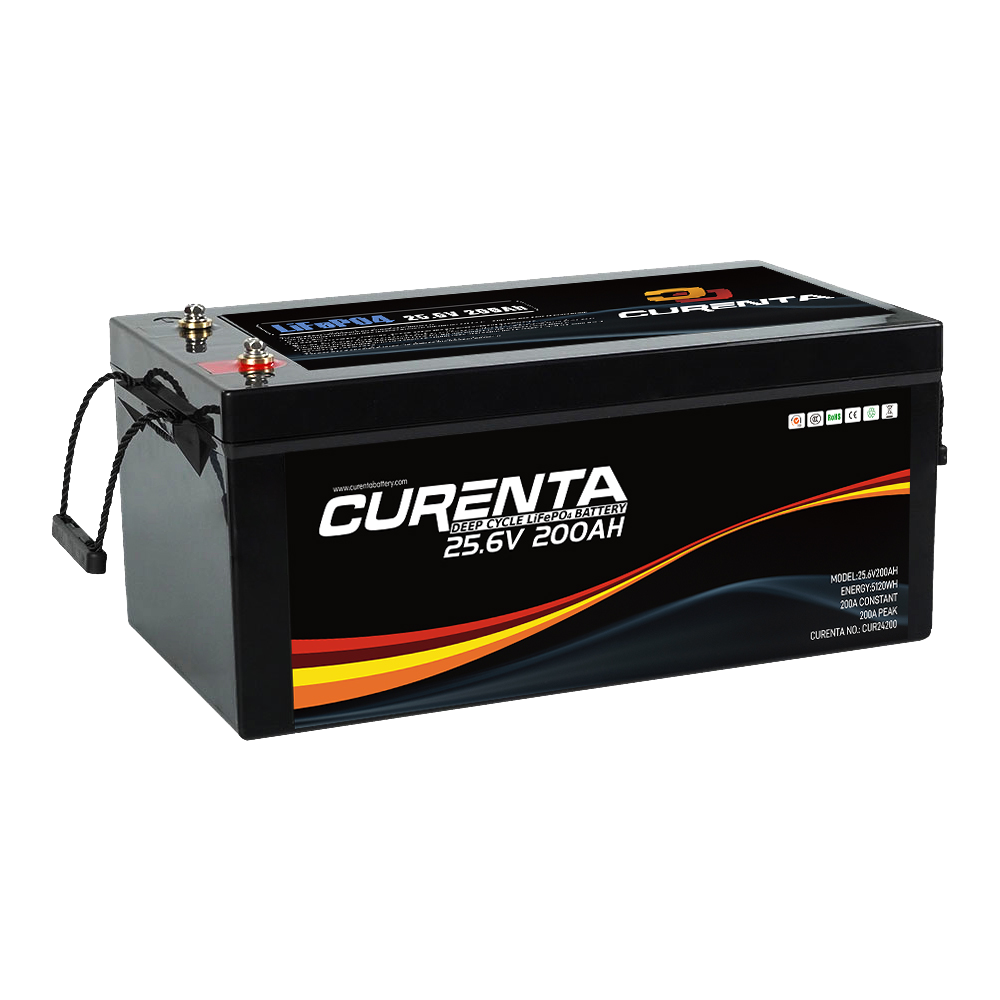
CURENTA BATTERY, INC. is a LiFePO4 battery manufacturer with more than 15 years of experience in energy storage systems and motive power applications. The company provides battery products and system solutions for applications including golf carts, electric vehicles, residential energy storage, solar battery systems, and lead-acid battery replacement.
For B2B customers evaluating lithium golf cart batteries, the selection process should begin with the electrical and operating requirements of the vehicle. Nominal voltage, required capacity, continuous and peak discharge current, charger compatibility, installation dimensions, and operating temperature all need to be considered together.
CURENTA BATTERY reports that it operates local warehouse and maintenance teams in the United States and Europe. These resources can be relevant to buyers evaluating regional supply and service arrangements.
The company also states that it holds ISO 9001, ISO 14001, and ISO 45001 certifications and has passed CE, IEC, UKCA, UN 38.3, and MSDS-related certification or documentation requirements. Buyers should request the specific certificates, reports, and applicable product documentation needed for their intended market and battery model.
CURENTA BATTERY offers a 10-year warranty commitment, subject to the applicable product and warranty terms. For procurement planning, buyers should confirm the coverage, operating conditions, exclusions, and service procedures for the specific battery under consideration.
More information about the company is available on the CURENTA BATTERY official website.
When discussing a potential golf cart battery project with a manufacturer, provide the vehicle model, system voltage, existing battery arrangement, daily distance, operating hours, typical load, terrain, charger specifications, and battery compartment dimensions. This information helps establish a technically appropriate starting point and reduces the risk of selecting a battery that does not match the vehicle.
15. Frequently Asked Questions About Golf Cart Battery Voltage and Capacity
What Voltage Is Best for a Golf Cart Battery?
There is no single best voltage for every golf cart. Common systems include 36V, 48V, and 72V, but the correct choice is determined by the vehicle's electrical design. Confirm the required voltage before evaluating capacity or considering a conversion.
Is a Higher-Ah Golf Cart Battery Always Better?
No. A higher Ah rating generally means more stored charge at the same voltage, but it may also increase cost, weight, and charging requirements. The battery should be sized to meet the vehicle's actual energy demand while remaining compatible with the controller, charger, and installation space.
How Long Will a 48V 100Ah Golf Cart Battery Last?
A nominal 48V 100Ah battery stores approximately 4.8kWh. Its operating time depends on usable energy and average power consumption.
For example, if 3.84kWh is available under an illustrative 80% depth-of-discharge assumption and the cart consumes an average of 1.2kW, the theoretical operating time is approximately 3.2 hours. Real-world operating time may differ because of acceleration, terrain, load variation, temperature, and system losses.
This is an energy-based estimate, not a guaranteed driving duration or range.
Can I Install a 100Ah Lithium Battery Instead of a 150Ah Lead-Acid Battery?
Potentially, but the Ah ratings alone do not establish equivalence. Compare the complete battery-bank voltage, nominal and usable energy, current ratings, charging requirements, and vehicle compatibility.
A lithium battery may provide a different usable-energy profile from a lead-acid battery, but the appropriate capacity must be determined from the application's energy demand and the battery manufacturer's specifications.
Should I Choose a 100Ah or 150Ah Lithium Golf Cart Battery?
A 100Ah battery may suit moderate operating requirements when its usable energy and current ratings are sufficient. A 150Ah battery provides 50% more nominal capacity at the same voltage and may be preferable for longer operating cycles or greater reserve requirements.
Measure daily energy consumption and confirm the controller's current demand before making the final decision.
Can a Golf Cart Use a Lithium Battery Without Replacing the Charger?
Only if the existing charger is compatible with the lithium battery manufacturer's charging requirements. Check the charging voltage, current, control profile, and any temperature-related restrictions. If compatibility cannot be confirmed, use an approved charger.
Does a Higher-Voltage Golf Cart Battery Provide More Range?
Not necessarily. Range depends primarily on usable energy and energy consumption, among other factors. A higher-voltage battery with the same Ah rating has more nominal energy, but voltage compatibility and the vehicle's complete electrical design must be considered. Higher voltage should not be selected as a shortcut to increasing range.
How Much Reserve Capacity Should a Golf Cart Battery Have?
The appropriate reserve depends on route predictability, charging access, temperature, vehicle load, and the consequences of an interrupted operating cycle. Use actual energy-consumption data and establish a reasonable margin for demanding routine conditions rather than relying on a universal percentage.
What Is More Important: Battery Capacity or Discharge Current?
Both are essential. Capacity determines how much energy the battery can store, while discharge-current capability determines whether it can supply the power required by the vehicle. A suitable battery must satisfy both requirements.
How Can Fleet Operators Reduce Battery Selection Errors?
Standardize the information collected for each vehicle, including system voltage, controller rating, daily energy consumption, charger specifications, battery dimensions, and operating environment. Require suppliers to provide comparable datasheets and verify installation requirements before ordering.
Conclusion
Choosing the right voltage and capacity for a golf cart battery requires a systematic evaluation of electrical compatibility, energy consumption, power demand, charging arrangements, and operating conditions.
Start by confirming whether the vehicle requires a 36V, 48V, or 72V battery system. Next, estimate daily energy consumption using actual distance and operating data. Convert that requirement into amp-hours using the planned usable depth of discharge, then add a justified reserve for demanding operating conditions.
Before purchasing, verify continuous and peak discharge ratings, BMS protection, charger compatibility, physical dimensions, temperature limits, and warranty conditions. For B2B buyers, also review technical documentation, certification requirements, supply arrangements, and after-sales support.
A well-matched LiFePO4 golf cart battery should meet the vehicle's electrical requirements and provide enough usable energy for its intended duty cycle without unnecessary oversizing. By basing procurement decisions on measurable operating requirements rather than nominal capacity alone, dealers, distributors, and fleet operators can make more consistent battery selections and manage long-term operating costs more effectively.

 English
 German
 Czech
Czech French
 Italian
 Hungarian
 Russian
 Japanese
 Korean
 Arabic
 Spanish
 Portuguese
 Danish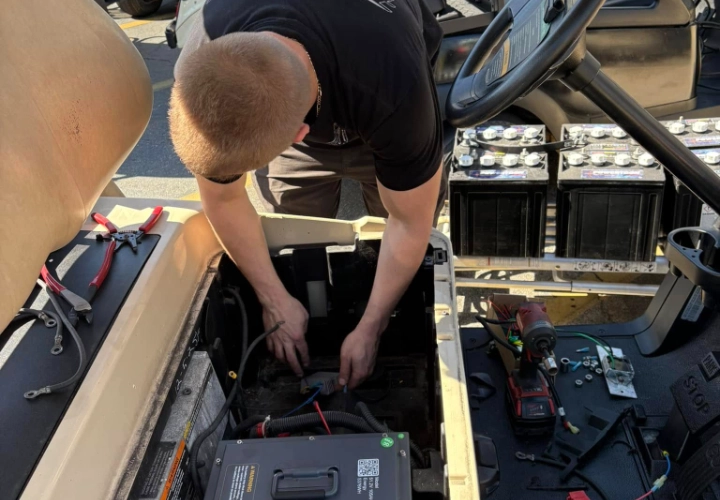
 WhatsApp