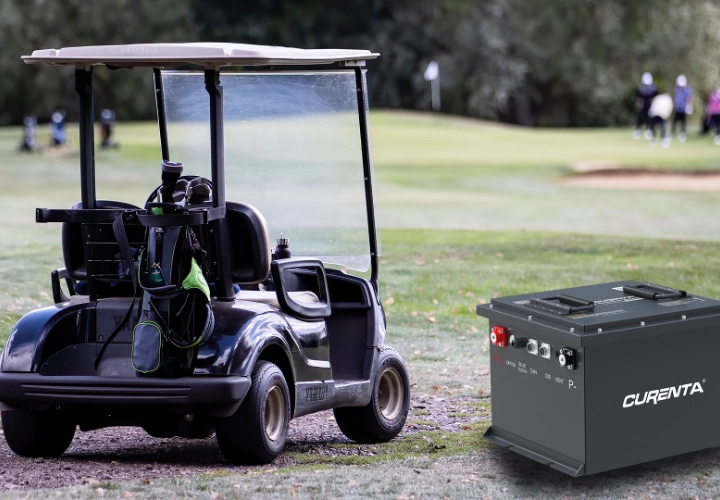
Golf carts are used in golf courses, resorts, residential communities, industrial facilities, campuses, farms, and commercial transportation operations. As these vehicles take on more daily tasks, battery performance has become an important factor in operating efficiency. Buyers are no longer looking only at the initial cost of a battery. They also need to consider driving range, charging time, maintenance requirements, service life, and the total cost of keeping a vehicle in operation.
Traditional lead-acid batteries have served the golf cart market for many years, but lithium technology offers several practical advantages for operators who need consistent performance and more efficient energy use. In particular, lithium iron phosphate batteries, commonly known as LiFePO4 batteries, have become an important option for golf cart manufacturers, fleet operators, dealers, and battery replacement projects.
Lithium golf cart batteries can improve usable energy capacity, reduce charging downtime, and simplify routine maintenance. However, the actual benefits depend on battery capacity, vehicle configuration, driving conditions, charger compatibility, and daily operating patterns. Understanding these factors helps buyers select a battery system that delivers measurable value rather than relying on general performance claims.
Why Battery Technology Matters for Golf Cart Performance
A golf cart's operating range and charging efficiency are closely connected to its battery system. The battery supplies energy to the electric motor, controller, lights, accessories, and other electrical components. When the battery cannot deliver sufficient usable energy or takes too long to recharge, the vehicle may require more frequent charging and experience longer periods out of service.
For an individual golf cart, these interruptions may be manageable. For a fleet of vehicles operating across a golf course, hotel, resort, factory, or residential community, the impact can be much greater. A cart that returns to the charging area before completing its assigned route creates additional work for staff and may affect customer service or transportation schedules.
Battery selection should therefore be based on actual operating requirements. Buyers need to evaluate how far each cart travels per shift, how much time it spends moving under load, how often it stops and starts, and how much charging time is available between operating periods.
A properly selected lithium battery system can help address these requirements by offering high usable energy, efficient charging, reduced battery maintenance, and a lighter overall battery package.
How Lithium Golf Cart Batteries Improve Driving Range
1. More Usable Energy from the Battery Pack
Battery capacity is commonly expressed in ampere-hours (Ah) or kilowatt-hours (kWh). These measurements describe different aspects of the battery system, and they should not be treated as interchangeable without considering voltage.
Ampere-hours measure the amount of electrical charge a battery can deliver under specified conditions. Kilowatt-hours measure energy capacity and are particularly useful when comparing battery packs with different nominal voltages.
The basic relationship is:
Energy (kWh) = Nominal Voltage (V) × Capacity (Ah) ÷ 1,000
For example, a nominal 51.2 V lithium battery rated at 100 Ah has a nominal energy capacity of 5.12 kWh. A 48 V, 100 Ah battery has a nominal energy capacity of 4.8 kWh. Actual usable energy will depend on the battery's operating limits, discharge conditions, temperature, and battery management settings.
One reason LiFePO4 golf cart batteries can deliver a practical range advantage is that they generally support a greater usable proportion of their nominal capacity than conventional lead-acid batteries under suitable operating conditions. Lead-acid battery capacity is also affected by discharge rate, temperature, and how deeply the battery is discharged.
This difference matters when a cart needs to complete a full operating shift. A battery's nameplate capacity alone does not show how much energy is available for real-world driving. Buyers should compare usable energy, discharge limits, and expected vehicle consumption rather than relying exclusively on Ah ratings.
2. More Consistent Power During Operation
A golf cart needs power not only to maintain speed on level ground but also to accelerate, climb slopes, carry passengers, and transport equipment. These activities create changing electrical loads that influence battery performance.
LiFePO4 batteries generally maintain a relatively stable voltage over much of their discharge cycle. This can help an electric golf cart deliver more consistent performance as the battery's state of charge decreases, provided the battery and motor controller are properly matched.
Lead-acid batteries experience greater voltage decline as they discharge, and voltage can drop further under heavy loads. In some operating conditions, this can affect acceleration or trigger low-voltage protection before the vehicle has used all the energy that an operator expected to access.
Lithium batteries do not eliminate every performance limitation. Motor power, controller settings, tire pressure, vehicle weight, and battery discharge-current limits still matter. A battery with insufficient current capability may restrict acceleration or trigger protection when the cart climbs a steep incline.
For fleet buyers, the important question is whether the battery can supply the required continuous and peak current throughout the expected operating cycle. Reviewing these specifications with the golf cart manufacturer or battery supplier is an important part of the selection process.
3. Lower Battery Weight Can Reduce Energy Consumption
Weight is another factor that influences golf cart range. A heavier vehicle generally requires more energy to accelerate and climb slopes. When a cart operates throughout the day with repeated stops, starts, and changes in elevation, these energy demands accumulate.
Lithium battery packs are typically lighter than comparable lead-acid battery systems designed for similar golf cart applications. The exact weight reduction depends on the battery capacity, pack design, enclosure, and the lead-acid configuration being replaced.
Reducing battery weight can lower the vehicle's total mass and improve energy efficiency, especially on routes involving frequent acceleration or hills. It may also increase the payload available for passengers, golf equipment, tools, or cargo, subject to the vehicle's rated load limits.
However, weight reduction should not be used as the only measure of performance. A lighter battery must still meet the required voltage, usable capacity, current output, environmental protection, and mechanical installation requirements.
Before replacing a lead-acid battery bank, buyers should confirm the new battery's dimensions, mounting arrangement, cable routing, and weight distribution. A suitable lithium battery conversion should improve energy use without compromising vehicle stability or safe installation.
4. Better Range Planning for Different Applications
The range of a lithium-powered golf cart depends on more than its battery capacity. A cart carrying two people on a flat golf course may consume significantly less energy than a utility cart carrying tools and supplies across a large industrial site.
Common factors affecting golf cart battery range include:
Total vehicle and passenger weight.
Road gradient and surface condition.
Average speed and acceleration frequency.
Ambient temperature and battery temperature.
Tire pressure and rolling resistance.
Motor and controller efficiency.
Auxiliary electrical loads.
Battery age and available capacity.
Driving habits and charging practices.
For example, a resort shuttle that operates on flat roads with scheduled stops may have a relatively predictable energy demand. A maintenance cart carrying equipment across a large property with steep paths may require more reserve capacity.
Fleet operators should collect operating data from representative routes before selecting a battery. Measuring energy consumption over a complete shift provides a more useful basis for battery sizing than relying on a manufacturer's maximum-range estimate alone.
A reasonable design should include a reserve for unexpected trips, additional passenger loads, seasonal temperature changes, and gradual capacity loss over time. This reduces the risk of selecting a battery that meets the requirement only under ideal conditions.
How Lithium Batteries Improve Golf Cart Charging Efficiency
1. Shorter Charging Time Under Suitable Conditions
Charging time depends on the battery's usable capacity, starting state of charge, charger output, charging profile, temperature, and the battery management system's limits.
Lithium batteries can often accept higher charging currents than comparable lead-acid batteries when the battery specification and charger permit it. This can shorten the time required to restore energy after a working shift.
For instance, a 5.12 kWh battery pack receiving an ideal constant charging power of 1 kW would require approximately 5.12 hours to receive 5.12 kWh of energy. Actual charging takes longer because of conversion losses, power variations, charging controls, and other operating factors. The example illustrates the relationship between energy capacity and charging power, not a guaranteed charging time.
The charger must also be compatible with the battery's chemistry, voltage, current limits, and charging profile. Using an unsuitable charger may reduce charging performance, trigger protective shutdowns, or create safety risks.
When comparing lithium golf cart batteries, buyers should ask the supplier for the recommended charger output and the expected charging time under clearly defined conditions. A stated charging time is useful only when the starting and ending state of charge, charger rating, and temperature are known.
2. Less Time Spent Waiting for a Full Charge
Many golf carts operate on a predictable daily schedule. They may run through the morning, return for charging during lunch, and operate again in the afternoon. Others work continuously across multiple shifts.
In these situations, charging flexibility can be as important as total range. A battery that can accept an appropriate amount of energy during a short break may help a vehicle return to service sooner.
Lithium battery systems can support opportunity charging when the battery manufacturer permits it and the charging equipment is properly configured. This allows operators to add energy during scheduled breaks rather than depending entirely on a long overnight charging period.
For example, a hotel may operate carts throughout the day for guest transportation and luggage handling. A short charging window between shifts can help keep vehicles available without maintaining a large reserve fleet.
Opportunity charging still requires planning. The operator must consider charger availability, electrical capacity, battery temperature, the manufacturer's charging instructions, and the minimum state of charge required for the next task.
Frequent charging does not automatically increase productivity. The benefit appears when charging periods fit the operating schedule and provide enough energy to cover the next planned work period.
3. Charging Efficiency and Energy Losses
Charging efficiency describes how much electrical energy supplied by the charger is retained as usable energy in the battery. It is different from the speed at which a battery charges.
During charging, some energy is lost through heat, battery electrochemical processes, wiring, and charger power conversion. Battery chemistry, current, temperature, and charging strategy all affect the final result.
LiFePO4 batteries generally offer favorable charging characteristics and can achieve high charge efficiency under suitable operating conditions. Their actual wall-to-battery efficiency depends on the battery system and charger, so buyers should request test data when precise energy comparisons are necessary.
A practical evaluation should measure the energy drawn from the electrical supply and compare it with the energy returned during vehicle operation. For fleet applications, a dedicated energy meter can help identify differences in charging consumption across vehicles and operating cycles.
This information is valuable when estimating electricity costs. A battery that uses less electricity per completed route can reduce operating expenses, but the result must be measured under comparable driving conditions.
It is also important to avoid assuming that every lithium battery will deliver identical efficiency. Battery cell quality, pack design, wiring, thermal management, and the battery management system all influence overall performance.
4. Reduced Maintenance-Related Downtime
Charging efficiency is only one part of the operational picture. Battery maintenance also affects the time and labor required to keep golf carts available.
Traditional flooded lead-acid batteries require periodic electrolyte-level inspections and the addition of distilled water when necessary. Their terminals also require inspection and cleaning, while charging areas need appropriate ventilation and maintenance procedures. Sealed lead-acid designs have different requirements, but they still require attention to charging conditions and battery health.
LiFePO4 golf cart batteries generally do not require routine electrolyte watering. A battery management system can monitor operating conditions and provide protection against specified voltage, current, and temperature limits.
This reduces certain routine maintenance tasks and can simplify battery management for large fleets. It does not mean lithium batteries are maintenance-free in every respect. Operators should still inspect electrical connections, check mounting hardware, maintain the charging equipment, and follow the supplier's inspection schedule.
A well-managed maintenance program should also include monitoring for warning indicators, recording unusual charging behavior, and removing damaged batteries from service. These practices help protect both battery performance and vehicle availability.
Lithium vs. Lead-Acid Golf Cart Batteries: What Buyers Should Compare
Choosing between lithium and lead-acid batteries requires an evaluation of the complete operating cycle rather than a comparison of purchase prices alone.
| Evaluation factor | LiFePO4 lithium batteries | Lead-acid batteries |
|---|
| Usable capacity | Often supports a greater usable share of nominal capacity under suitable conditions | Usable capacity is more sensitive to discharge depth and load |
| Charging | Can accept relatively high charging currents when permitted by the specifications | Charging may take longer, especially during the final absorption stage |
| Battery weight | Typically lighter for comparable golf cart applications | Generally heavier for comparable energy requirements |
| Routine maintenance | No electrolyte watering for sealed LiFePO4 packs; inspections remain necessary | Flooded designs require watering and regular maintenance |
| Voltage behavior | Generally maintains a more stable voltage through much of the discharge cycle | Voltage tends to decline more noticeably during discharge |
| Cycle life | Can offer a long service life when operated within specified limits | Cycle life depends strongly on battery type, discharge depth, and maintenance |
| Initial investment | Usually higher than a conventional lead-acid replacement | Often lower at the initial purchase stage |
| System compatibility | Requires suitable charger, voltage, current, and installation arrangements | Must also be matched to the vehicle and charger |
This comparison provides general guidance. Actual performance depends on the specific battery model, usage conditions, and manufacturer's specifications.
For commercial buyers, total cost of ownership is often the more meaningful comparison. The calculation should include the battery purchase price, charger requirements, electricity consumption, maintenance labor, replacement frequency, downtime, and disposal costs.
A lithium battery may have a higher initial cost but still provide a competitive long-term result when it reduces maintenance requirements and supports more operating hours. Conversely, a lightly used cart with limited daily mileage may not benefit enough from the additional investment to justify an immediate conversion.
The correct choice depends on the vehicle's workload, expected ownership period, local service support, and financial objectives.
How to Calculate the Battery Capacity Needed for a Golf Cart
Battery selection should begin with energy consumption rather than a target Ah number chosen without context.
Step 1: Measure Daily Energy Consumption
If a golf cart has an energy consumption rate of 0.10 kWh per kilometer and travels 30 kilometers in a working day, its estimated daily energy requirement is:
30 km × 0.10 kWh/km = 3.0 kWh
This is an illustrative calculation. Actual consumption varies with speed, vehicle load, terrain, and operating conditions. Where possible, use measured data from the actual vehicle.
Step 2: Allow for a Practical Energy Reserve
Suppose the cart requires 3.0 kWh for a typical working day and the operator wants a 20% reserve relative to that requirement.
The target usable energy would be:
3.0 kWh × 1.20 = 3.6 kWh
The selected battery must provide at least 3.6 kWh of usable energy under the expected conditions. If the battery's usable capacity is lower than its nominal capacity, the nominal rating must be adjusted accordingly.
The reserve percentage should reflect actual operating uncertainty. Routes with steep slopes, changing passenger loads, or long distances between charging opportunities may require a larger reserve.
Step 3: Confirm Voltage and Current Requirements
A golf cart designed for a nominal 48 V battery system generally needs a compatible replacement system. A lithium pack's nominal voltage may differ from that of the original lead-acid bank even when suppliers market both for the same vehicle category.
Check the battery's voltage range, controller compatibility, continuous discharge current, peak current, and protective cutoff settings. The motor controller must remain within the battery's permitted operating range.
Do not assume that any battery labeled 48 V is automatically compatible with every 48 V golf cart.
Step 4: Match the Battery to the Charging Schedule
Calculate how much energy must be restored between operating periods and determine whether the charger can deliver that energy within the available time.
For a fleet, also consider the number of carts charging simultaneously. Ten carts requiring several kilowatt-hours each can create a substantial electrical load when connected at the same time.
A charging plan may need staggered charging periods, suitable circuits, adequate ventilation where required by the equipment, and clear procedures for handling damaged or abnormal batteries.
Step 5: Verify Installation Requirements
Before placing an order, confirm battery dimensions, mounting points, terminal orientation, cable specifications, enclosure protection, operating temperature range, and any required communication interface.
For replacement projects, verify whether the original charger can be reused or whether a lithium-compatible charger is required. Also check whether the cart's battery indicator can correctly interpret the new battery's state of charge.
These checks reduce the risk of installation delays and unexpected costs after delivery.
The Role of the Battery Management System in Range and Charging
A battery management system (BMS) is an important component of a modern lithium golf cart battery. It monitors operating conditions and controls protective functions according to the battery's design.
Depending on the model, BMS functions may include cell-voltage monitoring, charge and discharge current protection, temperature monitoring, balancing, and communication with compatible equipment.
Protecting the Battery During Discharge
If a cart operates on a steep route or carries a heavy load, the battery may experience a high current demand. The BMS helps prevent operation beyond specified limits by reducing or interrupting current when a protection threshold is reached.
This function helps protect the battery, but it should not be treated as a substitute for correct sizing. If the battery repeatedly reaches its current limit during normal operation, the pack may be undersized or unsuitable for the vehicle's workload.
Supporting Safe Charging
Charging below or above the manufacturer's permitted temperature range can affect battery performance and safety. A suitable BMS can prevent charging when monitored conditions exceed the battery's specified limits.
Some batteries include low-temperature charging protection, while others support additional features such as heating systems. These capabilities should be verified in the actual product specification rather than assumed for every LiFePO4 battery.
Improving State-of-Charge Monitoring
Traditional battery indicators may not provide accurate readings after a golf cart is converted from lead-acid to lithium. The different voltage behavior can cause an existing gauge to display an inaccurate state of charge.
A compatible display or battery monitoring interface can help operators estimate remaining energy and schedule charging more effectively. For fleet managers, accurate battery status information can also reduce unnecessary charging and help identify vehicles that require inspection.
How Operating Conditions Affect Lithium Battery Range
Terrain and Vehicle Load
Hills, rough surfaces, frequent acceleration, and heavy loads increase energy demand. A golf cart that regularly climbs slopes may use considerably more energy per kilometer than one traveling on flat pavement.
Operators should assess their most demanding normal route when sizing the battery. Designing around an unusually easy route can lead to insufficient range during busy periods.
Temperature
Battery performance changes with temperature. Cold conditions can reduce available energy and increase internal resistance, while high temperatures can accelerate degradation if the battery operates outside its recommended range.
The battery's specified charging and discharging temperature limits should be reviewed before deployment. Vehicles used outdoors in seasonal climates may need an operating plan that accounts for winter range changes and charging restrictions.
Driving Habits
Rapid acceleration, excessive speed, and unnecessary idling can increase energy consumption. Although lithium batteries can deliver strong power when properly designed, more aggressive driving still consumes more energy.
Fleet managers can improve efficiency through driver training, regular tire-pressure checks, route planning, and basic vehicle maintenance. These measures may improve range without changing the battery pack.
Auxiliary Loads
Lights, cooling fans, electronic accessories, and other electrical equipment consume energy. The effect depends on their power demand and how long they operate.
For carts with substantial auxiliary loads, include these devices in the daily energy estimate. A battery that is adequately sized for propulsion alone may not provide sufficient reserve when additional electrical equipment is installed.
Total Cost of Ownership for Commercial Golf Cart Fleets
For golf courses, resorts, rental operators, and industrial facilities, the battery decision should be evaluated over the expected service period.
A useful total cost of ownership model includes:
Initial battery purchase and installation.
Charger replacement or upgrades.
Electricity consumed during charging.
Routine inspection and maintenance labor.
Expected battery replacement intervals.
Vehicle downtime and fleet availability.
Warranty coverage and service arrangements.
End-of-life handling and recycling.
Consider a fleet operator comparing two battery systems. The lead-acid option may have a lower purchase cost, but its maintenance workload and charging schedule could create additional expenses. A lithium system may require more initial capital but reduce certain maintenance tasks and improve vehicle availability.
The financial result depends on how intensively the vehicles are used. A cart operating for several hours every day has a different cost profile from a cart used only occasionally.
A practical comparison should use the same analysis period and operating assumptions for both battery options. Buyers should avoid using cycle-life claims without checking the test conditions, permitted depth of discharge, temperature, and end-of-life capacity threshold.
It is also useful to calculate cost per operating hour or cost per kilometer. These measures connect battery investment to actual fleet productivity and make comparisons between different battery capacities more meaningful.
Choosing a LiFePO4 Golf Cart Battery Supplier
Battery specifications are only one part of a successful procurement decision. Buyers also need a supplier that can provide consistent product quality, technical documentation, warranty support, and a clear process for resolving service issues.
Review Technical Specifications
Request the battery's nominal voltage, rated capacity, nominal energy, usable energy if specified, continuous and peak discharge current, maximum charging current, dimensions, weight, operating temperature limits, and charging requirements.
Ask how cycle life was tested and what capacity-retention threshold defines the end of the stated cycle life. This information makes it easier to compare products on a consistent basis.
Confirm Certifications and Documentation
Depending on the target market and application, buyers may need documentation covering battery safety, transportation, environmental management, and quality systems.
Relevant documents may include UN 38.3 transportation test documentation, applicable IEC test reports, CE or UKCA conformity documentation where relevant, and material safety data sheets. Requirements depend on the product, destination market, and applicable regulations.
A supplier should clarify which certificates and reports apply to the exact battery model being purchased. A company-level management certification is not the same as a product-specific safety test report.
Evaluate Warranty and After-Sales Support
Warranty terms should specify the coverage period, capacity or performance conditions where applicable, exclusions, claim procedures, and the responsibilities of the supplier and buyer.
Local service resources can be particularly useful for commercial fleets because battery troubleshooting and replacement may affect daily operations. Buyers should ask how technical support is provided, whether replacement units are available, and what information is needed to process a warranty claim.
Check OEM and ODM Capabilities
Golf cart manufacturers, distributors, and fleet solution providers may require different battery capacities, enclosures, connectors, communication features, or branding arrangements.
An OEM or ODM supplier may be able to support customized battery configurations, private labeling, and application-specific engineering. Any customization should remain within validated electrical, mechanical, and safety limits.
For larger projects, buyers should agree on sample testing, production specifications, quality inspection procedures, delivery schedules, and documentation before confirming a bulk order.
CURENTA BATTERY: Lithium Battery Solutions for Golf Cart Applications
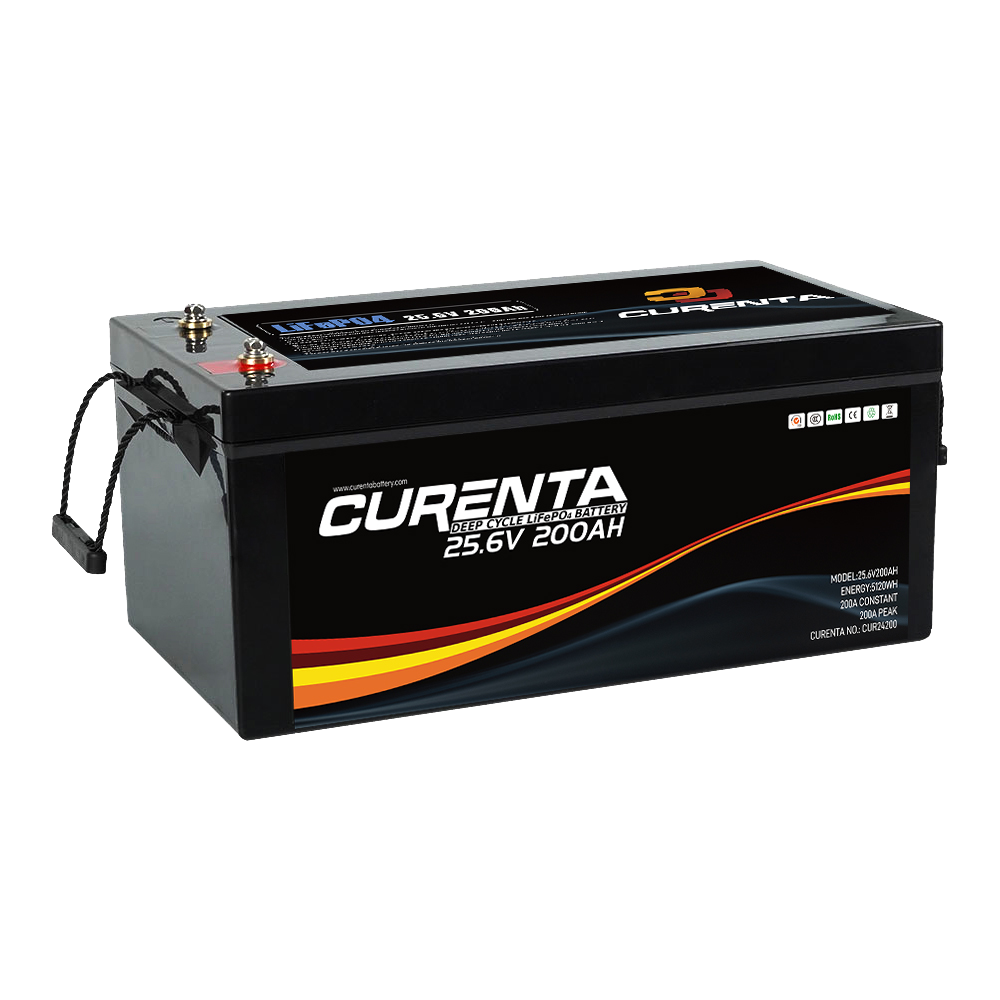
CURENTA BATTERY, INC. is a LiFePO4 battery manufacturer with more than 15 years of experience in energy storage systems and motive power applications. The company provides battery solutions for golf carts, electric vehicles, household energy storage, solar battery systems, and lead-acid battery replacement projects.
For golf cart buyers, selecting a battery system involves more than increasing nominal capacity. The battery must match the vehicle's voltage, current requirements, operating schedule, charging equipment, and installation constraints.
CURENTA BATTERY provides professional battery system solutions for domestic and international customers and maintains local warehouse and maintenance resources in the United States and Europe. These resources can be relevant to distributors, fleet operators, and commercial buyers evaluating regional service support.
The company reports ISO 9001, ISO 14001, and ISO 45001 certifications, along with CE, IEC, UKCA, UN 38.3, and MSDS-related documentation. Buyers should confirm the scope and model applicability of individual certifications and documents for their intended project.
CURENTA BATTERY also offers a 10-year warranty commitment. The specific warranty terms, applicable battery models, and coverage conditions should be reviewed before procurement.
For distributors and fleet operators planning a lithium golf cart battery conversion, a technical discussion with the supplier can help establish the appropriate capacity, discharge-current rating, charging configuration, and installation requirements.
More information about the company is available at CURENTA BATTERY's official website.
Frequently Asked Questions About Lithium Golf Cart Batteries
How much farther can a golf cart travel with a lithium battery?
There is no universal range improvement percentage. The result depends on the usable energy of the replacement battery, the original lead-acid configuration, vehicle weight, terrain, driving behavior, temperature, and motor efficiency.
A lithium conversion may extend practical range when it provides more usable energy or reduces battery weight. The most reliable method is to compare energy consumption and distance under similar operating conditions.
Do lithium golf cart batteries charge faster than lead-acid batteries?
They can charge faster when the lithium battery supports a higher charging current and the charger is properly matched. Actual charging time depends on battery capacity, starting state of charge, charger power, temperature, and the charging profile.
Buyers should compare the time required to restore the energy consumed during a typical working shift rather than relying only on a general charging-time claim.
Can a lithium battery replace a lead-acid golf cart battery directly?
Not always. The replacement must match the cart's voltage requirements, discharge current, physical dimensions, mounting arrangement, and electrical system. Charger compatibility and battery indicator behavior must also be checked.
A supplier or qualified technician should confirm the complete system compatibility before installation.
Are LiFePO4 batteries suitable for commercial golf cart fleets?
They can be suitable for fleets that benefit from reduced battery weight, less routine battery maintenance, flexible charging, and consistent power delivery. Their suitability depends on the required range, daily utilization, climate, charging infrastructure, and total cost of ownership.
Fleet operators should assess the economics using actual operating data and the supplier's specifications.
How should lithium golf cart batteries be maintained?
Follow the manufacturer's charging, storage, temperature, and inspection instructions. Check terminals and cables, inspect the mounting arrangement, monitor unusual warning indicators, and keep the charging equipment in good condition.
Avoid using incompatible chargers or operating the battery beyond its specified limits. Damaged or abnormal batteries should be handled according to the manufacturer's safety procedures.
What information should buyers provide when requesting a quotation?
A useful inquiry should include the golf cart make and model, existing battery voltage and capacity, daily travel distance, passenger or cargo load, terrain, available charging time, operating temperature range, and required quantity.
Photos of the existing battery compartment, charger nameplate, and electrical connections can help the supplier assess compatibility. For fleet projects, include the number of vehicles and their typical daily operating schedules.
Conclusion
Lithium batteries can improve golf cart range and charging efficiency by providing a greater proportion of usable energy, reducing battery-system weight, supporting suitable charging currents, and reducing certain maintenance requirements. These advantages can be particularly valuable for commercial operators who depend on high vehicle availability and predictable daily performance.
However, the best results come from matching the battery to the actual workload. Capacity, discharge current, charger compatibility, temperature limits, installation requirements, and warranty conditions all need to be evaluated before purchase.
For golf course operators, resorts, distributors, and industrial fleet managers, the next step is to establish daily energy demand and charging requirements, then compare battery systems using measurable operating data. With appropriate sizing and a compatible charging system, a LiFePO4 golf cart battery can support a more efficient and manageable fleet operation.
CURENTA BATTERY provides LiFePO4 battery solutions for golf carts and other motive power applications. Buyers planning a new fleet or a lead-acid battery replacement project can visit https://www.curentabattery.com/about.html to learn more about the company and discuss their application requirements.

 English
 German
 Czech
 French
 Italian
 Hungarian
 Russian
 Japanese
 Korean
 Arabic
 Spanish
 Portuguese
 Danish

 WhatsApp