Introduction: The Real Operational Problem Behind Traditional Lead-Acid Golf Cart Batteries
In most golf course fleets, resort transportation systems, and commercial utility vehicle operations, the battery system is not just a consumable component—it is a direct determinant of operational efficiency, service continuity, and total cost of ownership.
However, despite decades of widespread use, traditional lead-acid batteries continue to present structural limitations that directly impact fleet profitability and user experience:
First, inconsistent range performance is one of the most common operational complaints. As lead-acid batteries discharge, voltage drops rapidly and non-linearly. This results in a noticeable decline in vehicle speed and torque, especially during the second half of a shift. For fleet operators, this means unpredictable performance across identical routes and inconsistent user experience.
Second, long and inefficient charging cycles significantly reduce fleet utilization. Typical lead-acid systems require 6–10 hours for full charging and often demand controlled charging profiles to avoid degradation. In multi-vehicle fleets, this creates scheduling bottlenecks and reduces daily vehicle availability.
Third, frequent replacement cycles and maintenance requirements impose hidden operational costs. Water refilling, equalization charging, terminal corrosion management, and periodic capacity loss monitoring all require labor resources. More critically, most lead-acid systems degrade significantly within 12–18 months under high-frequency use, forcing repeated capital expenditure.
Finally, under continuous or high-load operation conditions, such as uphill driving, heavy passenger loads, or extended runtime scenarios, lead-acid batteries exhibit pronounced voltage sag. This leads to reduced motor torque, sluggish acceleration, and premature shutdown risk when SOC (state of charge) becomes low.
These challenges are not minor inconveniences—they are structural inefficiencies that directly reduce fleet productivity and increase cost per operating hour.
This is exactly why modern operators are shifting toward advanced LiFePO4-based golf cart lithium battery systems, engineered specifically for high-duty-cycle motive power applications.
1. LiFePO4 Lithium Technology: Redefining Cycle Life, Voltage Stability, and Energy Efficiency
At the core of our golf cart lithium battery platform is advanced Lithium Iron Phosphate (LiFePO4) chemistry, which has become the industry benchmark for high-reliability motive power applications.
Unlike lead-acid systems that rely on reversible chemical reactions with significant internal resistance growth over time, LiFePO4 chemistry provides a fundamentally more stable electrochemical structure.
1.1 Ultra-Long Cycle Life: Beyond 4000–6000 Cycles
One of the most critical advantages is cycle durability. Our engineered LiFePO4 systems are designed to deliver:
To put this into operational context, a fleet vehicle operating one full cycle per day can achieve:
This represents a 3–5x lifecycle extension, fundamentally changing capital expenditure cycles for fleet operators.
1.2 Stable Voltage Output Across Entire Discharge Curve
One of the most significant performance improvements is flat discharge voltage behavior.
Where lead-acid batteries exhibit a steep voltage decline, LiFePO4 maintains a near-linear voltage profile throughout the discharge cycle.
This directly results in:
Consistent motor torque output
Stable vehicle speed under varying SOC
No “mid-cycle performance collapse”
Predictable driving behavior across full shift operation
For golf cart users, this means the vehicle drives the same at 90% SOC as it does at 20% SOC—an essential requirement for commercial reliability.
1.3 Higher Energy Utilization Efficiency
Lead-acid systems typically operate at 70–75% usable capacity due to discharge limitations.
In contrast, LiFePO4 systems deliver:
90–95% usable energy efficiency
Lower internal resistance losses
Reduced heat generation under load
This translates directly into longer effective driving range per charge without increasing nominal battery capacity.
2. System-Level Advantage: Why a Motive Power Battery Solutions Provider Matters
Battery performance is not determined by cell chemistry alone. Real-world reliability depends on system-level engineering.
As a dedicated Motive Power Battery Solutions provider and professional golf cart lithium battery manufacturer, we design complete energy systems rather than standalone battery packs.
This includes:
Cell matching and grading for consistency
Structural pack engineering for vibration resistance
Thermal management architecture
High-current busbar optimization
Application-specific discharge tuning
This system approach ensures that performance is not only achieved in laboratory conditions but consistently maintained under real-world fleet operations.
3. Intelligent BMS: The Core of Safety, Stability, and Performance Optimization
At the heart of every high-performance golf cart lithium battery system is an advanced Battery Management System (BMS).
The BMS is not simply a protective circuit—it is the intelligent control layer that defines how the battery behaves under dynamic load conditions.
3.1 Multi-Layer Protection Architecture
Our BMS integrates:
These protections ensure safe operation even under extreme usage conditions.
3.2 Active Cell Balancing for Long-Term Consistency
One of the key causes of lithium battery degradation is cell imbalance over time.
Our BMS performs continuous:
Passive and active balancing
Cell voltage equalization
Capacity drift correction
This ensures that all cells age uniformly, directly contributing to extended cycle life beyond 4000 cycles.
3.3 Thermal Intelligence for High-Load Operation
Temperature is a critical factor in lithium battery performance.
Our system continuously monitors:
This enables adaptive control to prevent overheating during:
Continuous uphill driving
High-load passenger transport
Long-duration operation cycles
4. Fast Charging Capability: Increasing Fleet Utilization Rate
One of the most commercially impactful advantages of lithium battery systems is charging efficiency.
Our golf cart lithium battery platform supports:
2–3 hour full charge capability (depending on configuration)
Opportunity charging during short operational breaks
High charge acceptance rate without degradation
4.1 Operational Impact of Fast Charging
For fleet operators, charging time directly determines vehicle availability.
Reducing charging time from 8 hours to 2–3 hours enables:
In commercial environments such as resorts or rental fleets, this translates directly into improved ROI per vehicle.
5. Continuous High-Power Output: Stability Under Real Load Conditions
Golf carts are not constant-load systems. They experience dynamic stress profiles:
Acceleration bursts
Slope climbing
Passenger load variation
Stop-and-go operation
Our lithium battery system is engineered to maintain:
Stable high-current discharge capability
No voltage collapse under peak load
Consistent torque delivery throughout discharge cycle
This ensures reliable performance even under extended operation periods exceeding 6–10 hours per day.
6. Real-World Performance Metrics and Operational Scenarios
To translate technical performance into operational value, consider the following real-world benchmarks:
6.1 Daily High-Intensity Operation
A fully charged system supports:
Full-day operation (8–10 hours continuous use)
70–120 km range depending on vehicle type and load
Stable performance from start to finish
6.2 Lifecycle Comparison with Lead-Acid Systems
This results in:
6.3 Maintenance Elimination
Unlike lead-acid systems, lithium systems eliminate:
This reduces operational complexity and maintenance labor cost to near zero.
7. ROI Impact: Why Lithium Is a Financial Decision, Not a Technical Upgrade
A common procurement question is:
“Is upgrading to lithium batteries for golf carts actually worth it?”
From a financial perspective, the answer is driven by lifecycle economics:
7.1 Total Cost of Ownership Reduction
Although initial investment is higher, lithium systems provide:
7.2 Cost Per Operating Hour Advantage
When amortized over lifecycle cycles, lithium batteries significantly reduce:
This is where ROI becomes compelling for fleet operators.
8. How to Choose a Reliable Golf Cart Lithium Battery Manufacturer
Another frequently asked procurement question is:
“How do I choose a reliable golf cart lithium battery manufacturer?”
Key evaluation criteria include:
Verified cycle life performance (>4000 cycles real test data)
BMS engineering capability (not just basic protection board)
System integration experience with OEM golf cart platforms
Thermal and discharge stability validation
Customization capability for different vehicle models
A true golf cart lithium battery manufacturer should provide not just products, but complete Motive Power Battery Solutions tailored to operational requirements.
9. Application Scenarios: Where Performance Matters Most
Our systems are widely applied in:
Golf course fleet operations
Resort and hotel transportation systems
Tourist attraction shuttle fleets
Industrial utility vehicles
Campus and campus logistics mobility
In each scenario, the key value drivers remain consistent:
Conclusion: Engineering Power Systems for the Next Generation of Fleet Mobility
The transition from lead-acid to lithium is not simply a technology upgrade—it is a structural transformation in how fleet energy systems are managed, deployed, and optimized.
Our golf cart lithium battery solutions are engineered to deliver:
Over 4000+ cycle life performance
Stable voltage output under all load conditions
Fast charging within 2–3 hours
Intelligent BMS-driven safety and balancing
Significant reduction in total cost of ownership
As a professional Motive Power Battery Solutions provider and golf cart lithium battery manufacturer, our mission is to enable fleet operators, distributors, and OEM partners to achieve higher operational efficiency, lower lifecycle cost, and uncompromising performance stability in real-world applications.

 English
 German
 Czech
Czech French
 Italian
 Hungarian
 Russian
 Japanese
 Korean
 Arabic
 Spanish
 Portuguese
 Danish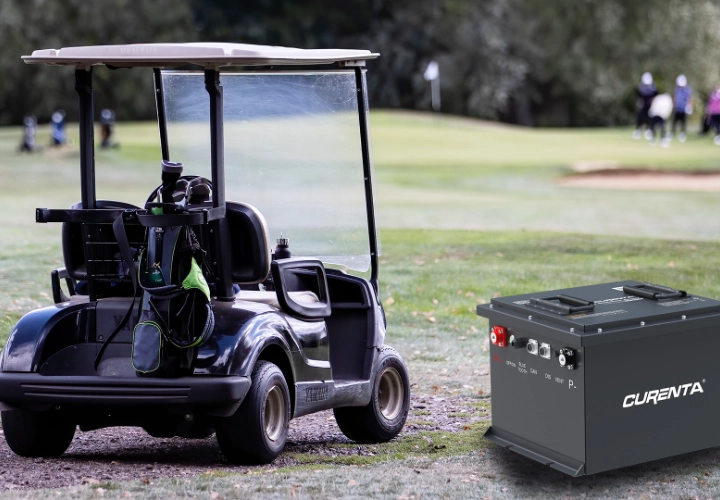
 WhatsApp