Replacing lead-acid batteries with lithium batteries is becoming an important consideration for fleet operators looking to improve equipment availability, reduce maintenance work, and manage long-term operating costs. From golf carts and electric utility vehicles to warehouse equipment, commercial vehicles, and industrial material-handling fleets, battery performance directly affects daily operations. When a battery takes too long to charge, requires frequent maintenance, or loses capacity earlier than expected, the resulting downtime can affect the entire fleet.
Lithium iron phosphate (LiFePO4) batteries offer an alternative to traditional lead-acid technology. They provide several operational advantages, including higher usable capacity, faster charging, longer cycle life, and lower routine maintenance requirements. However, switching battery technologies is not simply a matter of removing an old battery and installing a new one. Fleet operators need to evaluate equipment compatibility, charging infrastructure, battery management systems, operating conditions, safety requirements, and total cost of ownership before making the transition.
A well-planned lead-acid battery replacement project begins with understanding how the fleet actually operates. A golf cart fleet used for short trips throughout the day has different requirements from warehouse equipment operating multiple shifts or utility vehicles working outdoors. Battery capacity, discharge characteristics, charging schedules, and environmental conditions all influence which lithium battery solution is appropriate.
This guide explains the key considerations fleet operators should understand before replacing lead-acid batteries with lithium, helping purchasing managers, fleet maintenance teams, and equipment distributors make informed decisions.
1. Why Are Fleet Operators Considering Lithium Battery Replacement?
Lead-acid batteries have been widely used in electric vehicles and industrial equipment for decades. Their established technology, relatively straightforward charging requirements, and familiar maintenance procedures have made them a common choice for fleet applications.
However, traditional lead-acid batteries have several limitations that become more noticeable when equipment is used frequently.
Limited Usable Battery Capacity
One important difference between lead-acid and lithium batteries is the amount of rated capacity that can be used during normal operation.
Lead-acid batteries are generally not intended to be deeply discharged on a regular basis. Repeated deep discharges can shorten their service life, so operators often need to maintain a relatively high state of charge.
LiFePO4 batteries typically support a greater usable depth of discharge. Depending on the battery manufacturer's specifications and operating conditions, a lithium battery may allow operators to use a significantly larger portion of its rated capacity without causing the same level of degradation associated with deep cycling in lead-acid batteries.
For fleet operators, this means a lithium battery with a similar nominal capacity may provide more usable energy.
For example, consider two battery systems with a nominal capacity of 100Ah:
A lead-acid battery operated at 50% depth of discharge provides approximately 50Ah of usable capacity.
A LiFePO4 battery operated at 80% depth of discharge provides approximately 80Ah of usable capacity.
These figures are illustrative rather than universal operating limits. Actual usable capacity depends on the manufacturer's specifications, discharge rate, temperature, and battery management settings.
The practical advantage is that fleet operators may be able to meet daily energy requirements with a smaller nominal battery capacity when switching to lithium.
Long Charging Times
Charging time is another operational concern.
Lead-acid batteries generally require a longer charging period, particularly during the final absorption stage. Even when the battery has received most of its charge, completing the charging process can take additional time.
This becomes a problem for fleets that operate throughout the day.
For example, golf carts at resorts, electric utility vehicles at commercial facilities, and warehouse vehicles may need to return to service quickly. If charging takes several hours, operators may need additional batteries or vehicles to maintain sufficient fleet availability.
LiFePO4 batteries can generally accept higher charging currents when supported by the battery manufacturer's specifications and an appropriate charger. This makes faster charging possible.
The benefit is particularly relevant to operations that rely on short charging periods between shifts or during scheduled breaks.
Regular Maintenance Requirements
Flooded lead-acid batteries require periodic maintenance, including electrolyte level inspections, water replenishment, terminal cleaning, and checks for corrosion.
Poor maintenance can lead to reduced capacity, inconsistent performance, and premature battery failure.
Lithium batteries generally require much less routine maintenance. LiFePO4 batteries do not require electrolyte refilling, and their sealed construction eliminates many of the maintenance tasks associated with traditional flooded batteries.
Although lithium batteries still need regular inspections of electrical connections, cables, mounting arrangements, and battery condition, they can significantly reduce routine battery maintenance workloads.
For large fleets, reducing maintenance tasks can improve labor efficiency and simplify daily fleet management.
2. Understand the Difference Between LiFePO4 and Lead-Acid Battery Technology
Before selecting a replacement battery, fleet operators should understand the fundamental differences between the two technologies.
Lead-acid batteries store energy through chemical reactions involving lead plates and sulfuric acid. Their performance is influenced by discharge depth, temperature, charging conditions, and maintenance quality.
LiFePO4 batteries use lithium iron phosphate as the cathode material. This chemistry is widely used in energy storage and motive power applications because of its relatively stable thermal characteristics, long cycle life, and consistent discharge performance.
The following table summarizes the main differences.
Comparison Factor | Lead-Acid Battery | LiFePO4 Battery |
|---|
Usable capacity | Generally lower | Generally higher |
Cycle life | Typically shorter | Typically longer |
Charging speed | Relatively slow | Faster when properly configured |
Maintenance | May require regular maintenance | Generally low maintenance |
Weight | Relatively heavy | Lighter |
Voltage performance | Voltage declines during discharge | More stable discharge voltage |
Deep discharge | Can accelerate degradation | Better suited to deeper cycling |
Battery monitoring | Usually basic | Commonly integrated BMS |
Initial purchase cost | Generally lower | Generally higher |
Long-term operating cost | Depends on replacement and maintenance frequency | May be lower over the service life |
These differences are important, but they should not be interpreted as a guarantee that every lithium battery will outperform every lead-acid battery in every application.
Battery quality, system design, operating temperature, charging practices, and actual energy consumption all affect performance.
Why LiFePO4 Is Commonly Selected for Fleet Applications
Among different lithium battery chemistries, LiFePO4 is particularly suitable for many commercial and industrial applications.
Its advantages include:
Long cycle life: Quality LiFePO4 batteries can support many charge and discharge cycles when operated within their specified conditions. This can reduce the frequency of battery replacement.
Stable voltage output: LiFePO4 batteries maintain relatively stable voltage throughout much of their discharge cycle, helping equipment operate more consistently.
Lower maintenance requirements: They eliminate electrolyte maintenance and reduce the number of routine battery servicing tasks.
Integrated protection: A properly designed battery management system monitors important operating parameters and helps protect the battery against abnormal conditions.
High usable capacity: Greater usable depth of discharge can help fleets obtain more operating energy from a battery's rated capacity.
For operators who depend on equipment availability, these characteristics can make LiFePO4 a practical alternative to traditional lead-acid systems.
3. Check Equipment Compatibility Before Purchasing Lithium Batteries
One of the most important steps in a lead-acid battery replacement project is checking whether the existing equipment can operate safely and correctly with lithium batteries.
A battery that fits physically into the battery compartment is not necessarily compatible with the vehicle's electrical system.
Fleet operators should review several technical factors before placing an order.
Nominal Voltage Requirements
Start by identifying the existing battery system voltage.
Common configurations include:
12V battery systems
24V battery systems
36V battery systems
48V battery systems
72V battery systems
Some electric golf carts, utility vehicles, and industrial machines use multiple lead-acid batteries connected in series to achieve the required system voltage.
When replacing these batteries with lithium, operators need to confirm the correct lithium battery voltage and ensure that it matches the equipment manufacturer's electrical requirements.
For example, a golf cart using a 48V lead-acid battery bank may require a compatible 48V-class LiFePO4 battery system.
However, nominal voltage alone is not enough. The lithium battery's actual operating voltage range must also be compatible with the controller, motor, charger, and other electrical components.
Battery Dimensions and Installation Space
Physical compatibility is another consideration.
Before purchasing replacement batteries, measure:
Battery compartment length, width, and height.
Available clearance around the battery.
Mounting points and fixing arrangements.
Cable routing space.
Terminal positions and accessibility.
Available space for connectors and protective devices.
Lithium batteries are generally lighter than comparable lead-acid battery banks, but their dimensions and enclosure designs vary between manufacturers.
A battery may have the correct voltage and capacity but still be unsuitable if its enclosure does not fit the existing compartment.
For fleet operators managing different equipment models, documenting battery compartment dimensions can simplify future purchasing and standardization.
Maximum Discharge Current
Battery capacity is not the only electrical specification that matters.
Electric vehicles and industrial equipment can require high current during acceleration, climbing, starting, or carrying heavy loads.
The lithium battery must be capable of supplying both continuous and peak current requirements.
For example, a golf cart may have relatively moderate energy consumption during normal driving but require substantially higher current when accelerating or climbing an incline.
Before selecting a lithium battery, check:
Continuous discharge current.
Peak discharge current.
Peak current duration.
Battery management system discharge limits.
Compatibility with the vehicle controller.
If the battery's discharge capability is insufficient, the battery management system may disconnect the output during high-load operation.
This can cause unexpected vehicle shutdowns and interrupt fleet operations.
Battery Weight and Vehicle Performance
Lithium battery systems are generally lighter than equivalent lead-acid battery banks.
For golf carts, electric utility vehicles, and other motive power equipment, reducing battery weight can improve vehicle efficiency and reduce the load placed on the chassis and suspension.
However, removing a substantial amount of battery weight can also change vehicle weight distribution.
Fleet operators should confirm that the replacement battery is securely mounted and that its installation does not negatively affect vehicle balance, handling, or stability.
4. Evaluate Battery Capacity Based on Actual Fleet Usage
Selecting battery capacity based only on the original lead-acid battery rating is a common purchasing mistake.
The replacement battery should be selected according to the equipment's actual energy consumption and daily operating requirements.
A battery that is too small may cause unexpected shutdowns or require additional charging during the working day. A battery that is unnecessarily large can increase purchasing costs without delivering meaningful operational benefits.
Calculate Daily Energy Consumption
The first step is understanding how much energy each vehicle consumes during a normal working day.
Useful information includes:
Operating hours per day.
Average driving speed.
Distance traveled.
Vehicle load.
Terrain and road conditions.
Frequency of acceleration and stopping.
Auxiliary electrical loads.
Required reserve capacity.
For a fleet of golf carts, daily energy consumption may depend on the number of trips, passenger loads, terrain, and operating schedules.
For warehouse equipment, energy demand may be influenced by lifting frequency, travel distance, payload weight, and shift duration.
Operators should collect actual operating data whenever possible rather than relying entirely on estimated consumption.
Understand Amp-Hour and Kilowatt-Hour Ratings
Battery capacity is commonly expressed in amp-hours (Ah), while energy capacity is expressed in kilowatt-hours (kWh).
These measurements describe different aspects of battery performance.
Amp-hours indicate how much electrical charge a battery can deliver over time under specified testing conditions.
Kilowatt-hours indicate the amount of stored energy.
The relationship can be estimated using:
Energy (Wh) = Voltage (V) × Capacity (Ah)
For example, a 48V battery rated at 100Ah has a nominal energy capacity of approximately 4.8kWh.
However, usable energy will depend on the permitted depth of discharge, battery management system settings, operating temperature, discharge rate, and other manufacturer specifications.
This distinction is especially important when comparing lead-acid and lithium battery systems.
A direct comparison based only on amp-hour ratings may not accurately reflect the amount of energy available for daily operation.
Consider a Realistic Operating Reserve
Fleet operators should avoid selecting battery capacity based only on the minimum energy needed under ideal conditions.
Daily operations are rarely identical.
Vehicles may carry heavier loads, travel longer distances, encounter more slopes, or experience higher energy consumption during extreme temperatures.
A practical battery sizing plan should include an appropriate reserve capacity.
This reserve helps prevent the battery from reaching its minimum operating limit during unexpected changes in workload.
The correct reserve depends on application requirements, operating schedules, charging opportunities, and the manufacturer's recommended operating range.
5. Check the Battery Management System (BMS)
A battery management system is one of the most important components of a modern LiFePO4 battery.
Unlike traditional lead-acid batteries, lithium batteries require electronic monitoring and protection to maintain safe and reliable operation.
The BMS monitors battery conditions and controls charging and discharging according to predefined limits.
For fleet applications, operators should understand what protection functions are included in the selected battery.
Overcharge Protection
Overcharging can damage lithium battery cells and create unsafe operating conditions.
The BMS monitors cell voltage and can interrupt charging when the battery reaches its specified voltage limits.
This protection is particularly important for fleet vehicles that may remain connected to chargers for extended periods.
Over-Discharge Protection
Excessive discharge can reduce battery performance and affect service life.
The BMS monitors battery voltage and can disconnect the output when the battery reaches its configured low-voltage limit.
This helps protect the battery from operating outside its permitted discharge range.
Overcurrent Protection
When equipment demands more current than the battery is designed to supply, the BMS may limit or interrupt output.
This protection helps prevent excessive current from damaging battery components.
However, fleet operators must still ensure that the battery's continuous and peak discharge specifications match the equipment's actual requirements.
Temperature Monitoring
Temperature affects battery charging, discharging, and long-term performance.
A suitable BMS should monitor temperature and provide protection against operation outside the manufacturer's permitted range.
Low-temperature charging deserves particular attention.
LiFePO4 batteries generally should not be charged below their specified minimum charging temperature unless the battery incorporates an approved low-temperature charging solution, such as an integrated heating system.
Charging at temperatures below the permitted range can cause lithium plating and permanently damage battery cells.
Fleet operators working in cold climates should therefore confirm whether the replacement battery supports low-temperature charging protection or battery heating.
Communication and Monitoring Functions
For larger fleets, battery monitoring can help maintenance teams identify potential problems before they cause operational interruptions.
Depending on the battery design, communication options may include CAN, RS485, Bluetooth, or other monitoring interfaces.
These functions can provide information such as:
State of charge (SOC).
Battery voltage.
Current.
Temperature.
Battery alarms.
Operating status.
Remaining capacity.
Not every battery includes all these features.
Before purchasing, fleet managers should confirm which communication protocols are available and whether they can integrate with existing vehicle controllers or fleet monitoring systems.
6. Make Sure the Existing Charger Is Suitable for Lithium Batteries
A common misconception is that an existing lead-acid charger can automatically be used with a lithium replacement battery.
In practice, charging compatibility must be checked carefully.
Lead-acid and LiFePO4 batteries have different charging characteristics. Their voltage limits, charging stages, and termination requirements are not necessarily the same.
Using an unsuitable charger may result in incomplete charging, unnecessary battery protection shutdowns, or reduced battery life.
Why Lead-Acid Charging Profiles May Not Be Appropriate
Many lead-acid chargers use bulk, absorption, and float charging stages.
These charging stages are designed around the chemical characteristics of lead-acid batteries.
LiFePO4 batteries generally use a controlled constant-current and constant-voltage charging approach, with charging parameters specified by the battery manufacturer.
A lithium battery should not be charged using an unverified charging profile simply because the nominal voltage appears similar.
Check Charger Voltage and Current
Before installing a lithium replacement battery, verify:
The charger's output voltage is compatible with the battery.
The charging current is within the battery manufacturer's recommended range.
The charging profile is suitable for LiFePO4 chemistry.
The charger can operate correctly with the battery management system.
Any automatic shutdown or communication functions are compatible.
Some lithium batteries require specific charger models or communication functions.
Others can work with appropriately configured chargers without advanced communication.
The correct solution depends on the battery design.
Evaluate Charging Time in Real Operating Conditions
One of the main reasons fleet operators consider lithium battery replacement is faster charging.
However, actual charging time depends on battery capacity, charger output, starting state of charge, temperature, and charging limits.
For example, a 100Ah LiFePO4 battery charged at 50A may theoretically require around two hours to transfer 100Ah under simplified constant-current conditions.
Actual charging time may be longer because of charging voltage limits, current tapering, temperature restrictions, and other system factors.
Fleet managers should calculate charging requirements using realistic operating conditions rather than relying only on theoretical figures.
7. Consider Opportunity Charging for Multi-Shift Fleets
Opportunity charging is one of the operational advantages that can make lithium battery replacement attractive.
It refers to charging equipment during short periods when it is not being used, rather than waiting for a long charging period at the end of the working day.
For example, a warehouse vehicle may be connected to a charger during lunch breaks, shift changes, or scheduled idle periods.
With a properly configured LiFePO4 battery system, these shorter charging sessions may help maintain sufficient energy for continued operation.
How Opportunity Charging Changes Fleet Scheduling
Traditional lead-acid battery systems often require more carefully planned charging schedules.
Frequent charging interruptions may be less practical depending on the battery design and charging profile.
Lithium batteries generally offer greater flexibility when the manufacturer permits opportunity charging.
This can be particularly useful for:
Warehouse material-handling vehicles.
Golf carts operating throughout the day.
Electric utility vehicles.
Commercial cleaning equipment.
Industrial transport vehicles.
Airport and facility service vehicles.
However, opportunity charging should still follow the battery manufacturer's charging recommendations.
Fleet managers should also consider charger availability, electrical infrastructure, cable management, and charging station safety.
Reduce the Need for Spare Batteries
Some fleet operators maintain spare lead-acid battery packs to keep vehicles operating while discharged batteries are being recharged.
Depending on daily energy demand and charging opportunities, switching to lithium may reduce the number of spare battery packs required.
This can simplify battery inventory management and reduce the space needed for charging and battery storage.
The actual benefit depends on fleet size, operating hours, charging infrastructure, and vehicle utilization.
8. Understand the Safety Requirements of Lithium Battery Replacement
Battery safety should be treated as a core part of any fleet electrification project.
LiFePO4 chemistry is generally recognized for its relatively stable thermal characteristics compared with several other lithium-ion chemistries. However, this does not mean lithium batteries are risk-free.
Incorrect installation, unsuitable charging equipment, physical damage, electrical faults, and operation outside specified limits can still create safety hazards.
Select Batteries with Appropriate Certifications
Fleet operators should review the certifications and supporting documentation available for the replacement battery.
Depending on the intended market and application, relevant documentation may include:
CE conformity documentation.
IEC test reports or applicable IEC compliance documentation.
UKCA documentation where applicable.
UN38.3 test documentation for lithium battery transportation.
MSDS or SDS documentation.
Quality management certifications.
Relevant battery safety test reports.
It is important to distinguish between a company-level management system certification and a product-level safety certification.
For example, ISO 9001 relates to quality management systems. It does not independently demonstrate that a particular battery model has passed all relevant product safety tests.
Likewise, UN38.3 relates to transportation testing for lithium batteries and should not be treated as a complete certification of battery performance or installation safety.
Purchasing teams should request documentation for the specific battery model rather than relying only on general company credentials.
Check Installation Protection
A lithium battery installation should include appropriate electrical protection.
Depending on the system design, this may involve:
Properly rated fuses or circuit breakers.
Suitable battery disconnect arrangements.
Correct cable sizing.
Secure terminal connections.
Insulated electrical components.
Mechanical protection against vibration and impact.
Appropriate battery mounting.
Protection against water and dust.
These requirements should be determined by qualified technical personnel according to the battery specifications and applicable electrical standards.
Evaluate Environmental Protection
Fleet vehicles may operate in environments where batteries are exposed to dust, moisture, vibration, and temperature changes.
For outdoor golf carts and utility vehicles, enclosure protection can be particularly important.
Operators should check the battery's IP rating and confirm whether it is suitable for the intended environment.
An IP rating indicates the level of protection against solid particles and water under specified test conditions. It does not automatically guarantee resistance to every environmental hazard.
Battery enclosures should also be evaluated for mechanical durability and installation requirements.
9. Calculate the Total Cost of Ownership Instead of Comparing Purchase Prices
One of the biggest obstacles to lithium battery replacement is the higher initial purchase price.
For many fleet operators, lead-acid batteries appear more economical because their upfront cost is generally lower.
However, purchase price alone does not provide an accurate picture of long-term operating expenses.
A better approach is to compare the total cost of ownership (TCO) over the expected operating life of the battery system.
Initial Battery Investment
The initial investment includes more than the battery itself.
Fleet operators should consider:
Lithium battery purchase cost.
Compatible charger costs.
Installation labor.
Electrical system modifications.
Battery mounting adjustments.
Monitoring equipment.
Staff training.
Transportation and commissioning expenses.
Some equipment may require minimal modifications, while other vehicles may need more extensive electrical upgrades.
These differences should be identified before calculating the project budget.
Battery Replacement Frequency
Lead-acid batteries may require more frequent replacement, especially in fleets with intensive daily cycling.
LiFePO4 batteries can offer longer cycle life when operated within the manufacturer's recommended conditions.
To estimate replacement costs, fleet managers should examine the expected number of operating cycles and annual energy consumption.
However, advertised cycle life should be reviewed carefully.
A cycle-life specification is meaningful only when its test conditions are understood.
These conditions may include:
For example, cycle life measured at 80% depth of discharge cannot be directly compared with a figure measured at 100% depth of discharge.
Fleet operators should request test conditions and clarify what the manufacturer defines as the end of battery service life.
Maintenance and Labor Costs
Lead-acid battery maintenance can involve regular inspections, electrolyte refilling, terminal cleaning, corrosion removal, and other servicing tasks.
These activities require labor and may interrupt normal equipment operation.
Lithium batteries generally reduce these maintenance requirements.
For large fleets, the cumulative labor savings may be substantial, particularly when maintenance teams are responsible for dozens or hundreds of vehicles.
However, lithium systems still require inspections, connection checks, fault monitoring, and appropriate maintenance procedures.
Downtime and Productivity Costs
Downtime is often overlooked in battery purchasing decisions.
When a vehicle cannot operate because its battery is charging, undergoing maintenance, or awaiting replacement, the fleet may need to redistribute work or use backup equipment.
These interruptions can affect:
Warehouse productivity.
Golf course operations.
Resort transportation.
Industrial material handling.
Commercial facility maintenance.
Delivery and service schedules.
Faster charging and improved battery availability may reduce some of these operational disruptions.
Fleet managers should estimate the financial impact of downtime when comparing battery technologies.
A Practical TCO Comparison
The following framework can help purchasing teams compare the two technologies.
Cost Category | Lead-Acid System | LiFePO4 System |
|---|
Initial purchase | Usually lower | Usually higher |
Charger replacement | Depends on existing equipment | May require lithium-compatible charger |
Routine maintenance | Generally higher | Generally lower |
Battery replacement | Often more frequent | Potentially less frequent |
Charging downtime | Generally longer | Potentially shorter |
Usable energy | Generally lower | Generally higher |
Installation costs | Depends on existing system | May require modifications |
Monitoring | Often simpler | May provide advanced monitoring |
A useful TCO calculation is:
Total Cost of Ownership = Initial Investment + Maintenance Costs + Replacement Costs + Charging Costs + Downtime Costs
For a more accurate comparison, fleet managers should calculate these expenses over the same evaluation period.
They should also account for residual battery value, electricity prices, financing costs, and changes in fleet utilization where relevant.
A lithium battery may not be the lowest-cost option for every vehicle. However, for high-utilization fleets with frequent charging cycles and significant maintenance expenses, its long-term economic advantages may justify the initial investment.
10. Evaluate How Lithium Batteries Perform Under Different Operating Conditions
Battery performance is influenced by the environment in which equipment operates.
Fleet operators should consider local temperature conditions, humidity, vibration, workload, and charging arrangements before selecting a replacement battery.
High-Temperature Environments
High temperatures can accelerate battery aging.
Although LiFePO4 chemistry offers relatively stable thermal characteristics, prolonged operation at elevated temperatures can still reduce service life.
For vehicles operating in hot climates, check:
Recommended operating temperature.
Maximum charging temperature.
Maximum discharging temperature.
Thermal protection functions.
Battery enclosure ventilation requirements.
Avoid installing batteries in locations where heat from motors, controllers, or other equipment can accumulate.
Cold-Weather Operation
Cold temperatures can reduce available battery capacity and affect charging performance.
One important consideration is that LiFePO4 batteries generally have more restrictive low-temperature charging requirements than lead-acid batteries.
Charging below the manufacturer's specified minimum temperature may damage the cells.
Fleet operators in cold climates should look for batteries with suitable low-temperature charging protection.
Some models include integrated heating systems that warm the cells before charging.
These features may be useful for outdoor golf carts, utility vehicles, and equipment operating in winter conditions.
However, the additional energy consumed by battery heating should be considered when calculating usable energy and charging requirements.
Vibration and Mechanical Stress
Commercial and industrial vehicles may experience continuous vibration during operation.
Battery cells, internal connections, electrical terminals, and enclosures must be designed to withstand the mechanical conditions of the intended application.
Before purchasing, ask the manufacturer about vibration resistance, mounting requirements, and any applicable mechanical test documentation.
A battery designed for stationary household energy storage should not automatically be assumed suitable for mobile motive power applications.
Dust and Moisture Exposure
Outdoor and industrial applications may expose batteries to dust, rain, cleaning water, and other environmental contaminants.
The battery enclosure should provide appropriate protection for the installation environment.
Fleet operators should also check whether the battery requires additional protective covers or installation precautions.
Selecting a battery based on the actual operating environment helps reduce the risk of premature equipment problems.
11. Understand the Requirements for Replacing Batteries in Golf Cart Fleets
Golf carts are one of the most common applications for lead-acid to lithium battery conversion.
They are used at golf courses, hotels, resorts, residential communities, industrial campuses, airports, and commercial facilities.
For these operators, battery performance affects vehicle availability, charging schedules, and fleet maintenance costs.
Check the Golf Cart Controller
The golf cart controller manages power delivery between the battery and electric motor.
When changing from lead-acid to LiFePO4, the controller's voltage range and low-voltage settings should be checked.
Some controllers may require configuration changes to work correctly with lithium batteries.
If the controller's low-voltage protection is incompatible with the lithium battery's operating range, the vehicle may stop unexpectedly or fail to use the battery's available capacity effectively.
Review Battery Compartment Compatibility
Golf carts from different manufacturers and model years can have different battery compartment designs.
Before ordering replacement batteries, measure the available installation space and verify terminal orientation.
Also check whether the battery's mounting arrangement can withstand vibration during driving.
A properly designed lithium golf cart battery should be compatible with the vehicle's physical and electrical requirements.
Consider Daily Driving Patterns
Golf cart fleet operators should examine how far vehicles travel each day and how frequently they return to charging areas.
A golf course may require vehicles to complete several rounds without interruption.
A resort may operate golf carts continuously for passenger transportation.
An industrial campus may use utility carts for frequent short-distance trips.
These operating patterns influence the required battery capacity and charging strategy.
For example, a fleet with frequent opportunities for short charging periods may benefit from lithium batteries that support manufacturer-approved opportunity charging.
Evaluate Vehicle Performance
Because lithium batteries are lighter than traditional lead-acid battery banks, a properly designed conversion can reduce vehicle weight.
This may improve energy efficiency and vehicle responsiveness.
However, actual improvements depend on the golf cart's motor, controller, gearing, tire configuration, passenger load, and terrain.
Fleet operators should evaluate the complete vehicle system rather than expecting a battery replacement alone to solve every performance limitation.
12. Plan the Transition Without Disrupting Fleet Operations
Even when the technical specifications are correct, a poorly planned battery conversion can create unnecessary operational problems.
Fleet operators should develop an implementation plan before replacing all existing batteries.
Start with a Fleet Battery Audit
The first step is to document the existing fleet.
For each vehicle, record:
Equipment manufacturer and model.
Current battery chemistry.
Nominal voltage.
Existing battery configuration.
Battery capacity.
Charger model.
Daily operating hours.
Average energy consumption.
Current battery age.
Maintenance history.
Typical operating environment.
This information provides a technical foundation for selecting replacement batteries.
It also helps identify whether different vehicle models require different battery configurations.
Conduct a Pilot Installation
For large fleets, replacing every battery at once is not always the best approach.
A pilot installation allows maintenance teams to evaluate the replacement battery under actual working conditions.
Choose a small number of representative vehicles and monitor their performance over a defined evaluation period.
Useful indicators include:
The pilot should cover normal operating conditions, including typical workloads and charging schedules.
This provides practical information that may not be available from product specifications alone.
Train Maintenance Personnel
Lithium battery systems require different maintenance and troubleshooting procedures from traditional lead-acid batteries.
Maintenance personnel should understand:
Battery management system functions.
Charging requirements.
Low-temperature charging restrictions.
Battery isolation procedures.
Electrical connection inspections.
Fault alarm interpretation.
Safe handling procedures.
Manufacturer-approved troubleshooting methods.
Staff should also know when a battery fault requires technical support rather than an attempted repair.
Opening or modifying lithium battery packs without authorization can create serious safety risks and may invalidate product warranties.
Establish a Battery Monitoring Process
After installation, fleet managers should monitor battery performance regularly.
For larger operations, a centralized maintenance record can help identify unusual changes in energy consumption, charging behavior, or battery performance.
Monitoring data may also help maintenance teams identify vehicles that are being used more intensively than others.
This information can support better charging schedules, preventive maintenance, and future battery purchasing decisions.
13. Choose a Lithium Battery Manufacturer with Relevant Application Experience
The performance of a lithium battery system depends not only on its chemistry but also on cell quality, electrical design, BMS configuration, manufacturing consistency, and technical support.
For B2B buyers, choosing an experienced LiFePO4 battery manufacturer is therefore an important part of the replacement project.
Evaluate Manufacturing Experience
A manufacturer with experience in energy storage and motive power applications is more likely to understand the different technical requirements of stationary and mobile battery systems.
Fleet operators should ask about the manufacturer's experience with:
Golf cart batteries.
Electric utility vehicle batteries.
Lead-acid replacement batteries.
Industrial motive power batteries.
Commercial vehicle battery systems.
Household energy storage systems.
Experience across multiple applications can help manufacturers recommend appropriate battery configurations for different operating conditions.
Check Quality Management and Product Documentation
Manufacturing quality should be evaluated through documented processes rather than general marketing claims.
Purchasing teams should review:
Quality management certifications.
Product test reports.
Cell specifications.
BMS protection functions.
Production inspection procedures.
Warranty conditions.
Product traceability.
Technical documentation.
ISO 9001 certification can provide information about a manufacturer's quality management system, while environmental and occupational health and safety certifications may provide additional insight into its management practices.
However, buyers should always verify that the specific battery product meets the technical and regulatory requirements of the intended application.
Evaluate Warranty Coverage
Warranty terms are an important part of long-term battery purchasing decisions.
A 10-year warranty may be attractive, but fleet operators should review the actual conditions before making a purchasing decision.
Important questions include:
What is the warranty period?
What capacity retention level is guaranteed?
What cycle or energy-throughput limitations apply?
Are commercial and fleet applications covered?
Are there temperature restrictions?
What charging conditions are required?
What situations are excluded?
How are warranty claims handled?
Is local technical support available?
A longer warranty does not automatically mean that a battery will deliver the expected service life under every operating condition.
Clear warranty documentation helps purchasing managers understand the manufacturer's responsibilities and the customer's operating obligations.
Consider Local Warehouse and Maintenance Support
For international fleet operators, local service availability can be an important purchasing factor.
When a battery develops a fault, waiting for technical assistance or replacement parts from overseas may extend equipment downtime.
A manufacturer with local warehouse arrangements and maintenance support can help improve response times and simplify after-sales service.
This is particularly relevant for fleets that depend on continuous equipment availability.
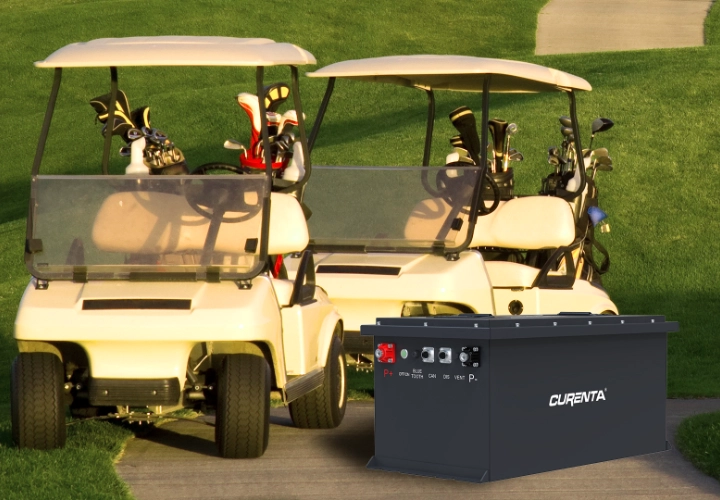
CURENTA BATTERY, INC. focuses on LiFePO4 battery manufacturing and battery system solutions for energy storage and motive power applications. With more than 15 years of industry experience, the company supports customers in applications including EVs, household ESS, lead-acid battery replacement, solar battery systems, and golf cart batteries.
Its local warehouse and maintenance team in the United States and Europe provide additional support for customers in these markets.
The company also offers a 10-year warranty commitment and maintains ISO 9001, ISO 14001, and ISO 45001 certifications. Its product-related compliance documentation includes CE, IEC, UKCA, UN38.3, and MSDS, subject to the applicable product model and documentation scope.
For fleet operators evaluating lithium battery replacement, working with a manufacturer that can provide technical information, product selection assistance, and after-sales support can make the transition easier to manage.
14. Common Mistakes to Avoid When Replacing Lead-Acid Batteries with Lithium
Even a technically suitable battery can produce disappointing results if the replacement project is not properly planned.
The following mistakes are worth avoiding.
Selecting a Battery Based Only on Amp-Hour Ratings
A 100Ah lithium battery does not provide the same usable energy as a 100Ah lead-acid battery under every operating condition.
Fleet managers should compare nominal energy, usable capacity, voltage range, and discharge limits.
Ignoring Peak Current Requirements
A battery may have sufficient capacity for daily energy consumption but still fail to support the equipment's peak current demand.
Always verify continuous and peak discharge specifications.
Reusing an Incompatible Charger
An unsuitable lead-acid charger can cause charging problems.
Confirm charging voltage, current, charging profile, and BMS compatibility before installation.
Overlooking Low-Temperature Charging
Cold-weather operation requires particular attention.
If the battery cannot safely accept a charge below a specified temperature, the charging system must prevent charging under those conditions or provide an approved heating solution.
Choosing the Cheapest Available Battery
A low purchase price does not necessarily indicate a good long-term investment.
Insufficient discharge capability, poor BMS design, limited product documentation, and inadequate after-sales support can increase the overall cost of ownership.
Replacing the Entire Fleet Without Testing
A pilot installation helps identify technical compatibility issues before they affect every vehicle.
For larger fleets, testing a representative group of vehicles is a practical way to reduce conversion risks.
Ignoring Warranty Conditions
Fleet operators should understand how warranty coverage applies to commercial applications, operating cycles, charging conditions, and capacity degradation.
Clear documentation is essential when evaluating long-term purchasing value.
15. A Practical Checklist Before Purchasing LiFePO4 Replacement Batteries
Before approving a battery replacement project, fleet managers and procurement teams can use the following checklist.
Electrical compatibility
Confirm the required nominal system voltage.
Verify the operating voltage range.
Check continuous and peak discharge current.
Confirm compatibility with the vehicle controller.
Verify terminal configuration and polarity.
Battery capacity
Calculate daily energy consumption.
Compare usable capacity rather than nominal Ah alone.
Account for operating hours and vehicle workload.
Include an appropriate energy reserve.
Confirm the manufacturer's cycle-life test conditions.
Charging system
Verify lithium charging compatibility.
Check charger output voltage and current.
Confirm the charging profile.
Evaluate opportunity charging requirements.
Check whether charger-to-BMS communication is necessary.
Installation
Measure battery compartment dimensions.
Confirm mounting arrangements.
Check cable sizes and terminal accessibility.
Evaluate weight distribution.
Review electrical protection requirements.
Environmental conditions
Confirm operating temperature limits.
Check low-temperature charging protection.
Evaluate enclosure protection.
Consider vibration and moisture exposure.
Review ventilation and installation requirements.
Manufacturer and after-sales support
Verify manufacturing experience.
Request product technical specifications.
Review applicable certifications and test reports.
Check warranty coverage.
Confirm technical support availability.
Evaluate spare parts and local service arrangements.
Completing this checklist before purchasing can help reduce compatibility problems and prevent unnecessary project costs.
16. Is Replacing Lead-Acid Batteries with Lithium the Right Decision for Every Fleet?
Although LiFePO4 batteries offer several advantages, replacing lead-acid batteries is not automatically the best decision for every fleet.
The economic benefits depend on equipment utilization, operating hours, battery replacement frequency, maintenance expenses, charging infrastructure, and expected service life.
For fleets with low daily utilization, limited charging requirements, and relatively inexpensive battery maintenance, continuing to use lead-acid batteries may remain a reasonable option.
For fleets with intensive daily use, multiple operating shifts, frequent charging requirements, and high maintenance costs, lithium battery replacement may provide a stronger business case.
The following applications are particularly worth evaluating.
Golf Courses and Resorts
Golf cart fleets often operate for extended periods and need reliable battery performance throughout the day.
LiFePO4 batteries can help reduce charging downtime and routine battery maintenance while providing more usable capacity.
Warehouses and Distribution Centers
Material-handling equipment may operate across multiple shifts.
Faster charging and the ability to use approved opportunity charging can help improve vehicle availability.
Industrial Facilities
Industrial utility vehicles and electric transport equipment may operate under demanding conditions.
Battery selection should prioritize discharge capability, mechanical durability, environmental protection, and compatibility with the equipment's electrical system.
Commercial Transportation
Electric utility vehicles and small commercial fleets may benefit from reduced battery weight and longer service life.
However, battery capacity, driving range, charging infrastructure, and vehicle controller compatibility must be evaluated carefully.
Solar and Backup Power Applications
Some businesses also use LiFePO4 batteries for solar energy storage and backup power.
Although these applications share the same battery chemistry, stationary energy storage systems have different operating requirements from motive power batteries.
Fleet operators should select a product specifically designed for the intended application rather than assuming that all LiFePO4 batteries are interchangeable.
Conclusion: Make Battery Replacement a Long-Term Fleet Investment
Replacing lead-acid batteries with lithium is a technical and operational decision that should be based on more than the initial purchase price.
For fleet operators, the most important considerations include usable capacity, equipment compatibility, charging infrastructure, BMS protection, environmental conditions, installation requirements, warranty coverage, and total cost of ownership.
LiFePO4 batteries can provide meaningful advantages in applications where equipment operates frequently, charging time affects productivity, and routine battery maintenance creates additional labor costs.
However, successful conversion depends on selecting the correct battery specifications and ensuring that the complete electrical system is compatible.
Before making a fleet-wide investment, operators should audit existing equipment, calculate actual energy consumption, evaluate charging requirements, and conduct a pilot installation. They should also work with a manufacturer capable of providing detailed technical documentation and reliable after-sales support.
CURENTA BATTERY, INC. specializes in LiFePO4 battery manufacturing and battery system solutions for motive power, EV, household ESS, solar energy storage, and lead-acid battery replacement applications. With more than 15 years of industry experience, local warehouse and maintenance support in the United States and Europe, and a 10-year warranty commitment, CURENTA BATTERY works with customers seeking dependable battery solutions for different operating requirements.
For fleet operators planning to upgrade from lead-acid to lithium, selecting the right battery system is an important step toward improving equipment availability, simplifying maintenance, and building a more efficient long-term fleet operation.
To learn more about LiFePO4 battery solutions for golf carts, electric vehicles, and commercial fleet applications, visit CURENTA BATTERY and discuss your battery requirements with its technical team.

 English
 German
 Czech
 French
 Italian
 Hungarian
 Russian
 Japanese
 Korean
 Arabic
 Spanish
 Portuguese
 Danish


 WhatsApp