Residential energy storage has moved from a niche technology to an important part of modern home energy management. As more households install rooftop solar, seek greater energy independence, or need reliable backup power, the battery itself has become a critical component of the overall system. Choosing the right chemistry is therefore not simply a matter of comparing nominal capacity. Homeowners, installers, distributors, and energy-system integrators need to consider safety, cycle life, operating stability, maintenance requirements, usable capacity, total ownership cost, and expected service life.
Among the available rechargeable battery chemistries, lithium iron phosphate, commonly known as LiFePO4 or LFP, has gained strong attention for residential applications. A LiFePO4 battery offers a combination of thermal stability, long cycle life, relatively low maintenance requirements, and predictable operating characteristics that make it particularly suitable for stationary energy storage.
For residential energy storage, these characteristics matter because a home battery is expected to operate repeatedly over many years. Unlike a portable device battery that may be charged occasionally, a home battery storage system can experience frequent charge and discharge cycles as it stores excess solar energy during the day and supplies electricity during the evening or during periods of insufficient generation. The battery must therefore withstand repeated operation while maintaining dependable performance.
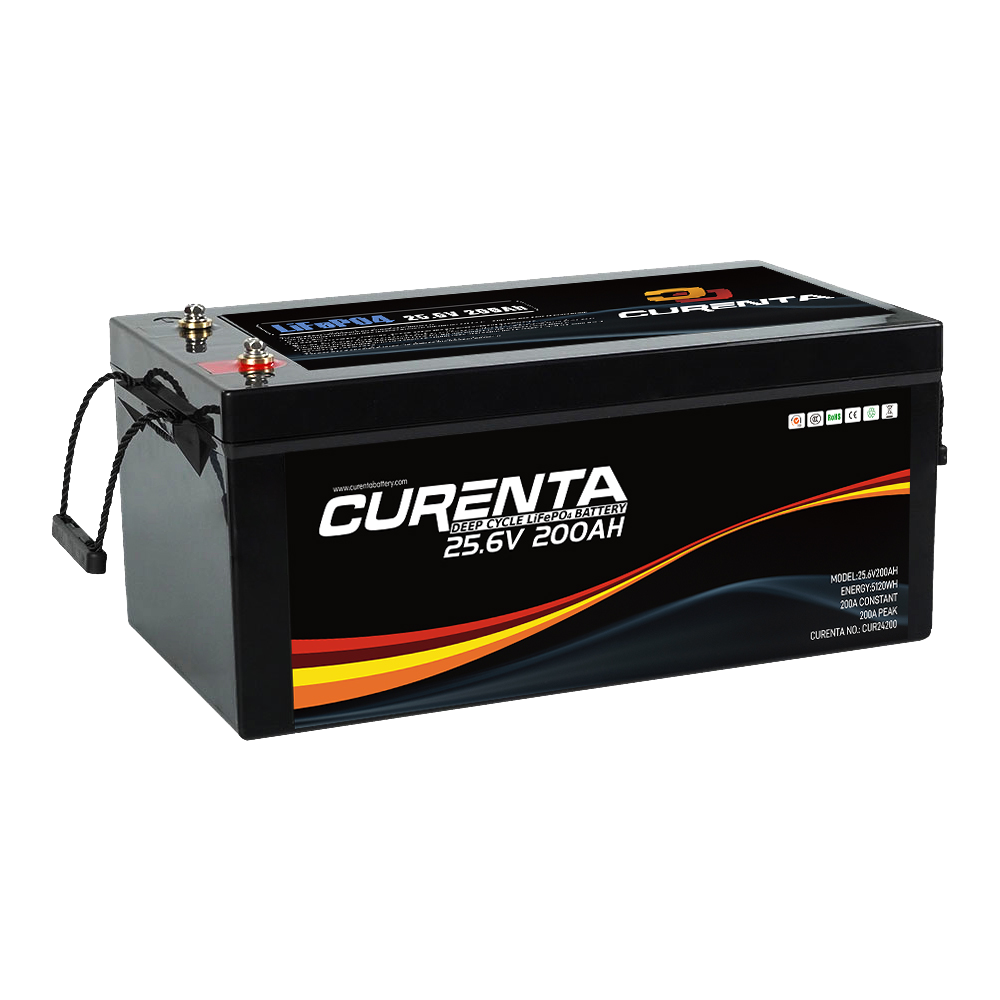
CURENTA BATTERY, INC. has more than 15 years of experience in energy storage systems and motivation power applications and focuses on LiFePO4 battery systems for different energy-storage and power requirements. Its product portfolio covers applications including household energy storage, EV systems, lead-acid battery replacement, solar battery systems, and other battery-powered applications. The company also maintains local warehouse and maintenance capabilities in the USA and Europe and provides battery system solutions for international and local customers.
This article examines why LFP chemistry is increasingly considered a practical choice for residential energy storage, with particular attention to safety, cycle life, stability, maintenance, and long-term value.
What Is a LiFePO4 Battery?
A LiFePO4 battery is a lithium-ion battery that uses lithium iron phosphate as the cathode material. The chemistry is different from other lithium-ion technologies, particularly those using nickel-rich or cobalt-containing cathode materials.
The distinction is important because battery chemistry influences more than energy density. It also affects thermal behavior, cycle life, operating characteristics, system design, and maintenance requirements.
In residential energy storage, maximum energy density is not always the most important design objective. A home battery is normally installed in a fixed location where physical space is less restrictive than it is in a smartphone, laptop, or electric vehicle. As a result, the advantages of a chemistry with strong durability and thermal stability can outweigh the advantage of achieving the highest possible energy density.
A typical home energy storage system may be connected to rooftop photovoltaic panels, an inverter, the household electrical distribution system, and sometimes the utility grid. The battery stores electrical energy and makes it available when required. For example, during daylight hours, solar generation may exceed household demand. Instead of sending all surplus energy elsewhere, the system can direct some of that energy into the battery. Later, when solar production falls, stored energy can be used to support household loads.
This operating pattern places continuous demands on the battery. The system may charge and discharge every day, depending on the energy strategy and local conditions. Consequently, the battery's ability to handle repeated cycling becomes a major consideration.
Why Battery Chemistry Matters in Residential Energy Storage
It is tempting to evaluate batteries primarily according to capacity, voltage, or initial purchase cost. However, these specifications only describe part of the system.
Two batteries with similar nominal capacity can have very different practical characteristics. One may be designed primarily for high power output, another for long service life, and another for applications where low weight is critical. Residential storage generally prioritizes reliability and predictable long-term operation.
The battery chemistry influences several important factors:
Thermal and chemical stability
Expected cycle life
Usable energy over the operating period
Charge and discharge behavior
Maintenance requirements
System protection requirements
Long-term capacity retention
Total cost of ownership
For this reason, selecting a battery for residential energy storage requires looking beyond the nameplate capacity.
A 10 kWh battery, for example, should not automatically be considered equivalent to another 10 kWh battery simply because the nominal figures match. The actual value depends on how the system is operated, how much of the nominal capacity can be practically used, how frequently it cycles, how the battery is managed, and how its capacity changes over time.
This is one reason LiFePO4 batteries have attracted attention in stationary storage. Their characteristics align well with the operational requirements of a home battery storage system.
1. Safety Is a Major Advantage of LFP Chemistry
Safety is one of the first issues that should be evaluated when selecting a residential battery.
A battery installed in a home operates close to people, electrical equipment, building materials, and other household assets. It may be installed in a garage, utility room, equipment area, or another designated location. Therefore, battery safety cannot be treated as a secondary consideration.
LiFePO4 chemistry is widely recognized for its strong thermal and chemical stability compared with several other lithium-ion chemistries. The phosphate-based cathode structure is relatively stable, which contributes to the chemistry's suitability for stationary energy storage.
This does not mean that an LFP battery is inherently risk-free. Every rechargeable battery is an energy-storage device and must be designed, installed, protected, and operated correctly. Electrical faults, physical damage, inappropriate charging, excessive temperature, manufacturing defects, or incorrect system configuration can create risks regardless of chemistry.
The practical advantage of LiFePO4 is that the chemistry provides a favorable foundation for a safe battery system.
A properly engineered LiFePO4 battery system normally incorporates additional layers of protection. These can include a battery management system, overcharge protection, over-discharge protection, overcurrent protection, temperature monitoring, cell balancing, and appropriate electrical isolation.
The battery management system is particularly important. The BMS monitors individual cells or cell groups and helps keep the battery within defined electrical and thermal operating limits. Depending on the system design, it can also communicate with the inverter or energy management system.
For residential applications, this combination of stable chemistry and electronic protection is valuable. The objective is not simply to select a safe cell chemistry but to build a complete battery system in which the cells, BMS, enclosure, electrical protection, inverter interface, and installation environment work together.
2. Long Cycle Life Makes LFP Suitable for Daily Energy Storage
A home battery storage system can cycle frequently.
Consider a household with solar panels. During the day, photovoltaic generation may exceed immediate household consumption. The battery charges using surplus energy. In the evening, solar generation decreases or stops while household demand continues. The battery then discharges to support the load.
This can create a charge-discharge cycle on a regular basis.
For this reason, cycle life is one of the most important specifications for residential energy storage.
Cycle life refers broadly to the number of charge-discharge cycles a battery can complete while maintaining a defined level of performance. However, cycle-life figures should always be interpreted carefully because test conditions matter. Depth of discharge, charge and discharge rates, temperature, voltage limits, rest periods, and the manufacturer's end-of-life definition can all influence the result.
LiFePO4 chemistry is known for its strong cycle-life characteristics. This makes it particularly attractive when a battery is expected to operate repeatedly over an extended period.
For a home energy storage system, long cycle life can provide several practical benefits.
First, it can reduce the frequency with which the battery needs to be replaced. A battery that maintains useful performance through many operating cycles can support a longer service period.
Second, longer cycle life can improve the economics of storing solar energy. The system is not simply purchasing a battery for occasional emergency backup. It may be using that battery hundreds or thousands of times throughout its operating life. The more effectively the battery handles repeated cycling, the more value the owner can obtain from the installed system.
Third, long cycle life can make system planning easier. Installers and system integrators can design the battery around a predictable operating strategy rather than treating the battery as a short-term component.
This is particularly relevant for solar-plus-storage applications, where the battery may be intentionally cycled on a regular schedule.
3. LFP Provides Stable Performance for Repeated Operation
Residential storage is not normally a single-use application.
The battery needs to handle changing loads, variable solar production, different charging conditions, and seasonal changes. A home energy system may experience light cycling on some days and deeper cycling on others.
This creates a need for stable and predictable battery behavior.
LiFePO4 chemistry is well suited to this type of application because it is designed around durability and stable electrochemical behavior rather than simply maximizing energy density.
For system designers, stable performance can simplify the process of developing charging and discharging strategies. The battery can be integrated with an inverter and energy management system to support applications such as solar self-consumption, backup power, peak-load management, and other residential energy strategies.
Stable operation is also important from a user perspective. Most homeowners do not want to continuously monitor the battery. They expect the energy storage system to perform its intended function automatically.
That means the system should be designed so that the battery management system, inverter, and control logic handle routine operating decisions without requiring daily intervention.
4. Lower Maintenance Requirements Are Valuable for Homes
One of the practical differences between modern lithium battery systems and traditional lead-acid systems is maintenance.
Lead-acid batteries have been widely used for backup power and energy storage for decades. They remain suitable for many applications, but certain types can require more attention to installation conditions, charging behavior, ventilation, and maintenance.
LiFePO4 batteries generally require less routine maintenance.
There is no need for users to perform traditional electrolyte maintenance on a sealed lithium battery system. The battery management system can monitor important operating parameters automatically, while the system's electronics manage many protective functions.
Lower maintenance does not mean zero maintenance.
A professional residential energy storage installation should still be inspected according to the requirements of the system manufacturer, installer, and applicable local standards. Electrical connections, communication interfaces, ventilation or thermal-management arrangements, enclosure condition, and system alarms should be checked as appropriate.
However, the reduction in routine battery maintenance can be a significant benefit for residential users.
For installers and distributors, this can also reduce the amount of ongoing service work associated with normal operation. A battery system that is designed for low-maintenance operation can be easier to deploy across a large number of residential projects.
5. Long-Term Value Is More Important Than Initial Battery Cost
The cheapest battery is not necessarily the most economical battery.
Residential energy storage should be evaluated over its expected operating period. A battery that costs less initially but requires earlier replacement may ultimately cost more than a higher-quality battery with longer useful life.
This is where total cost of ownership becomes important.
A basic total-cost assessment can consider:
Initial battery and system cost
Installation cost
Expected operating life
Usable capacity
Cycle frequency
Energy throughput
Maintenance requirements
Warranty coverage
Potential replacement cost
System efficiency and operating losses
The exact economics vary according to the installation, electricity rates, solar generation profile, battery utilization, financing structure, and local energy policies. Therefore, it is not appropriate to assume that every household will achieve the same financial return.
However, the principle remains straightforward: residential storage is a long-term infrastructure investment, so battery durability matters.
A LiFePO4 battery can offer strong long-term value when its long cycle life, low maintenance requirements, and stable operation are aligned with the intended application.
6. LiFePO4 Works Well With Solar Battery Systems
Solar energy is one of the most common applications for residential battery storage.
Photovoltaic generation is inherently variable. Solar panels generate electricity during daylight hours, but household electricity demand does not necessarily follow the same pattern.
A family may produce more electricity than it consumes at noon but require considerably more electricity in the evening.
A battery provides a way to shift part of the generated energy from one period to another.
For example, a simplified daily operating pattern could look like this:
During the morning, solar generation begins to increase and household demand is supplied partly by photovoltaic power.
Around midday, solar generation may exceed household consumption. The surplus can be directed to the battery.
In the afternoon, the battery may continue charging depending on solar production and household demand.
During the evening, solar production falls while household demand may increase because lighting, cooking, air conditioning, entertainment equipment, and other loads are active.
The battery can then discharge stored energy to support selected or general household loads, depending on system configuration.
This repeated daily operation makes battery cycle life particularly relevant.
A LiFePO4 battery can therefore be a practical match for a solar battery system where repeated charging and discharging is expected.
7. Home Battery Storage Can Improve Energy Utilization
The value of a home battery storage system is not limited to backup power.
Depending on local electricity tariffs and system configuration, storage can help homeowners make better use of locally generated energy.
For a solar-equipped home, excess electricity can be stored instead of being immediately exported or curtailed, depending on the local grid arrangement. The stored energy can then be used later.
This can increase the proportion of solar electricity consumed within the property.
The actual benefit depends on the household's consumption profile, solar system size, battery capacity, electricity tariff, export compensation rules, and control strategy. A battery that is too small may not capture enough surplus energy, while a battery that is substantially oversized may not be fully utilized.
This is why battery sizing should be based on real load data and operating objectives rather than simply selecting the largest available capacity.
CURENTA BATTERY focuses on professional battery system solutions for applications including household ESS and solar battery systems. For system integrators and distributors, this application-oriented approach is important because the battery should be evaluated as part of a complete energy storage system rather than as an isolated component.
8. Temperature Stability Matters in Residential Installations
Battery performance is affected by temperature.
Very high or very low temperatures can influence charging, discharging, available capacity, internal resistance, and long-term battery aging. Therefore, the installation environment should always be considered during system design.
LiFePO4 chemistry has favorable thermal characteristics, but it still requires appropriate operating conditions.
A residential battery should be installed according to the manufacturer's specifications. The location should provide suitable environmental conditions, adequate clearance, and appropriate protection from excessive heat, moisture, physical damage, and other hazards.
The battery management system can monitor temperature and help prevent operation outside specified limits. In some systems, thermal management may also be used to maintain the battery within a preferred operating range.
This is an important distinction: good battery chemistry does not eliminate the need for good system engineering.
The strongest residential energy storage solution combines stable battery chemistry with correct installation, appropriate electrical protection, intelligent battery management, and proper operating limits.
9. The Battery Management System Is a Critical Part of the Solution
When discussing LiFePO4 batteries, it is easy to focus entirely on the cells. In reality, the battery management system is equally important to the practical performance of a battery pack.
A BMS can perform several functions, depending on system design:
Monitor cell voltage
Monitor battery temperature
Control or limit charging
Control or limit discharging
Protect against overcurrent
Protect against overvoltage
Protect against excessive discharge
Balance cells
Monitor system status
Communicate with external equipment
Cell balancing is particularly useful because individual cells do not always behave identically. Differences in capacity, internal resistance, temperature, and aging can cause cell voltages to diverge.
A properly designed BMS helps keep the cells operating within an appropriate range.
For residential systems, the BMS also plays an important role in communication with the inverter. Compatibility between battery communication protocols, inverter requirements, voltage ranges, current limits, and control logic should be verified before installation.
Therefore, buyers should not evaluate a LiFePO4 battery only by its cell chemistry. The quality of the complete battery system matters.
10. LFP Can Be a Practical Alternative to Lead-Acid Storage
Lead-acid batteries have historically been used in backup power, solar systems, recreational vehicles, telecommunications, and other applications.
However, residential energy storage places increasing emphasis on cycle life, usable energy, maintenance, system footprint, and long-term reliability.
LiFePO4 batteries can provide several advantages in these areas.
One important difference is usable capacity. Battery manufacturers specify capacity under defined conditions, but the amount of energy that can be practically used depends on the permitted depth of discharge and system control strategy.
Another difference is cycle life. LiFePO4 chemistry is generally well suited to repeated cycling, whereas lead-acid systems can experience more significant degradation when subjected to frequent deep cycling.
Maintenance is another consideration. Lithium battery systems can reduce routine maintenance requirements compared with traditional battery technologies.
For customers replacing an existing lead-acid battery system, however, compatibility must be evaluated carefully. Voltage, charging parameters, physical dimensions, current requirements, BMS communication, inverter compatibility, and installation requirements all need to be considered.
A LiFePO4 battery should not be treated as a simple drop-in replacement unless the entire system is confirmed to be compatible.
11. Capacity Selection Should Match the Household Load
A common mistake in residential storage projects is selecting battery capacity based solely on the desired backup time without examining the actual load.
For example, a home may have several high-power appliances, but not all of them need to operate simultaneously during a power outage.
The first step is therefore to identify critical loads.
Typical critical loads might include:
Refrigerators and freezers
Lighting
Internet equipment
Security systems
Heating or cooling equipment
Medical or accessibility equipment where applicable
Selected kitchen appliances
Computers and communication equipment
Large resistive heating loads, electric water heaters, air-conditioning systems, pumps, and electric vehicle chargers can significantly increase power requirements.
Energy capacity and power output are also different specifications.
Capacity, normally expressed in kWh, indicates how much energy the battery can store under defined conditions.
Power, normally expressed in kW, indicates how much power the battery system can deliver at a given time.
A battery may have substantial energy capacity but still require careful assessment of its continuous and peak power capability.
For residential energy storage, both parameters should therefore be matched to the application.
12. Depth of Discharge Influences Battery Life and Usable Energy
Depth of discharge, commonly abbreviated as DoD, describes how much of the battery's available capacity is used during a discharge cycle.
For example, using a larger portion of a battery's capacity during each cycle generally places different demands on the battery than using a smaller portion.
Battery manufacturers establish recommended operating windows based on their cell chemistry and system design. Users should follow those specifications rather than assuming that maximum theoretical capacity should always be used.
A good residential energy storage system balances usable energy against long-term battery health.
Modern battery management systems can help control operating limits automatically. This makes the system easier for homeowners to use because the battery does not require manual adjustment for every cycle.
For system integrators, DoD should be incorporated into system sizing calculations and expected energy throughput models.
13. Warranty Is Part of the Long-Term Value Equation
A residential battery represents a significant equipment investment, so warranty terms should be considered alongside technical specifications.
Warranty conditions vary among manufacturers. Buyers should examine the warranty period, covered components, operating conditions, cycle limitations, capacity-retention requirements, installation requirements, and claim procedures.
CURENTA BATTERY states that it provides a 10-year warranty and focuses on quality and reliability across its battery system solutions.
A warranty does not replace proper engineering or maintenance. Instead, it provides additional support when the product is used within the manufacturer's specified conditions.
For distributors and system integrators, warranty support is also an important part of supplier evaluation. A technically capable battery supplier should be able to provide product documentation, technical support, troubleshooting assistance, and appropriate after-sales service.
14. Certifications Help Buyers Evaluate Battery Systems
Residential battery storage systems must satisfy applicable safety and transportation requirements.
Certification does not mean that a product is suitable for every installation, but it provides important information about the standards and testing associated with the product.
CURENTA BATTERY states that its quality management and environmental systems are certified to ISO9001, ISO14001, and ISO45001. Its products have also passed certifications or compliance requirements including CE, IEC, UKCA, UN38.3, and MSDS documentation.
For international buyers, this type of documentation can be particularly important.
UN38.3, for example, is associated with the transport testing requirements for lithium batteries. CE and UKCA relate to applicable product conformity frameworks in European and UK markets. IEC standards can apply to particular battery or electrical-system requirements.
However, buyers should always verify the exact certificate, standard, test report, product model, and applicable market requirements rather than relying solely on a general statement that a product is "certified."
For B2B procurement, documentation quality is an important part of supplier evaluation.
15. Residential Storage Requires More Than a Battery Pack
A complete residential energy storage system can include multiple components:
Battery modules
Battery management system
Inverter or hybrid inverter
Energy management system
Switchgear and protection devices
Monitoring and communication equipment
Cabling and connectors
Mounting or enclosure components
Solar photovoltaic system
Grid connection equipment
The battery must be compatible with the rest of the system.
For example, the inverter must support the battery's voltage range and current requirements. Communication between the inverter and BMS may also be required. Protection devices must be appropriately selected for the system's electrical characteristics.
This means that battery selection should ideally occur as part of system-level engineering.
For homeowners, this is one reason to work with qualified installers. For distributors and B2B buyers, it means that technical support from the battery supplier can be as important as the battery itself.
16. LFP Is Particularly Attractive for Backup Power
Residential backup power is another important application.
Power outages can affect lighting, refrigeration, communications, heating and cooling, security equipment, and other essential household functions. A properly designed battery storage system can provide backup electricity during a grid interruption.
LiFePO4 chemistry is suitable for this application because backup batteries may remain at relatively high states of charge for extended periods and then need to provide reliable power when required.
The system must still be designed correctly.
Backup capacity depends on the battery size and the connected loads. A system intended to operate only essential appliances will have different requirements from a system intended to power most of a house.
The inverter's transfer behavior, backup output rating, surge capability, and connection architecture also matter.
The battery is therefore one part of the backup solution, not the entire solution.
17. Residential Energy Storage Is Becoming More Application-Specific
The residential storage market is becoming more sophisticated.
Instead of using one generic battery for every household, system designers increasingly consider the actual application.
A home in a region with frequent outages may prioritize backup capability.
A home with substantial solar generation may prioritize daily cycling and self-consumption.
A home in an area with time-of-use electricity rates may use storage to shift electricity consumption toward lower-cost periods.
A larger property may require higher power output and greater energy capacity.
A smaller household may benefit from a compact system with moderate capacity.
These differences mean that the most appropriate LiFePO4 battery is determined not only by chemistry but also by voltage, capacity, power output, communication capabilities, enclosure design, installation conditions, and operating strategy.
18. How to Evaluate a LiFePO4 Battery for a Residential Project
For B2B buyers, installers, and system integrators, a structured evaluation can prevent many problems later.
Start with the application.
Is the battery intended for solar self-consumption, backup power, off-grid use, peak-load management, or a combination of these applications?
Then determine the required energy capacity.
Estimate daily energy consumption, identify critical loads, and assess how much solar energy is available for charging.
Next, evaluate power requirements.
Check both continuous load and peak or surge requirements.
After that, examine battery specifications.
Important parameters can include:
Nominal voltage
Nominal capacity
Usable capacity
Recommended depth of discharge
Continuous charge current
Continuous discharge current
Peak discharge capability
Operating temperature range
Cycle-life test conditions
Communication interfaces
BMS functions
Enclosure rating
Installation orientation
Warranty terms
Finally, evaluate the supplier.
Look at technical experience, quality systems, certifications, documentation, warranty support, spare-parts availability, after-sales service, and logistics capabilities.
This approach provides a much clearer picture than comparing battery prices alone.
19. Why Long-Term Reliability Matters to B2B Buyers
For a residential battery distributor or energy storage integrator, the performance of the battery affects more than the individual installation.
If a battery experiences repeated failures, communication problems, unexpected shutdowns, or premature capacity degradation, the resulting service costs can affect the profitability of the entire project.
Technical support and after-sales response therefore become important supplier-selection criteria.
CURENTA BATTERY has more than 15 years of experience in energy storage systems and motivation power applications and maintains local warehouse and maintenance teams in the USA and Europe.
For international customers, local service capability can reduce logistical delays and make warranty or maintenance processes more manageable.
This is particularly relevant as residential energy storage systems become more widely deployed across different markets.
20. Maintenance Still Matters Even With an LFP Battery
The lower maintenance requirements of lithium batteries should not lead users to ignore system condition.
A residential energy storage system should be monitored for abnormal alarms, unexpected capacity changes, communication failures, unusual temperatures, physical damage, or other signs of malfunction.
Installers should follow the battery manufacturer's recommended inspection and maintenance procedures.
The surrounding environment also matters. Excessive heat, water exposure, dust, corrosive environments, or physical impact can affect equipment performance even when the underlying battery chemistry is highly stable.
Routine monitoring is therefore a preventive measure.
For commercial distributors and installers, remote monitoring can also help identify potential problems before they become major service events.
21. What Makes LFP Different From Other Lithium-Ion Chemistries?
Lithium-ion is a broad category rather than a single chemistry.
Different lithium-ion chemistries are optimized for different requirements.
Some chemistries prioritize energy density. Others prioritize power capability, cost, cycle life, or thermal characteristics.
LiFePO4 is particularly attractive for stationary energy storage because residential systems can often accept somewhat greater physical size in exchange for characteristics such as long cycle life and thermal stability.
This is a key reason the chemistry has become prominent in energy storage.
The "best" lithium battery chemistry depends on the application. A high-performance mobile device, an electric vehicle, and a stationary home battery do not necessarily require identical battery characteristics.
For residential energy storage, durability and safety are often more important than achieving the smallest possible battery enclosure.
22. How LFP Supports the Long-Term Operation of a Home Battery Storage System
A home battery storage system should be viewed as long-term infrastructure.
The system may be expected to operate through many seasons and thousands of operating hours. Solar production varies throughout the year, while household electricity consumption changes according to weather, occupancy, appliances, and lifestyle.
The battery must therefore tolerate changing operating conditions while maintaining useful performance.
LiFePO4 chemistry is well suited to this requirement because it combines a durable chemistry with a battery architecture that can incorporate sophisticated monitoring and protection.
The result is a system designed around predictable, repeated energy storage rather than short-term high-intensity use.
This makes LFP especially relevant for homeowners who want to use their battery every day rather than keeping it solely for emergency backup.
23. The Environmental and Resource Perspective
Battery selection also has an environmental dimension.
Energy storage itself can support greater utilization of renewable electricity, but battery production and eventual recycling also need to be considered.
LiFePO4 does not eliminate the environmental impacts associated with battery production. Manufacturing cells requires raw materials, energy, transportation, and industrial processing.
However, long service life can be valuable because a battery that remains useful for a longer period does not need to be replaced as frequently.
This reinforces the importance of looking at battery durability rather than focusing only on the initial product specification.
Responsible battery sourcing should also consider end-of-life handling, transportation requirements, recycling infrastructure, and applicable local regulations.
24. Common Mistakes When Choosing a Residential LiFePO4 Battery
Several mistakes occur repeatedly when residential storage systems are selected without sufficient technical analysis.
Choosing only by capacity
A larger kWh rating does not automatically mean a better system. The battery must match actual load requirements and expected operating conditions.
Ignoring power requirements
Energy capacity and power output are different. A battery may have sufficient stored energy but insufficient instantaneous power for certain loads.
Selecting a battery without checking inverter compatibility
Voltage ranges, current limits, communication protocols, and charging parameters must be compatible.
Ignoring installation conditions
Temperature, moisture, ventilation, physical protection, and accessibility can affect system performance.
Comparing only the initial purchase price
A lower initial cost can be misleading if the battery has shorter useful life or higher maintenance requirements.
Assuming all LiFePO4 batteries are identical
Cell quality, BMS design, system integration, quality control, documentation, and supplier support can differ significantly between products.
Overlooking warranty conditions
Warranty length alone is not enough. The operating conditions and capacity-retention requirements should also be reviewed.
25. A Practical Procurement Checklist for B2B Buyers
When purchasing LiFePO4 batteries for residential energy storage projects, buyers can organize supplier evaluation around several categories.
First, confirm the basic battery specification.
Verify nominal voltage, capacity, energy, current limits, dimensions, weight, and operating temperature.
Second, review battery management functions.
Check protection features, balancing functions, monitoring capability, communication interfaces, and alarm behavior.
Third, examine cycle-life data.
Ask for test conditions rather than accepting an isolated cycle-life number. The test depth of discharge, temperature, current rate, and end-of-life criterion should be understood.
Fourth, verify certifications and documentation.
Confirm that the documentation applies to the specific battery model and target market.
Fifth, evaluate warranty support.
Review the warranty period, coverage, exclusions, installation requirements, and claim process.
Sixth, assess logistics.
For international projects, transportation requirements for lithium batteries can affect project schedules and costs. Local warehousing can be useful where available.
Seventh, evaluate technical support.
The ability to obtain accurate configuration information and troubleshooting assistance can be critical during installation and commissioning.
26. Why a 10-Year Perspective Is More Useful Than a 1-Year Perspective
Residential energy storage is a long-term investment.
A one-year evaluation may focus on purchase price and basic performance. A 10-year evaluation asks different questions:
Will the battery still provide useful capacity?
How frequently will it need service?
How many cycles can it support?
How well does it integrate with the inverter?
What happens if the system requires technical support?
Are replacement components available?
What warranty protection is provided?
How does the battery perform under the expected operating profile?
These questions are more relevant to the actual economics of home battery storage.
CURENTA BATTERY states that it provides a 10-year warranty and focuses on quality and reliability. For buyers planning long-term residential energy storage projects, warranty and service support should be evaluated together with battery chemistry and specifications.
27. LiFePO4 and the Future of Residential Energy Storage
The growth of residential solar generation is closely connected with the growth of energy storage.
As solar systems become more common, homeowners increasingly want to use more of the electricity they generate. Battery storage provides a mechanism for shifting energy from periods of high generation to periods of higher demand.
At the same time, concerns about grid reliability have increased interest in backup power.
These trends create a strong use case for durable stationary battery technologies.
LiFePO4 is unlikely to be the right answer for every possible battery application, but its combination of safety characteristics, cycle life, stability, and low maintenance requirements makes it particularly relevant to residential energy storage.
The technology is also supported by a growing ecosystem of inverters, energy management systems, monitoring platforms, and installation practices.
28. Why the Complete System Matters More Than the Cell Chemistry Alone
It is important not to oversimplify the discussion by saying that LiFePO4 chemistry alone guarantees a high-quality energy storage system.
The quality of the cells matters.
But so do the BMS, electrical design, enclosure, thermal management, firmware, communication system, inverter compatibility, production quality control, and installation.
A high-quality battery cell integrated into a poorly designed system may still create operational problems.
Conversely, a well-engineered battery system can make much better use of the underlying advantages of LFP chemistry.
For this reason, B2B buyers should evaluate suppliers as solution providers rather than simply as sources of battery cells or battery packs.
29. The Role of Quality Management in Battery Reliability
Battery reliability begins before the product reaches the installation site.
Manufacturing process control, incoming material inspection, cell matching, assembly quality, electrical testing, BMS programming, finished-product testing, and traceability can all influence final performance.
Quality management systems can help establish consistent procedures across these stages.
CURENTA BATTERY states that it operates with ISO9001, ISO14001, and ISO45001 certifications, covering quality management, environmental management, and occupational health and safety management.
For B2B customers, these systems provide useful evidence that quality and operational processes are being managed within established frameworks.
Nevertheless, buyers should still review product-specific test data, specifications, samples, and references when making procurement decisions.
30. When Is a LiFePO4 Battery the Right Choice for a Home?
A LiFePO4 battery is particularly compelling when the residential energy storage project requires:
Frequent charge and discharge cycles
Long expected service life
Strong thermal stability
Low routine maintenance
Solar energy storage
Daily energy shifting
Backup power
Replacement of frequently cycled lead-acid batteries
Predictable long-term operation
It may be less appropriate when the application places an unusually high priority on minimum weight or maximum energy density and has different system requirements.
The correct choice should always be based on the actual application.
For most stationary residential storage projects, however, the characteristics of LFP align closely with the priorities of homeowners and system integrators.
31. Final Considerations for Homeowners, Installers, and Distributors
The growing adoption of LiFePO4 batteries in residential energy storage is not based on one single advantage.
It is the combination of several characteristics.
Safety matters because the battery is installed in or around a home.
Cycle life matters because the battery may charge and discharge frequently.
Stability matters because homeowners expect predictable operation.
Maintenance matters because most users do not want to perform frequent battery servicing.
Long-term value matters because residential energy storage is a multi-year investment.
System compatibility matters because the battery must communicate and operate correctly with the inverter and other equipment.
Supplier support matters because installation, commissioning, troubleshooting, warranty service, and replacement logistics all affect the real-world ownership experience.
This combination explains why LiFePO4 has become an important chemistry for residential energy storage.
Conclusion
LiFePO4 batteries are becoming a preferred choice for residential energy storage because their characteristics match the practical requirements of long-term stationary battery applications.
A residential battery is expected to store energy safely, cycle repeatedly, operate reliably, require limited routine maintenance, and provide useful performance over many years. LiFePO4 chemistry addresses these requirements with strong thermal and chemical stability, long cycle-life potential, and predictable operating characteristics.
For solar battery systems, these advantages become especially relevant. Solar generation changes throughout the day, while household electricity demand follows a different pattern. A durable battery can bridge that gap by storing surplus electricity and making it available when required.
The long-term value of a home battery storage system should therefore be evaluated through more than its initial purchase price or nominal capacity. Cycle life, usable energy, power capability, operating conditions, BMS design, inverter compatibility, certifications, warranty coverage, and technical support all contribute to the final result.
For B2B customers, installers, distributors, and energy-system integrators, the supplier is equally important. A reliable residential storage solution requires more than battery cells. It requires consistent product quality, appropriate system engineering, documentation, technical support, and after-sales service.
CURENTA BATTERY, INC. brings more than 15 years of experience in energy storage systems and motivation power applications, with a focus on LiFePO4 battery solutions for household ESS, solar battery systems, EV applications, lead-acid battery replacement, golf carts, and other power requirements. The company states that it provides a 10-year warranty and maintains local warehouse and maintenance capabilities in the USA and Europe, supporting customers in both local and international markets.
For organizations evaluating residential energy storage solutions, the key question should not simply be "How much does the battery cost?" A more useful question is: "How reliably can this battery deliver the required energy, cycle after cycle, over its expected service life?"
That is where LiFePO4 chemistry has established its value. By combining safety-oriented chemistry, long cycle-life characteristics, low maintenance requirements, and suitability for repeated energy storage, a LiFePO4 battery can provide a practical foundation for modern residential energy storage systems.
For more information about CURENTA BATTERY's energy storage solutions, visit the company's residential and energy system product range at Energy Storage Systems Solutions.

 English
 German
 Czech
Czech French
 Italian
 Hungarian
 Russian
 Japanese
 Korean
 Arabic
 Spanish
 Portuguese
 Danish
 WhatsApp