In today’s global energy transition, lithium batteries are no longer just components—they are the backbone of electric mobility, renewable energy storage, and industrial electrification. As demand grows, so does scrutiny over quality, safety, and long-term reliability. For B2B buyers, identifying a reliable lithium battery manufacturer China is not just a sourcing decision, but a strategic risk-management choice.
CURENTA BATTERY positions itself in this landscape as a LiFePO4-focused manufacturer with over 15 years of experience in energy storage and motive power systems, serving applications ranging from residential ESS to EVs and industrial equipment.
But beyond marketing language, what actually defines “reliable” in this industry—and how does a manufacturer like CURENTA align with those expectations?
1. What “Reliable Lithium Battery Manufacturer China” Really Means in Practice
In procurement terms, “reliable” is not a branding claim—it is a measurable combination of engineering discipline, compliance, and supply chain execution.
For lithium battery sourcing, buyers typically evaluate reliability across five dimensions:
1. Product safety consistency
Lithium battery failures are rarely random—they are usually linked to poor thermal management, unstable cell sourcing, or weak BMS (Battery Management System) design.
2. Certification compliance
Global B2B markets require strict adherence to standards such as CE, UN38.3, MSDS, ISO9001, and IEC testing frameworks.
3. Cycle life stability
A “cheap” battery often performs well in early cycles but degrades unpredictably after 300–500 cycles. Reliable manufacturers focus on long-cycle chemistry stability, particularly LiFePO4.
4. Manufacturing traceability
Batch tracking, cell origin documentation, and quality control logs are essential for industrial applications.
5. After-sales engineering support
For ESS and EV applications, post-deployment support often determines total cost of ownership more than upfront price.
CURENTA’s positioning as a reliable lithium battery manufacturer China is built around addressing these exact expectations rather than only focusing on product output.
2. CURENTA BATTERY Overview: Industrial Focus and Manufacturing Scope
CURENTA BATTERY, INC is a high-tech enterprise specializing in LiFePO4 lithium battery systems for energy storage and motive power applications.
Unlike consumer-level battery assemblers, its production focus spans:
Residential energy storage systems (ESS)
Commercial & industrial energy storage
Golf cart and low-speed EV batteries
Forklift and industrial motive power systems
Marine and RV energy systems
Lead-acid replacement lithium solutions
This multi-application approach is important: it indicates the company is not dependent on a single market segment, but instead develops modular battery platforms adaptable to different voltage and capacity requirements.
From a manufacturing perspective, scalability across applications is often a key indicator of engineering maturity.
3. Why LiFePO4 Chemistry Matters for Reliability
One of the most important technical decisions behind any reliable lithium battery manufacturer China is chemistry selection.
CURENTA primarily uses LiFePO4 (Lithium Iron Phosphate), which is widely adopted in industrial and storage applications because of its inherent stability.
Key advantages include:
Strong thermal stability under high load conditions
Lower risk of thermal runaway compared to NMC chemistry
Long cycle life (often 3,000–6,000 cycles depending on design)
Better performance in deep discharge applications
Lower degradation rate in partial-state-of-charge operation
This chemistry choice aligns with industrial demand patterns where downtime risk and safety compliance outweigh energy density optimization.
For B2B buyers, this directly translates into lower maintenance costs and more predictable lifecycle planning.
4. Manufacturing Capability and R&D Structure
CURENTA emphasizes internal R&D capability combined with engineering talent experienced in high-performance battery design.
A notable aspect of its structure is the integration of:
Battery system design engineering (pack-level optimization)
BMS development and software logic tuning
Thermal management design for high-load scenarios
Application-specific customization (ESS vs EV vs industrial use)
In the lithium battery industry, manufacturers typically fall into three categories:
Cell producers (chemistry-level manufacturing)
Pack assemblers (integration-focused)
System manufacturers (full solution providers)
CURENTA operates closer to the third category, which is generally more aligned with enterprise and industrial buyers who require integrated system reliability rather than standalone cells.
5. Quality Control Systems and Certification Framework
A defining trait of a reliable lithium battery manufacturer China is how quality control is enforced—not just whether certifications exist.
CURENTA states compliance with key international standards, including:
ISO 9001 (quality management systems)
ISO 14001 (environmental management)
ISO 45001 (occupational health and safety)
CE certification for EU compliance
UN38.3 for transport safety testing
However, what matters in practice is how these systems are implemented:
Typical industrial QC checkpoints include:
Incoming cell grading and impedance matching
Pack-level voltage balancing verification
Charge-discharge cycle stress testing
Vibration and shock simulation tests
Thermal runaway containment validation
Final system integration testing under load
Manufacturers that consistently enforce these stages tend to show lower field failure rates in ESS and mobility deployments.
6. Global Supply Chain Strategy and Local Support
One often overlooked factor in evaluating a reliable lithium battery manufacturer China is international support infrastructure.
CURENTA operates with:
This structure is important for B2B clients because lithium battery systems are not “plug-and-forget” assets. They require:
Firmware updates (BMS tuning)
Replacement modules in case of degradation
Technical troubleshooting for system integration issues
Compliance documentation for insurance and regulatory audits
Without regional support, downtime costs can exceed hardware costs in industrial deployments.
7. Application Engineering: Why Customization Matters
Unlike standardized consumer batteries, industrial lithium systems must be engineered around real-world load profiles.
CURENTA’s model emphasizes customization across:
Voltage architecture (12V / 48V / high-voltage stacks)
Capacity scaling (parallel ESS configurations)
Communication protocols (CAN, RS485 integration)
Mechanical form factors (rack-mounted, wall-mounted, modular stacking)
Environmental adaptation (marine, high-temperature, outdoor enclosures)
This flexibility is critical in B2B environments where system integration is often more complex than the battery itself.
A reliable supplier does not just ship batteries—it delivers integration-ready systems.
8. Common Mistakes Buyers Make When Choosing Suppliers in China
Even experienced procurement teams sometimes misjudge battery suppliers by focusing on the wrong signals.
Common mistakes include:
1. Overweighting price per kWh
Low upfront cost often hides:
2. Ignoring system-level engineering
Battery packs are not standalone units; they are electrochemical systems requiring coordination between hardware and software.
3. Assuming certification equals performance
Certifications confirm compliance, not necessarily long-term reliability under real-world stress.
4. Not validating after-sales capability
Many suppliers lack regional technical support, which becomes critical in industrial deployment.
Manufacturers positioned as a reliable lithium battery manufacturer China differentiate themselves precisely by solving these gaps.
9. Market Positioning: Where CURENTA Fits in the Global Battery Ecosystem
The global lithium battery market is increasingly segmented into:
High-volume EV gigafactory suppliers (e.g., Tier-1 automotive battery makers)
Industrial ESS manufacturers
Mid-scale customized system providers
Low-cost commodity assemblers
CURENTA’s positioning aligns with industrial ESS and motive power segments, where:
Flexibility is more important than scale alone
Reliability outweighs cost optimization
Engineering support is part of the product value
This positioning is particularly relevant for distributors, system integrators, and project developers.
10. Conclusion: Defining True Reliability in Lithium Battery Manufacturing
A reliable lithium battery manufacturer China is not defined by production volume alone, but by a combination of engineering discipline, system integration capability, and long-term support infrastructure.
From an industry standpoint, CURENTA BATTERY reflects several core reliability indicators:
Focus on stable LiFePO4 chemistry
Multi-application industrial design capability
International certification compliance
R&D-driven customization approach
Overseas logistics and support structure
Experience in energy storage and motive power systems
For B2B buyers evaluating long-term partnerships, these factors are often more decisive than short-term pricing advantages.
In a market where lithium battery failures can result in operational downtime, financial loss, or safety risks, reliability is not optional—it is the foundation of procurement strategy.

 English
 German
 Czech
Czech French
 Italian
 Hungarian
 Russian
 Japanese
 Korean
 Arabic
 Spanish
 Portuguese
 Danish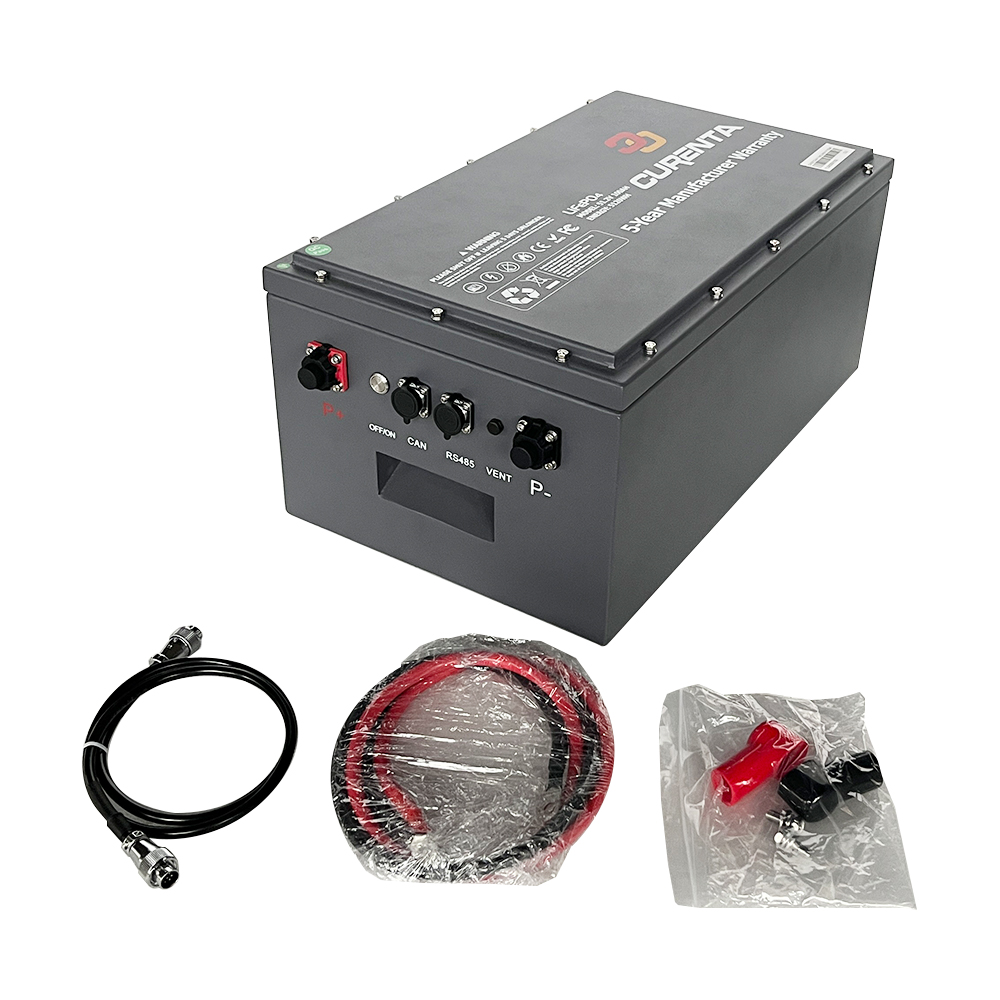


 WhatsApp