Residential solar energy has moved from a niche technology to a practical power solution for homeowners, installers, energy developers, and distributed energy businesses. Solar photovoltaic (PV) systems can generate electricity directly from sunlight, reduce dependence on grid power, and lower household electricity costs. However, one fundamental limitation remains: solar panels only produce electricity when sufficient sunlight is available.
This creates a mismatch between solar generation and household electricity consumption. A typical home may produce its highest amount of solar electricity around midday, while electricity demand can increase in the morning, evening, or at night. Without an effective way to store surplus electricity, part of the solar energy generated during the day may be exported to the grid or curtailed, depending on the local system configuration and utility rules.
This is where solar energy storage becomes increasingly important.
A battery energy storage system (BESS) allows electricity generated by residential PV panels to be stored and used later. Instead of treating solar power as an electricity source that is available only during daylight hours, the combination of PV and battery storage turns it into a more flexible household energy resource.
For residential solar installers, distributors, system integrators, and battery manufacturers, understanding this relationship is essential. Battery storage is not simply an additional component attached to a solar installation. Properly designed, it can change how a residential solar system operates, how much solar energy a household can use directly, and how the system responds to changes in electricity demand and grid conditions.
Why Solar Panels Alone Cannot Meet Residential Energy Demand
The biggest challenge with residential PV is not the ability to generate electricity. Modern solar panels can produce substantial amounts of energy during suitable weather conditions. The challenge is matching when electricity is generated with when electricity is consumed.
Consider a household with a solar PV system installed on its roof.
During a sunny afternoon, the PV array may produce more electricity than the home needs. Appliances, lighting, air conditioning, and other loads may not consume all of the available generation. Depending on the local grid connection and electricity policy, the excess power may be exported to the grid.
Later in the evening, the situation changes. Solar production drops rapidly as sunlight decreases, while household electricity demand may increase. Residents return home, turn on lights, operate kitchen appliances, use heating or cooling equipment, charge electronic devices, or charge an electric vehicle.
The solar panels cannot directly provide enough power once sunlight disappears.
The household therefore needs electricity from another source.
Traditionally, this source has been the utility grid. With a battery system, however, excess electricity generated earlier in the day can be stored and made available when solar generation falls.
This simple shift—from producing electricity to storing electricity—addresses one of the central operational limitations of residential solar.
What Is Solar Energy Storage?
Solar energy storage refers to the use of energy storage technologies to retain electricity generated by solar panels so that it can be used at a later time.
In residential applications, lithium iron phosphate (LiFePO4) batteries have become an important battery chemistry for energy storage systems because they can provide a combination of safety characteristics, cycle performance, and usable energy capacity suitable for many stationary applications.
A typical residential solar battery system may include several major components:
Solar PV modules
Solar inverter or hybrid inverter
Battery modules or battery packs
Battery management system (BMS)
Energy management system (EMS), depending on system design
Protection and electrical equipment
Monitoring and communication equipment
Grid connection and household loads
The PV system generates DC electricity. The inverter manages the conversion between DC and AC power and coordinates electricity flow between the solar array, battery, household loads, and grid.
The battery does not replace the solar panels. Instead, it changes how the electricity generated by the panels can be used.
This distinction is important for system designers and B2B buyers. The value of a storage solution depends not only on battery capacity but also on the compatibility and control of the complete energy system.
How a Residential Solar Battery Solves the Intermittency Problem
Solar generation is inherently variable.
Clouds can reduce PV output within minutes. Weather conditions change throughout the day. Solar production also follows a predictable daily cycle, increasing after sunrise, reaching a peak during the daytime, and falling toward zero after sunset.
Residential electricity consumption does not follow the same pattern.
Battery storage provides a buffer between these two profiles.
During periods when PV generation exceeds household consumption, the battery can charge. When household demand exceeds current PV production, the battery can discharge.
The basic operating logic is straightforward:
Solar generation > household load → charge the battery
Household load > solar generation → discharge the battery
Solar generation + battery output < household load → import electricity from the grid, where available
This does not eliminate the variability of solar generation. Instead, it makes the variability easier to manage.
For example, suppose a residential PV system generates 8 kWh of electricity during a particular afternoon, while the household consumes only 4 kWh during that period. The remaining 4 kWh could potentially be stored in a battery rather than being immediately exported or wasted, subject to system losses, battery state of charge, inverter limits, and local regulations.
Later, when the household needs additional electricity, the stored energy can be discharged.
The result is a better match between solar generation and household consumption.
The Difference Between PV Generation and Solar Energy Availability
One common misconception is that installing more PV capacity automatically solves a home's energy needs.
It does not necessarily do so.
Increasing the number of solar panels increases potential generation, but it does not change the fundamental timing of solar production. A larger PV array can produce more electricity during sunny periods, while the household may still require electricity after sunset.
This is why PV capacity and storage capacity should be considered separately.
PV capacity determines how much solar electricity the system can potentially generate under given conditions.
Battery capacity determines how much energy can be stored.
Battery power rating determines how quickly the battery can charge or discharge.
These parameters have different functions.
For B2B system designers, confusing energy capacity with power capacity can lead to poor system sizing. A battery with a large energy capacity but insufficient discharge power may not adequately support high household loads. Conversely, a battery with high output power but limited energy capacity may discharge quickly during extended periods of high demand.
A complete system design therefore needs to consider both.
Why Residential Solar Batteries Are Becoming More Important
The growth of residential solar is creating a corresponding need for more flexible energy management.
There are several reasons.
1. Solar Generation and Household Demand Often Do Not Match
The first and most obvious reason is load shifting.
Many homes consume electricity outside the hours when their PV systems generate the most power. Battery storage can move a portion of daytime solar production into the evening.
This can increase the amount of solar electricity consumed within the property instead of immediately sending surplus generation elsewhere.
For homeowners, that can improve the practical value of their PV investment.
For installers and system integrators, it creates an opportunity to provide a more complete energy solution rather than a PV-only installation.
2. Electricity Tariffs Can Vary by Time
In markets where electricity prices change according to time of day, storage can become an energy management tool.
A household may generate solar electricity during periods when grid electricity is relatively inexpensive or when solar generation exceeds household demand. The battery can then discharge during periods when grid electricity is more expensive, subject to tariff structures and applicable regulations.
The financial value of this strategy depends heavily on local electricity rates, export compensation, battery efficiency, degradation, installation costs, and operating rules.
Therefore, B2B solar businesses should avoid presenting battery storage as having the same economic return in every market.
The correct approach is to evaluate the local tariff and load profile before selecting battery capacity.
3. Battery Storage Can Increase Energy Independence
A residential solar battery can reduce the household's dependence on grid electricity during certain operating periods.
This does not mean that every solar-plus-storage system can operate independently of the grid. Grid-connected systems need to be designed with appropriate inverter functions, electrical protection, and backup capabilities if backup operation is required.
However, when a system includes suitable backup functionality, stored energy can potentially support selected household loads during a grid outage.
For homeowners who place a high value on power continuity, this can be an important reason to install storage.
For installers, it also means that the system should be designed around the customer's actual backup requirements.
There is a major difference between backing up a refrigerator, lighting, communications equipment, and essential outlets and attempting to power an entire house with high-demand appliances.
Solar Battery System Design Should Start With the Load Profile
One of the most practical lessons for residential solar businesses is that battery sizing should not begin with a simple question such as, "How many kWh of storage should we install?"
The better question is:
When does the household use electricity, and how much electricity does it use?
A load profile provides more useful information.
For example, two homes may each consume 20 kWh per day but have completely different energy patterns.
Home A may use most of its electricity during the daytime. Home B may use a large proportion of its electricity between 5 p.m. and midnight.
Home B is likely to have a stronger reason for using battery storage to shift daytime solar generation into evening consumption.
Other factors also matter:
Daily electricity consumption
Peak household load
Average solar generation
PV system size
Evening and nighttime consumption
Desired backup loads
Grid reliability
Electricity tariff structure
Export compensation
Available installation space
Battery operating temperature
Inverter power rating
Required backup duration
Expected battery cycle frequency
A good solar battery system is therefore not necessarily the largest system.
It is the system that matches the customer's energy behavior and technical requirements.
Battery Capacity vs. Battery Power
For buyers evaluating residential energy storage products, two specifications deserve particular attention: energy capacity and power output.
Battery energy capacity is generally expressed in kilowatt-hours (kWh). It describes how much energy the battery can store under specified conditions.
Battery power is expressed in kilowatts (kW). It indicates how much power the system can deliver or absorb at a given time.
These specifications answer different questions.
If a household needs to operate several appliances simultaneously, the discharge power rating becomes important.
If the household wants to store a large amount of solar energy for evening use, usable energy capacity becomes more important.
A practical design may therefore require a balance between both specifications.
For example, a system intended primarily for evening load shifting may prioritize sufficient usable capacity, while a system designed for backup operation may need stronger attention to inverter and battery discharge power.
Usable Capacity Matters More Than Nominal Capacity
Another important consideration is that nominal battery capacity does not necessarily equal the amount of energy a homeowner can use under normal operating conditions.
Battery systems operate within defined state-of-charge limits. Manufacturers may specify a recommended depth of discharge or usable energy capacity that differs from the nominal energy rating.
System losses also occur through battery charging, discharging, inverter conversion, wiring, and other components.
Therefore, B2B buyers should compare products based on clearly defined usable capacity and operating conditions rather than relying only on the headline kWh figure.
This becomes particularly important when comparing different battery systems across manufacturers.
A meaningful technical comparison should consider:
These details provide a much more accurate picture of system suitability.
Why LiFePO4 Chemistry Is Relevant to Residential Storage
Battery chemistry directly affects the design and operating characteristics of an energy storage product.
LiFePO4, or lithium iron phosphate, is widely used in stationary energy storage applications. It is valued for its combination of thermal stability, cycle characteristics, and suitability for repeated charging and discharging.
For residential systems, battery safety is particularly important because the equipment is installed close to living spaces.
However, battery chemistry alone does not determine system safety.
A reliable energy storage solution also requires appropriate cell selection, battery management, electrical protection, thermal management, enclosure design, manufacturing quality, and system-level testing.
For distributors and installers, this means supplier evaluation should go beyond asking whether a product uses LiFePO4 cells.
The manufacturing process, BMS strategy, certifications, warranty terms, quality control, and after-sales support also need to be assessed.
The Role of the Battery Management System
The Battery Management System is one of the key components inside a modern battery energy storage solution.
The BMS monitors battery operating conditions and helps manage parameters such as voltage, current, temperature, and state of charge.
Depending on system architecture, it can also support cell balancing, fault detection, protection functions, communication with the inverter, and battery status monitoring.
From a B2B perspective, the BMS should be considered part of the product's overall reliability rather than an isolated technical feature.
Compatibility between the battery BMS and inverter is especially important.
A battery with suitable electrical specifications may still create integration problems if its communication protocol is incompatible with the selected inverter or energy management platform.
Therefore, system integrators should confirm communication compatibility before placing large-volume orders.
How Battery Storage Changes Solar System Operation
Without storage, a residential PV system generally follows a relatively simple pattern.
When solar generation is available, household loads consume electricity from the PV system first, with excess power potentially exported to the grid. When solar generation falls below household demand, electricity can be imported from the grid.
Adding a battery introduces another layer of control.
The system can prioritize different operating strategies, such as:
Solar power supplies household loads.
Surplus solar charges the battery.
Once the battery reaches the selected state of charge, excess solar may be exported.
When PV generation falls, the battery can supply household loads.
Grid electricity can provide additional energy when PV and battery output are insufficient.
More advanced systems can use an EMS to optimize these decisions according to electricity tariffs, forecast solar generation, battery state of charge, household demand, and backup requirements.
This makes the residential solar installation more dynamic.
Solar Energy Storage and Self-Consumption
One of the main technical objectives of combining PV and storage is increasing solar self-consumption.
Solar self-consumption refers to using electricity generated by the PV system within the property rather than exporting it immediately to the grid.
Suppose a home generates 10 kWh of solar electricity in one day.
If the household directly consumes 4 kWh while the remaining 6 kWh is exported, the home's direct solar utilization is limited.
A battery can potentially store part of that surplus and discharge it later.
If 4 kWh is stored and later used by the household, the system can shift more of the original solar production into the home's consumption period.
Actual results depend on battery capacity, efficiency, system losses, household load, PV production, and control strategy. The example is intended to demonstrate the operating principle rather than guarantee a particular result.
For installers, self-consumption should therefore be evaluated using real or estimated load and generation profiles.
Solar Battery Storage Is Not Only About Saving Electricity Bills
Although electricity cost reduction is an important consideration, residential storage can serve several different purposes.
Load shifting
The battery moves solar electricity from high-generation periods to high-consumption periods.
Backup power
A properly configured system can provide electricity to selected loads when the grid is unavailable.
Solar utilization
Storage can increase the proportion of PV generation consumed within the property.
Energy management
An EMS can coordinate PV, battery, grid electricity, and household loads.
Grid interaction
Depending on market rules and system configuration, storage may also support grid-related functions.
Not every residential system needs all of these functions.
A distributor or installer should first identify the customer's primary objective and then select the appropriate battery and inverter architecture.
What Installers Should Consider Before Selecting a Battery Supplier
For B2B customers, choosing a battery manufacturer involves more than comparing product specifications.
The supplier's ability to support the complete project can be equally important.
A practical supplier assessment may include the following areas.
Product quality
Check cell quality, manufacturing processes, BMS design, enclosure construction, thermal management, and quality-control procedures.
Certifications
Confirm that the product carries the certifications and test documentation required for the target market and application.
Requirements vary by country and system type, so certification claims should always be verified against current project requirements.
Warranty
Review the warranty period, warranty conditions, throughput limitations where applicable, operating requirements, and claim procedures.
A long warranty is useful only when its terms are clearly defined and supported by a supplier capable of honoring them.
Technical support
Battery integration can involve inverter communication, installation configuration, troubleshooting, firmware updates, and system commissioning.
A supplier with responsive technical support can reduce project delays.
Local service capability
For distributors serving residential markets, local inventory and maintenance support can make a significant difference.
A battery system that requires long-distance shipment for every service issue can increase downtime and operating costs.
Customization
Large distributors and system integrators may require customized communication interfaces, battery configurations, labels, packaging, firmware settings, or other product adaptations.
Supplier flexibility can become an important factor as deployment volume increases.
Why Local Inventory Can Matter for Residential ESS
Residential battery storage is a physical product that can require replacement components, technical support, and warranty service.
For B2B customers, the distance between the manufacturer and the end market can therefore affect the practical service experience.
Local warehouse inventory can help distributors respond more quickly to project demand.
Local maintenance teams can also support troubleshooting and after-sales service.
This is particularly valuable for installers managing multiple residential projects. A delayed battery shipment can delay commissioning, inspection, or final handover of an entire solar installation.
For this reason, procurement teams should evaluate both product performance and supply-chain capability.
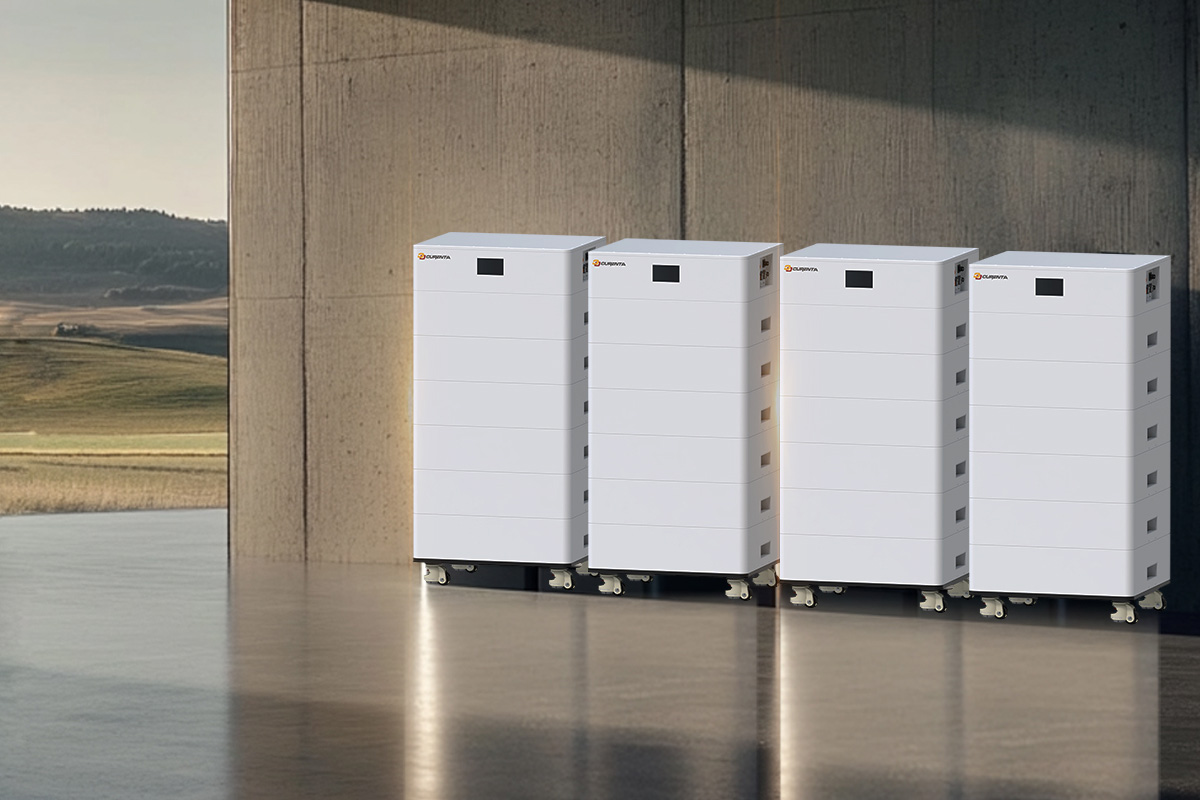
How CURENTA BATTERY Approaches Residential Energy Storage
CURENTA BATTERY, INC. focuses on LiFePO4 battery manufacturing and battery system solutions for energy storage and motive power applications.
With more than 15 years of experience in energy storage systems and motive power, the company serves applications including household ESS, solar battery systems, EV-related applications, lead-acid battery replacement, and golf cart batteries.
For international B2B customers, CURENTA BATTERY combines manufacturing capabilities with local warehouse and maintenance support in the United States and Europe.
The company operates as a state-supported high-tech enterprise and maintains ISO 9001, ISO 14001, and ISO 45001 certifications. Its products and operations also cover certifications and documentation including CE, IEC, UKCA, UN38.3, and MSDS, according to applicable product requirements.
CURENTA BATTERY also provides a 10-year warranty commitment for applicable products, giving distributors and system integrators a longer-term framework when evaluating residential battery supply.
For businesses developing residential solar energy solutions, supplier capability should be evaluated according to the specific battery model, market, certification requirement, installation architecture, and application.
More information about the manufacturer's capabilities and battery solutions is available on the company's official website.
How to Match Battery Storage With Different Residential Applications
Not every household requires the same solar battery configuration.
A small home with low electricity consumption may require a relatively modest storage system.
A larger property with air conditioning, heat pumps, electric vehicles, or other high-demand loads may require substantially greater battery power and energy capacity.
Some households may primarily want to increase solar self-consumption.
Others may prioritize backup power.
Still others may be focused on reducing electricity purchases during high-rate periods.
These differences create several common application profiles.
Solar self-consumption
The objective is to store surplus daytime PV production and use it later.
The system should be sized according to solar surplus and evening demand.
Time-of-use optimization
The battery charges when conditions are favorable and discharges during higher-cost periods, according to the applicable tariff and control strategy.
Backup power
The system is designed to keep selected household loads operating during grid interruptions.
Here, power output, backup circuit design, inverter functionality, and expected outage duration become particularly important.
High-energy households
Homes with substantial daily electricity demand may require larger battery banks or multiple battery modules.
In this situation, scalability and system expansion capabilities become important purchasing considerations.
The Importance of Scalability
Residential energy demand can change.
A homeowner may initially install solar panels and a relatively small battery system, then add an electric vehicle, heat pump, air conditioning equipment, or additional PV capacity later.
A modular energy storage architecture can make future expansion easier.
For distributors, scalable battery systems can also simplify product portfolios.
Instead of carrying numerous completely different battery products, a modular platform may allow installers to configure different storage capacities using compatible modules.
However, expansion should not be assumed to be possible simply because a battery is modular. The manufacturer must specify supported configurations, maximum parallel units, inverter compatibility, installation requirements, and battery age or firmware considerations.
These technical details should be confirmed before project deployment.
Safety Should Remain a System-Level Priority
Residential battery storage is installed in environments where people live and work, so safety must be treated as a system-level engineering requirement.
Important considerations include:
Installers should follow applicable local electrical codes and manufacturer instructions.
Battery specifications should also be evaluated under the actual operating conditions of the target market.
For B2B procurement teams, asking for technical documentation and certification records before deployment can reduce integration and compliance risks.
What Happens When Solar Production Is Low for Several Days?
Battery storage solves short-term energy shifting very effectively, but it does not create energy.
This distinction is critical.
If several consecutive days have poor solar conditions, a residential battery may eventually reach a low state of charge. If PV generation remains insufficient, the household may still need electricity from the grid or another backup energy source.
Therefore, a battery should not be presented as a complete substitute for grid electricity in every residential application.
The correct role of storage depends on the system objective.
For daily load shifting, relatively frequent charging and discharging may be expected.
For backup applications, the system may spend long periods at a high state of charge and only discharge when an outage occurs.
Different operating strategies place different requirements on battery sizing and controls.
Solar PV and BESS Work Better as an Integrated System
The most effective residential solar installations increasingly treat PV and BESS as a coordinated energy system.
The PV array generates electricity.
The battery stores surplus electricity.
The inverter controls power conversion.
The BMS monitors battery conditions.
The EMS can coordinate energy flows.
The household creates the demand profile.
The grid provides additional energy when required and may receive exported electricity under applicable regulations.
Each component affects the performance of the others.
For example, installing a large battery behind an undersized inverter may prevent the system from delivering the battery's full potential power. Similarly, installing more PV capacity without sufficient consideration of inverter limits, household load, and storage capacity can lead to unused generation during certain periods.
System-level design is therefore more important than simply selecting the largest individual components.
What B2B Buyers Should Ask a Battery Manufacturer
Before purchasing residential solar batteries in volume, distributors and installers should ask suppliers for clear answers to several technical and commercial questions.
What is the usable battery capacity?
Do not compare only nominal kWh ratings.
What is the continuous discharge power?
This determines how much household load the battery can support under normal operating conditions.
What is the maximum recommended depth of discharge?
This affects usable energy and battery operation.
Which inverters are compatible?
Confirm both electrical and communication compatibility.
What communication protocols are supported?
This is particularly important for system integration.
What certifications are available for the target market?
Certification requirements differ by market.
What warranty conditions apply?
Review not only the duration but also operating conditions and claim procedures.
Is the product scalable?
Check supported parallel configurations and expansion requirements.
What after-sales support is available?
Determine where technical support and warranty service are provided.
Where is inventory located?
Local stock can influence project lead time and service response.
These questions can help procurement teams distinguish between a battery product that looks competitive on a specification sheet and a storage solution that can actually support long-term residential deployments.
The Future of Residential Solar Is More Flexible Energy Management
Residential solar will continue to evolve from a simple electricity-generation model toward a more flexible energy management model.
PV remains the foundation because it generates renewable electricity.
Battery storage adds flexibility by allowing that electricity to be used at a different time.
As electric vehicles, heat pumps, smart appliances, and other electrified loads become more common, the ability to coordinate generation, storage, and consumption becomes increasingly valuable.
A household may eventually have several major electricity assets operating together:
Rooftop PV
Residential battery storage
EV charging
Heating and cooling systems
Smart appliances
Grid electricity
Energy management software
The battery can act as the connection between variable solar generation and changing electricity demand.
This is why solar energy storage is becoming an increasingly important part of residential PV deployment.
Conclusion
Installing solar panels is an important step toward residential renewable energy, but PV generation alone does not solve the timing problem of electricity supply and demand.
Solar panels generate the most electricity when sunlight is available, while households often need significant amounts of electricity after solar production declines. This mismatch is the fundamental reason that battery storage has become increasingly important.
A residential solar battery provides a practical way to store surplus PV generation and make that energy available later. When combined with an appropriately sized inverter, BMS, EMS, and electrical protection system, a solar battery system can improve solar self-consumption, support load shifting, provide backup capability where designed for it, and give households greater flexibility in managing electricity.
For B2B buyers, however, successful deployment requires more than choosing a battery with a large capacity. Product chemistry, usable capacity, power rating, inverter compatibility, certifications, warranty terms, manufacturing quality, scalability, technical support, and local service capability all deserve attention.
The strongest residential solar solutions are therefore not simply larger PV systems or larger batteries. They are well-integrated PV-plus-storage systems designed around real household load profiles and the specific requirements of the target market.
For manufacturers, distributors, installers, and system integrators, this creates a clear opportunity: as residential solar deployment expands, reliable battery storage can turn intermittent solar generation into a more controllable and useful household energy resource.

 English
 German
 Czech
Czech French
 Italian
 Hungarian
 Russian
 Japanese
 Korean
 Arabic
 Spanish
 Portuguese
 Danish

 WhatsApp