As global demand for energy storage continues to grow, more EPC contractors, renewable energy developers, utility companies, telecom operators, and industrial users are searching for reliable battery system partners that can provide complete project support instead of only supplying battery cells or battery packs.
For many buyers, sourcing individual components from different suppliers creates unnecessary complexity. Battery modules may come from one factory, BMS systems from another, inverters from a third-party brand, and EMS software from somewhere else. Integration risks, communication compatibility issues, delayed delivery schedules, and after-sales coordination problems often appear during the project lifecycle.
A turnkey supplier works differently.
Instead of only selling hardware, a turnkey energy storage solution provider manages the complete process including system design, battery integration, testing, certification support, logistics coordination, commissioning guidance, and long-term technical support.
For overseas buyers working on commercial, industrial, telecom, solar hybrid, or utility-scale projects, this approach can significantly reduce project risks and shorten deployment timelines.
As a professional lithium battery manufacturer, CURENTA BATTERY has seen increasing demand from customers looking for scalable and customized turnkey energy storage systems manufactured in China.
What Does a Turnkey Energy Storage Solution Provider Actually Do?
The phrase “turnkey energy storage solution provider” is often used broadly in the industry, but in practice, the capabilities of suppliers vary significantly.
Some companies mainly assemble batteries and outsource most engineering tasks. Others focus only on battery cells or container integration. Very few manufacturers can truly support the full energy storage project lifecycle.
A genuine turnkey provider should typically offer the following capabilities:
Battery cell selection and matching
Battery module and rack design
Battery Management System (BMS) integration
Energy Management System (EMS) integration
PCS and inverter compatibility support
Thermal management optimization
Communication protocol integration
Safety protection design
Certification assistance
Remote monitoring support
Containerized ESS integration
Logistics and export coordination
Technical documentation
Installation and commissioning guidance
After-sales support
For international buyers, having one engineering team responsible for the complete solution simplifies communication and accountability.
Instead of coordinating multiple vendors across different countries and time zones, buyers can work with a single technical contact that understands the entire system architecture.
Why China Has Become a Major Energy Storage Manufacturing Hub
Over the past decade, China has become one of the world’s largest manufacturing centers for lithium battery technology and energy storage systems.
Several factors contributed to this growth.
Mature Lithium Battery Supply Chain
China has one of the most complete battery manufacturing ecosystems globally. From cathode materials and battery cells to BMS hardware and ESS containers, most upstream and downstream suppliers are located within efficient industrial clusters.
This concentration helps reduce production costs while improving manufacturing speed and supply stability.
For turnkey energy storage projects, supply chain coordination matters just as much as battery performance.
A supplier with stable access to components can maintain more reliable delivery schedules and production consistency.
Strong Engineering and Integration Capabilities
Energy storage projects are not simply about assembling batteries.
System integration involves electrical engineering, thermal design, communication architecture, software compatibility, and safety management.
Chinese manufacturers with extensive ESS experience often develop specialized engineering teams dedicated to integration projects across multiple application scenarios such as:
Commercial and industrial ESS
Solar-plus-storage systems
Telecom backup systems
Microgrid projects
Off-grid applications
Utility-scale storage
EV charging infrastructure support
Marine and mobile ESS systems
This experience becomes valuable when overseas customers require customized project configurations.
Competitive Cost Structure
Price is still an important factor in global energy storage procurement.
Compared with suppliers in Europe or North America, Chinese manufacturers often provide more competitive pricing due to:
Localized component sourcing
Large-scale production
Lower manufacturing costs
Mature automation systems
Integrated supply chains
However, experienced buyers increasingly understand that the lowest initial price is not always the best choice.
The real value comes from balancing:
System safety
Product reliability
Technical support
Delivery stability
Lifecycle cost
Warranty support
Long-term scalability
A professional turnkey energy storage solution provider in China should help customers optimize total project value rather than simply lowering upfront pricing.
Common Problems Buyers Face When Sourcing Energy Storage Systems
Many overseas buyers contact Chinese battery manufacturers after encountering problems with previous ESS suppliers.
These issues are often similar across different projects.
Incomplete Technical Support
Some suppliers focus mainly on manufacturing but provide limited engineering assistance.
This creates difficulties during:
Without strong technical support, even high-quality battery hardware may underperform in real-world projects.
Communication Compatibility Issues
Battery systems must communicate correctly with inverters, PCS units, and monitoring platforms.
Common communication protocols include:
Poor protocol compatibility can delay project deployment and increase debugging costs.
A professional turnkey provider should already have integration experience with major inverter and PCS brands.
Certification Challenges
Different countries require different compliance standards.
Depending on the market, buyers may require:
Some suppliers cannot provide sufficient documentation or testing support for international projects.
This becomes especially problematic for utility-scale or government-backed projects.
Weak After-Sales Support
Energy storage systems are long-term infrastructure investments.
Customers need suppliers capable of supporting:
Many low-cost suppliers disappear after shipment or cannot provide effective technical responses.
This is one of the biggest concerns among international buyers.
Key Features Buyers Should Evaluate in a Turnkey ESS Supplier
Selecting the right turnkey energy storage solution provider in China requires more than comparing quotations.
Experienced buyers usually evaluate suppliers from several technical and operational dimensions.
Battery Technology Selection
Different projects require different battery chemistries.
Today, Lithium Iron Phosphate (LiFePO4) remains the dominant choice for most stationary ESS projects because of its:
For commercial and industrial storage applications, cycle life and thermal management are especially important because systems often operate daily under demanding charge-discharge conditions.
System Scalability
Future expansion is often overlooked during initial project planning.
A scalable ESS architecture allows:
Additional battery racks
Modular capacity expansion
Flexible voltage configuration
Parallel system deployment
This helps customers adapt to future energy demand growth without replacing the original infrastructure.
Thermal Management Design
Battery temperature management directly affects:
Safety
Cycle life
System efficiency
Long-term reliability
Depending on project scale and environmental conditions, ESS systems may use:
Air cooling
Forced-air cooling
Liquid cooling
High-temperature environments require particularly careful thermal design.
Safety Protection Architecture
ESS safety has become a global industry focus.
A reliable system should include:
Multi-level BMS protection
Overcharge protection
Short-circuit protection
Thermal runaway prevention
Fire suppression options
Isolation protection
Emergency shutdown systems
For large-scale projects, safety compliance is often mandatory during project approval.
EMS and Remote Monitoring
Modern ESS projects increasingly rely on intelligent monitoring systems.
Advanced EMS platforms help users:
Monitor battery health
Optimize charging strategies
Analyze system efficiency
Reduce energy costs
Enable predictive maintenance
Remote diagnostics also help suppliers provide faster after-sales support.
Applications Driving ESS Demand Worldwide
The global energy storage market is expanding rapidly across multiple industries.
Commercial and Industrial Energy Storage
Factories, warehouses, office parks, and commercial buildings increasingly use ESS systems for:
In regions with unstable grid pricing, ESS systems can significantly improve operational energy management.
Solar Plus Storage Projects
Solar energy intermittency creates growing demand for battery storage integration.
Solar-plus-storage systems help:
This segment continues to grow rapidly in Southeast Asia, Africa, the Middle East, Europe, and Latin America.
Telecom Backup Power
Telecom infrastructure requires stable and uninterrupted power supply.
Compared with traditional lead-acid systems, lithium battery ESS solutions offer:
Telecom operators increasingly upgrade base station backup systems using lithium ESS technology.
Utility-Scale Energy Storage
Large utility projects support:
Grid balancing
Frequency regulation
Renewable integration
Load shifting
Emergency backup
These projects require high engineering capability and extensive system integration experience.
Not every battery factory can handle utility-scale ESS deployment requirements.
Why Customization Matters in B2B Energy Storage Projects
Unlike consumer electronics, ESS projects rarely follow one universal specification.
Every project has different:
Load requirements
Environmental conditions
Voltage architecture
Installation limitations
Grid standards
Safety regulations
This is why customization capability is extremely important when selecting a turnkey energy storage solution provider in China.
For example:
Desert projects may require advanced cooling systems
Coastal installations may need anti-corrosion protection
Telecom projects may prioritize compact footprint
Industrial users may require high-cycle operation
Mobile ESS projects may demand vibration-resistant structures
A supplier with strong engineering flexibility can optimize system design according to actual operating conditions instead of forcing standardized products into unsuitable applications.
Important Questions Buyers Should Ask Before Choosing a Supplier
Before signing a contract, buyers should carefully evaluate potential suppliers.
Some important questions include:
Does the supplier manufacture batteries internally?
Some trading companies market themselves as ESS providers without owning production facilities.
A real manufacturer usually provides:
Better quality control
Faster technical response
More stable delivery schedules
Better customization capability
What inverter brands are already compatible?
ESS integration experience matters.
Suppliers with existing compatibility experience can reduce commissioning risks.
What certifications are available?
Buyers should confirm whether certifications match destination market requirements.
What is the warranty structure?
Battery warranties should clearly define:
Is remote technical support available?
Remote troubleshooting capability can significantly reduce operational downtime.
Can the system support future expansion?
Scalability is important for long-term investment planning.
The Growing Importance of Long-Term Partnerships
In the ESS industry, the supplier relationship does not end after shipment.
Battery systems often operate for 10 years or longer.
As a result, long-term supplier stability becomes extremely important.
Buyers increasingly prefer manufacturers that can provide:
Stable production capacity
Long-term technical support
Spare parts availability
Firmware updates
Ongoing engineering assistance
This is especially critical for large commercial or utility projects where downtime creates significant operational and financial risks.
How CURENTA BATTERY Supports Global ESS Projects
As a China-based lithium battery manufacturer, CURENTA BATTERY focuses on practical and scalable energy storage solutions for international B2B customers.
The company supports various applications including:
Rather than offering only standardized products, the company works with customers on customized integration requirements based on actual project conditions.
This includes support for:
For overseas buyers looking for a turnkey energy storage solution provider in China, technical coordination and reliable project execution are often more important than aggressive pricing alone.
This is particularly true for projects requiring:
Stable long-term operation
International certification support
Complex integration
Multi-system communication
Scalable deployment
Final Thoughts
Global demand for energy storage systems will continue growing as renewable energy adoption accelerates and power infrastructure modernization expands.
However, ESS procurement is becoming increasingly technical.
Buyers are no longer simply purchasing batteries. They are investing in complete energy infrastructure systems that must operate safely and reliably for many years.
This is why more international companies are searching specifically for a turnkey energy storage solution provider in China instead of only sourcing battery products separately.
A capable turnkey supplier can help reduce:
For B2B buyers evaluating ESS manufacturing partners, the most important factors are usually:
As the global ESS market matures, suppliers that combine strong manufacturing capacity with real integration expertise will continue gaining trust from overseas project developers and industrial customers.

 English
 German
 Czech
Czech French
 Italian
 Hungarian
 Russian
 Japanese
 Korean
 Arabic
 Spanish
 Portuguese
 Danish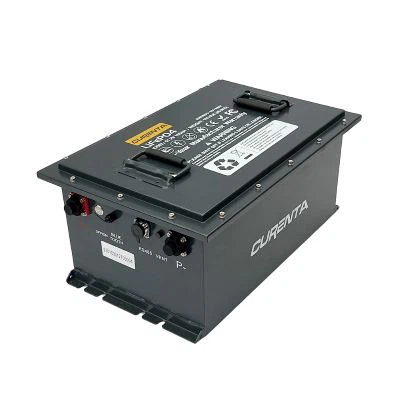


 WhatsApp