For companies selling energy storage products, electric vehicles, golf carts, solar systems, industrial equipment, and other battery-powered applications, selecting the right battery supplier is only one part of the procurement process. The more important question is whether the supplier can develop and deliver a battery system that matches the actual requirements of the application.
This is where a LiFePO4 battery OEM service becomes valuable.
Unlike buying a standard battery model from a catalog, OEM cooperation allows a buyer to work with a battery supplier on specifications such as voltage, capacity, dimensions, connectors, communication protocols, battery management systems, enclosure design, charging parameters, and application requirements. For B2B customers, this can make a significant difference when the battery must fit existing equipment or be integrated into a larger energy system.
For distributors, system integrators, equipment companies, and project contractors, the objective should not simply be to find the lowest battery unit price. A practical OEM program should provide consistent specifications, engineering support, quality control, documentation, testing, and dependable after-sales service.
CURENTA BATTERY, INC. provides LiFePO4 battery solutions for applications including EVs, household energy storage systems, lead-acid battery replacement, solar battery systems, golf carts, and other power applications. With more than 15 years of experience in energy storage and motivation power, the company supports customers in both international and local markets, with warehouse and maintenance resources in the USA and Europe.
What Is LiFePO4 Battery OEM Service?
LiFePO4 battery OEM service refers to the process of developing, configuring, producing, testing, and supplying lithium iron phosphate battery products according to a customer's application and technical requirements.
LiFePO4, or lithium iron phosphate, is a lithium-ion battery chemistry widely used for energy storage and power applications. Compared with conventional lead-acid batteries, LiFePO4 systems can provide higher usable energy, lower weight, longer cycle life, and more flexible system integration.
However, a LiFePO4 cell alone is not a complete battery system.
A commercial battery pack normally includes multiple components:
LiFePO4 battery cells
Battery Management System (BMS)
Busbars and internal connections
Fuse or circuit protection
Wiring harness
Connectors
Enclosure
Terminals
Communication interface
Temperature sensors
Charging and discharging control
Mounting structure
Product labeling and documentation
An OEM project therefore involves much more than selecting a cell capacity.
For example, a customer replacing a 48V lead-acid battery in a golf cart may require a battery pack with specific external dimensions, terminal positions, discharge current, charger compatibility, CAN communication, state-of-charge display, and mounting points. A standard 48V LiFePO4 battery may have the correct nominal voltage but still be unsuitable if these interface requirements are ignored.
This is why a properly structured LiFePO4 battery OEM service should begin with the application rather than simply with a battery model.
Why B2B Buyers Need OEM Battery Solutions
Standard batteries work well when the application requirements are common and the buyer can adapt the equipment around the battery.
OEM battery development becomes more important when the battery has to fit an existing product or project.
Typical B2B requirements include:
A specific battery voltage
Customized capacity
Limited installation space
Required maximum discharge current
Specific charging voltage
Defined communication protocols
CAN or RS485 communication
Specific connector types
Different enclosure materials
IP-rated housing
Particular mounting points
Display requirements
Thermal management
Low-temperature charging protection
Specific certification requirements
Customized labels and documentation
Integration with existing controllers or inverters
For equipment manufacturers and system integrators, these requirements can determine whether a battery is commercially usable.
A battery supplier that only provides standard products may not be able to address all of these details. An experienced OEM partner should be able to discuss the complete electrical and mechanical interface before production begins.
What Can Be Customized Through a LiFePO4 Battery OEM Service?
The degree of customization depends on the supplier's engineering and production capabilities, but several areas are commonly adjustable.
Battery Voltage
Voltage is normally determined by the application architecture.
Common battery configurations include 12V, 24V, 36V, 48V, 72V, and higher-voltage systems. The actual battery configuration depends on the number and arrangement of cells, BMS design, charger specifications, and application requirements.
For example, a 48V battery system may be used in:
A buyer should specify not only the nominal voltage but also the required operating voltage range.
This is important because the nominal voltage is not the same as the battery's actual voltage during charging and discharging.
Battery Capacity
Capacity is usually expressed in ampere-hours (Ah) or kilowatt-hours (kWh).
For example, a 48V 100Ah battery has a nominal energy value of approximately:
48V × 100Ah = 4.8kWh
The actual usable energy depends on operating conditions, BMS settings, discharge limits, temperature, battery chemistry, and system design.
For OEM projects, the supplier should understand the expected load profile rather than selecting capacity based solely on the nameplate.
A customer should provide information such as:
This allows the battery system to be sized according to actual operating conditions.
Battery Dimensions
Physical dimensions are often one of the most important OEM requirements.
A battery may have the correct voltage and capacity but still fail to fit the equipment.
OEM dimensional requirements may include:
Length
Width
Height
Terminal location
Mounting holes
Cable exit position
Handle location
Display position
Connector position
Enclosure orientation
For replacement applications, buyers should provide the original battery dimensions and installation drawings whenever possible.
A detailed mechanical drawing can reduce communication errors during development.
BMS Configuration
The Battery Management System is one of the most important components in a LiFePO4 battery.
The BMS monitors and controls key battery parameters, including:
The BMS configuration should correspond to the battery's intended application.
For example, a battery designed for stationary solar storage may have different current requirements and communication functions from a battery designed for an electric vehicle or golf cart.
For this reason, BMS selection should be considered at the beginning of an OEM project instead of being treated as a final accessory.
LiFePO4 Battery OEM Service for Lead-Acid Replacement
Lead-acid battery replacement is one of the practical applications for LiFePO4 technology.
Many existing systems were originally designed around lead-acid batteries. When converting to lithium batteries, simply matching the nominal voltage is not sufficient.
The replacement battery needs to be evaluated against the original system.
Important factors include:
Physical Compatibility
The lithium battery should fit within the existing battery compartment or mounting structure.
If the dimensions differ substantially, the customer may need to modify the equipment.
Charger Compatibility
Lithium batteries have different charging requirements from lead-acid batteries.
A suitable charging profile must be used. Depending on the system, the charger may need to be replaced or reconfigured.
Current Requirements
The battery must be capable of supplying the required continuous and peak current.
This is especially important for equipment with motors, compressors, pumps, or other loads that generate high startup currents.
BMS Protection
The BMS should provide protection appropriate to the application.
For example, a golf cart battery may experience rapid current changes during acceleration and regenerative braking. The BMS and battery design need to account for these operating conditions.
Installation
The battery enclosure, terminals, cables, and mounting points should be checked before replacement.
A properly designed LiFePO4 battery OEM service can address these details as part of the conversion process instead of treating the lithium battery as a simple drop-in component.
OEM LiFePO4 Batteries for Solar Energy Storage
Solar energy storage has different requirements from mobile power applications.
A typical residential or small commercial system may include:
Solar panels → inverter → battery → household loads
In this configuration, the battery needs to communicate correctly with the energy management system or inverter.
Important OEM specifications can include:
A battery designed for solar storage should therefore be evaluated as part of the complete system.
For example, if an inverter requires a specific CAN communication protocol, the battery BMS needs to support the required communication method and parameter mapping.
This is one reason why technical communication between the battery supplier and system integrator is important during an OEM project.
OEM Battery Solutions for Golf Carts
Golf carts place different demands on batteries compared with stationary energy storage.
During acceleration, the motor can require substantial current. The battery therefore needs appropriate continuous and peak discharge capability.
A golf cart battery OEM project may involve:
LiFePO4 technology can also reduce the weight of the battery system compared with traditional lead-acid configurations.
However, weight reduction should not be considered independently from current capability and mechanical requirements.
A professional OEM assessment should evaluate the complete power system.
OEM Batteries for Electric Vehicles and Motivation Power
Electric vehicles and motivation power equipment generally have more demanding electrical requirements.
Depending on the application, the battery may need to support:
The battery pack should therefore be designed around the vehicle controller and motor system.
For an EV application, the customer should provide information about the motor power, controller current, operating voltage, expected driving conditions, and installation space.
For example, a 72V battery with a certain Ah rating does not automatically mean it is suitable for a 72V vehicle. The BMS discharge current, cell characteristics, thermal performance, controller compatibility, and connector design also need to be considered.
How the OEM Battery Development Process Works
A structured development process reduces technical errors and unnecessary revisions.
Step 1: Define the Application
The first step is to determine where the battery will be used.
The supplier should understand whether the project involves:
The application determines the technical direction of the battery.
Step 2: Collect Technical Requirements
The buyer should provide as much information as possible.
A useful specification sheet may include:
| Requirement | Example |
|---|
| Nominal Voltage | 48V |
| Capacity | 100Ah |
| Energy | 4.8kWh |
| Continuous Discharge | Application dependent |
| Peak Discharge | Application dependent |
| Charging Method | LiFePO4 charger |
| Communication | CAN / RS485 |
| Dimensions | Customer-defined |
| Installation | Rack / floor / vehicle |
| Operating Temperature | Application dependent |
| Quantity | Project requirement |
The more complete the initial specification, the fewer changes are likely to be required later.
Step 3: Electrical Design
The battery configuration is then determined.
This includes cell configuration, BMS selection, current capability, protection settings, wiring, connectors, and charging parameters.
For higher-power systems, thermal considerations should also be addressed.
Step 4: Mechanical Design
The enclosure and installation structure are developed according to the application.
Mechanical design may include:
Enclosure dimensions
Mounting structure
Cable routing
Terminal placement
Display position
Ventilation
Protection requirements
Step 5: Prototype Development
For projects requiring customization, prototype samples are useful before mass production.
The prototype can be installed into the target equipment and tested under actual operating conditions.
This stage can identify issues that may not be visible from electrical specifications alone.
Step 6: System Testing
Testing should cover the parameters that matter to the application.
Depending on the product, this may include:
Charge testing
Discharge testing
Capacity testing
BMS protection testing
Temperature monitoring
Communication testing
Mechanical inspection
Charger compatibility
Inverter compatibility
Load testing
The exact test program should be determined according to the battery application.
Step 7: Production and Quality Control
After the design is confirmed, production can move forward under the agreed specifications.
For B2B buyers, consistency between batches is particularly important.
A battery specification that changes from one production batch to another can create problems for equipment assembly, system integration, inventory management, and after-sales service.
Why BMS Communication Matters in OEM Projects
For modern energy storage systems, communication is often a core requirement rather than an optional feature.
The BMS may communicate battery information to an inverter, vehicle controller, display, or energy management system.
Typical data can include:
CAN and RS485 are common communication interfaces, but the actual protocol and data mapping must be confirmed with the target equipment.
This is an area where buyers should avoid assumptions.
Two batteries may both claim to support CAN communication but still fail to communicate with the same inverter because their communication protocols are different.
During an OEM project, protocol documentation and compatibility testing should therefore be completed before mass production.
Quality Control Considerations for B2B Buyers
Battery quality is not determined by one specification.
A professional procurement evaluation should consider the entire supply chain and production process.
Cell Consistency
Cell consistency affects pack performance.
Differences between cells can influence balancing requirements, usable capacity, and long-term performance.
BMS Reliability
The BMS should be appropriately matched to the cell configuration and application.
Protection parameters should be verified rather than simply copied from a standard configuration.
Electrical Testing
Battery packs should be tested for voltage, capacity, current, and protection functions according to the agreed quality requirements.
Mechanical Quality
Enclosure assembly, terminals, connectors, cable routing, and mounting structures should be inspected.
Documentation
For international B2B transactions, technical documentation is important.
Depending on the product and market, buyers may require:
Product specifications
User manuals
Safety information
Test reports
Shipping documentation
Certification documents
MSDS
UN38.3 documentation
The exact documents required depend on the product configuration, transport method, and destination market.
Certifications and Compliance
Compliance requirements should be considered before finalizing the battery design.
CURENTA BATTERY states that its quality management system is certified to ISO9001, ISO14001, and ISO45001. Its products and operations also include certifications or documentation such as CE, IEC, UKCA, UN38.3, and MSDS, depending on the applicable product and requirement.
For B2B procurement, buyers should confirm which specific certification applies to the exact battery model being purchased.
A certification associated with one battery configuration should not automatically be assumed to cover every customized battery configuration.
This is particularly important when the OEM project involves changes to:
Cell configuration
BMS
Enclosure
Voltage
Capacity
Communication system
Charging system
The compliance documentation should match the final commercial product.
What Should Buyers Ask a LiFePO4 Battery OEM Supplier?
Before starting an OEM project, procurement teams should ask practical technical questions.
1. What battery chemistry is being used?
Confirm that the proposed battery uses the required LiFePO4 chemistry and understand the cell specifications.
2. What BMS is included?
Ask about BMS current rating, protection functions, balancing, temperature monitoring, and communication.
3. Can the battery dimensions be customized?
This is particularly important for replacement batteries and equipment integration.
4. Can the communication protocol be customized?
If the battery connects to an inverter or controller, compatibility should be tested.
5. What testing is performed?
Ask which tests are performed before shipment and whether test reports are available.
6. What certifications are available?
Confirm the certifications and transport documents applicable to the exact model.
7. What warranty is provided?
Warranty terms should clearly define coverage, operating conditions, exclusions, and the process for handling claims.
8. Is technical support available after delivery?
For B2B projects, after-sales engineering support can be as important as the initial battery specification.
How to Prepare an OEM Battery RFQ
A detailed Request for Quotation (RFQ) helps a supplier provide a more accurate proposal.
Instead of sending only:
"Please quote a 48V 100Ah LiFePO4 battery."
A better RFQ could include:
If some specifications are unknown, the buyer can identify them as "to be confirmed."
This gives the battery supplier an opportunity to recommend a suitable configuration instead of making assumptions.
OEM vs. Standard LiFePO4 Battery: Which Is Better?
Not every customer needs a customized battery.
A standard battery can be the better choice when:
The application uses common specifications
No special dimensions are required
Standard communication is sufficient
The charger is already compatible
The customer needs fast procurement
The project volume is relatively small
OEM development becomes more attractive when:
The battery must fit a proprietary product
The application has unusual current requirements
Special connectors are required
Communication integration is necessary
The customer needs a unique enclosure
Multiple batteries must operate within a specific system
The product will be sold as part of a larger equipment solution
The right decision depends on the total project requirements, not simply the battery price.
Common Mistakes in LiFePO4 OEM Projects
Several avoidable problems occur repeatedly in battery integration projects.
Mistake 1: Selecting Only by Voltage and Capacity
A battery's 48V 100Ah label does not describe its complete performance.
BMS current, cell configuration, communication, dimensions, charger compatibility, and thermal requirements also matter.
Mistake 2: Ignoring Peak Current
Motor-driven equipment can have short-duration current peaks that are significantly higher than average operating current.
The battery and BMS must be designed accordingly.
Mistake 3: Checking Communication Too Late
CAN or RS485 compatibility should be verified during the design stage.
Waiting until after mass production can create costly integration problems.
Mistake 4: Treating Certification as a Generic Property
Certification must correspond to the applicable product and configuration.
Buyers should request documentation for the actual battery being purchased.
Mistake 5: Not Testing the Battery in the Target Equipment
Laboratory testing cannot replace system-level testing.
A prototype should be tested in the actual application whenever practical.
Mistake 6: Focusing Only on Initial Purchase Cost
The lowest initial price may not result in the lowest total cost.
A more useful evaluation considers:
For B2B customers, total cost of ownership is often a more meaningful metric than unit price alone.
How to Evaluate an OEM Battery Supplier
A supplier evaluation should cover both technical capability and business reliability.
Technical Capability
Check whether the supplier can support:
Production Capability
Ask about:
Production capacity
Quality management
Inspection procedures
Traceability
Production consistency
Batch control
After-Sales Capability
A battery is a long-term component. Buyers should understand how the supplier handles:
For international customers, local support can significantly simplify after-sales operations.
Why Local Support Matters for International B2B Buyers
Battery projects often continue long after the initial shipment.
If a distributor or system integrator encounters a technical issue, waiting for support across different time zones can slow down troubleshooting.
CURENTA BATTERY maintains local warehouse and maintenance resources in the USA and Europe, supporting customers in international markets.
For distributors, this type of local infrastructure can be useful when the business needs inventory support, maintenance assistance, or faster response to customer issues.
The practical value depends on the specific product, location, and service arrangement, so these details should be confirmed during the purchasing process.
Building a Long-Term OEM Battery Program
A successful OEM relationship should not end after the first shipment.
Once the battery has been validated, both sides should establish a controlled specification.
A useful OEM product file may include:
This creates a reference point for future orders.
If a component needs to change, the supplier and buyer can evaluate the impact before the change is introduced into production.
This is particularly important for distributors and equipment companies that expect to sell the same battery configuration over several years.
LiFePO4 Battery OEM Service for Distributors
Distributors often have different requirements from equipment manufacturers.
A distributor may need several battery configurations for different customer applications while maintaining a manageable product portfolio.
An OEM supplier can help structure products around common platforms.
For example, a distributor might use a common battery architecture while offering different capacities or enclosure configurations.
This can simplify:
Inventory planning
Spare parts
Training
Product documentation
Customer support
Procurement
However, product standardization should be balanced against actual market requirements. Excessive customization can increase complexity and make inventory management more difficult.
The goal should be to identify which specifications truly require customization and which can remain standardized.
LiFePO4 Battery OEM Service for System Integrators
System integrators need batteries that communicate and operate correctly within a larger system.
For solar ESS projects, this may mean inverter compatibility.
For EV applications, it may mean controller integration.
For industrial equipment, it may involve PLC or monitoring-system communication.
For this customer group, the battery supplier's engineering capability is particularly important.
A successful integration project normally involves technical communication between the battery supplier, equipment manufacturer, and system integrator.
The battery should be treated as a system component rather than an isolated product.
Practical Considerations for Global Shipping
Lithium batteries are subject to transportation requirements.
B2B buyers should discuss shipping requirements with the supplier before placing an order.
Relevant documentation may include UN38.3 test documentation and MSDS, depending on the product and shipping method.
Packaging requirements can also vary according to battery type, configuration, transportation mode, and destination.
The supplier and logistics provider should confirm the applicable requirements for the specific shipment.
This is another reason why an experienced battery supplier can be valuable to international buyers.
Warranty and Long-Term Reliability
Warranty length is an important purchasing consideration, but the warranty period alone does not define battery quality.
Buyers should examine:
CURENTA BATTERY states that it provides a 10-year warranty for its battery products. Buyers should confirm the detailed warranty terms for the specific OEM configuration before placing an order.
For long-term projects, warranty conditions should be included in the commercial and technical documentation.
When Should You Choose a LiFePO4 Battery OEM Service?
An OEM approach is particularly appropriate when your battery needs to meet a defined equipment or system specification.
Consider OEM development if you need:
A customized voltage or capacity
A specific battery enclosure
A replacement battery with defined dimensions
High-current output
Custom BMS parameters
CAN or RS485 communication
Inverter compatibility
Vehicle controller integration
Customized connectors
Specific mounting arrangements
Project-specific documentation
If your requirement is a common battery configuration with no special integration requirements, a standard product may be more efficient.
The key is to match the procurement model to the technical complexity of the project.
How CURENTA BATTERY Supports B2B Battery Projects
CURENTA BATTERY, INC. focuses on LiFePO4 battery systems for energy storage and motivation power applications. The company has more than 15 years of experience in the industry and provides battery solutions for EVs, household ESS, lead-acid replacement, solar battery systems, golf carts, and other applications.
Its product range can be reviewed through the company's LiFePO4 battery product portfolio.
For B2B customers, the value of an OEM supplier is not simply the ability to provide lithium battery cells. The supplier should be able to understand the application, define the battery architecture, configure the BMS, address mechanical and electrical requirements, complete appropriate testing, and provide documentation for the final product.
CURENTA BATTERY combines battery system experience with quality management certifications including ISO9001, ISO14001, and ISO45001. The company also states that it has passed CE, IEC, UKCA, UN38.3, and MSDS-related requirements for applicable products.
Its USA and Europe warehouse and maintenance resources are also intended to support customers in international markets.
A Practical Checklist Before Ordering
Before confirming an OEM battery project, buyers can use the following checklist:
Application
Electrical
What is the nominal voltage?
What capacity is required?
What is the continuous discharge current?
What is the peak current?
What charger will be used?
Is regenerative charging involved?
Communication
Mechanical
What are the maximum dimensions?
Where are the mounting points?
What terminals are required?
Where should connectors and cables be located?
Environmental
What is the operating temperature?
Will the battery be installed indoors or outdoors?
Is water or dust protection required?
Will the battery experience vibration or impact?
Compliance
What certifications are required?
Is UN38.3 documentation required?
What shipping regulations apply?
What documents are needed for customs clearance?
Commercial
What is the initial order quantity?
What is the expected annual demand?
What warranty is required?
What after-sales support is expected?
Is local inventory or service required?
Answering these questions before development can significantly reduce misunderstandings and project delays.
Final Considerations for B2B Buyers
A successful battery procurement project starts with the application rather than the battery catalog.
For a standard application, an off-the-shelf LiFePO4 battery may be sufficient. For equipment manufacturers, distributors, system integrators, and project contractors with specific electrical or mechanical requirements, a LiFePO4 battery OEM service provides a more structured way to develop a battery around the actual application.
The most important factors are not limited to nominal voltage and capacity. BMS configuration, peak current, charger compatibility, communication, enclosure design, operating environment, certification, testing, documentation, warranty, and after-sales support all influence the final result.
A good OEM process should therefore follow a clear sequence: define the application, collect technical requirements, develop the electrical and mechanical design, build prototypes, perform application testing, confirm the specification, and then move into controlled production.
For B2B buyers evaluating long-term battery suppliers, this approach provides a more practical basis for comparing suppliers than unit price alone.
If your project requires a customized LiFePO4 battery for EVs, solar energy storage, golf carts, lead-acid replacement, household ESS, or another application, the first step is to prepare a complete technical specification. Once the requirements are clear, the right battery configuration and OEM development route become much easier to determine.

 English
 German
 Czech
Czech French
 Italian
 Hungarian
 Russian
 Japanese
 Korean
 Arabic
 Spanish
 Portuguese
 Danish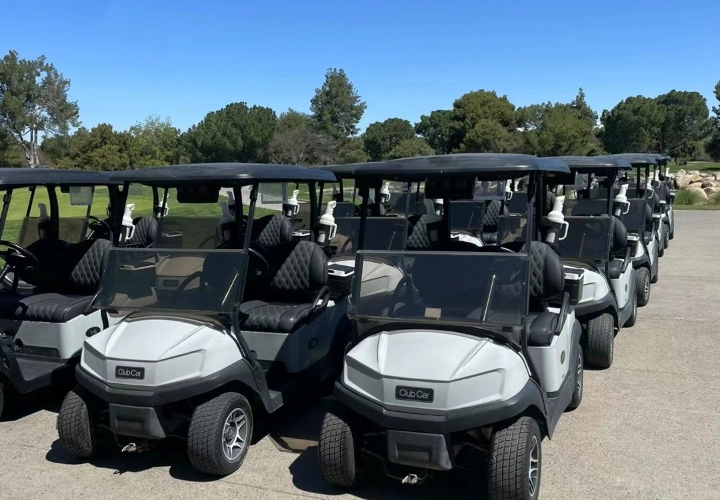


 WhatsApp