For buyers of energy storage systems, the number of charge-discharge cycles is one of the first specifications reviewed when comparing lithium batteries. A battery described as a 6000 cycle LiFePO4 battery may appear straightforward on a datasheet, but cycle life is not a single number that can be evaluated without understanding the test conditions behind it.
For distributors, system integrators, solar companies, EV solution providers, golf cart suppliers, and industrial battery buyers, the more important question is not simply whether a battery can reach 6000 cycles. The real question is whether the battery can deliver predictable performance over its intended operating profile, temperature range, depth of discharge, charging method, and application environment.
Lithium iron phosphate, commonly called LiFePO4 or LFP, has become an important chemistry for applications where safety, service life, usable capacity, and operating stability are more important than achieving the highest possible energy density. Compared with traditional lead-acid batteries, LiFePO4 systems can provide substantially longer cycle life and more usable energy within a similar application.
However, buyers should avoid treating “6000 cycles” as a universal guarantee. A cycle-life figure is meaningful only when the testing conditions are clearly defined.
This guide explains how B2B buyers can evaluate a 6000 cycle LiFePO4 battery, what specifications should be checked before placing an order, how cycle life affects total cost of ownership, and which technical factors have the greatest impact on long-term battery performance.
What Does 6000 Cycles Mean for a LiFePO4 Battery?
A battery cycle generally refers to a complete process of discharging and recharging the battery. In real applications, however, users rarely discharge a battery from 100% to 0% and then recharge it every day.
Instead, batteries may operate at different depths of discharge.
For example:
A 100% discharge followed by a full recharge represents approximately one full cycle.
Two 50% discharge events followed by recharging represent approximately one equivalent full cycle.
Four 25% discharge events represent approximately one equivalent full cycle.
Therefore, when a supplier specifies 6000 cycles, buyers should ask how the cycles were calculated and under what test conditions.
A typical cycle-life test may specify:
For example, a battery tested at moderate temperature and controlled discharge conditions may achieve a different cycle count from the same battery operating continuously at high current and high temperature.
This distinction is particularly important for B2B projects because the battery may be deployed for many years. A system integrator needs to understand not only the initial nominal capacity but also how much capacity can reasonably remain after thousands of cycles.
Why LiFePO4 Chemistry Is Suitable for Long-Cycle Applications
LiFePO4 is a lithium-ion battery chemistry based on lithium iron phosphate as the cathode material. It is widely used in stationary energy storage and various motive-power applications because of its combination of cycle life, thermal stability, and usable energy.
One of its main advantages is long service life under appropriate operating conditions.
Compared with conventional lead-acid batteries, LiFePO4 batteries can generally tolerate a much greater number of charge-discharge cycles. They also maintain a relatively stable voltage during discharge, which can be beneficial for equipment that requires consistent electrical performance.
For B2B users, the advantages of LiFePO4 are not limited to cycle count.
1. Longer operating life
A longer cycle life can reduce the frequency of battery replacement. This is particularly valuable for systems installed in locations where battery replacement involves labor, transportation, downtime, or service visits.
2. Higher usable capacity
Lead-acid batteries are often operated with conservative depth-of-discharge limits to avoid excessive degradation. LiFePO4 systems can generally support deeper discharge when the battery is properly designed and managed.
This means the buyer can potentially obtain more usable energy from the same nominal capacity.
3. Lower maintenance requirements
LiFePO4 batteries are sealed systems and do not require the routine electrolyte maintenance associated with traditional flooded lead-acid batteries.
4. Stable voltage characteristics
LFP chemistry provides a relatively flat discharge voltage curve. This can help equipment operate consistently throughout much of the battery's usable state-of-charge range.
5. Battery management system integration
Modern LiFePO4 battery packs normally incorporate a battery management system, or BMS, to monitor parameters such as cell voltage, temperature, current, state of charge, and protection conditions.
For commercial and industrial projects, the BMS is an important part of the overall battery system rather than an optional accessory.
A 6000 Cycle Rating Is Not the Same as a 6000-Day Warranty
One of the most common misunderstandings in battery procurement is assuming that 6000 cycles automatically means the battery will operate for 6000 days or that it will maintain its original capacity throughout that period.
These are different concepts.
Cycle life describes the number of charge-discharge cycles achieved under specified test conditions before the battery reaches a defined end-of-life threshold.
Warranty terms define the manufacturer's contractual commitment regarding product performance, defects, or other specified conditions.
A battery may have a long cycle-life specification while its warranty uses a different combination of:
B2B buyers should therefore review both the technical datasheet and the warranty document.
If a project requires long-term energy storage, ask the supplier to clarify what capacity retention is expected at different stages of the battery's operating life.
How Depth of Discharge Affects Cycle Life
Depth of discharge, or DoD, is one of the most important variables affecting battery life.
Suppose a 100 Ah battery is discharged by 20 Ah before being recharged. Its depth of discharge for that event is 20%.
If it is discharged by 80 Ah, the DoD is 80%.
Repeated deep discharges generally place greater stress on a battery than shallow cycling. Therefore, a project designed around moderate DoD may achieve better long-term durability than one that repeatedly pushes the battery close to its lower voltage limit.
For example, a solar energy storage system may be configured to reserve a certain state-of-charge range rather than using 100% of the nominal battery capacity every day.
This can create a balance between:
Usable energy per day + battery longevity + system economics
The correct DoD target depends on the application.
A backup power system may spend most of its time at high state of charge and experience relatively few cycles. A daily solar energy storage system may cycle almost every day. A golf cart or industrial vehicle may experience multiple partial cycles during normal operation.
For this reason, buyers should provide the supplier with the actual operating profile rather than simply asking for the highest cycle count.
How to Calculate the Practical Value of a 6000 Cycle Battery
Cycle life becomes more useful when it is translated into expected energy throughput.
Assume a battery has:
The approximate energy delivered per full equivalent cycle would be:
10 kWh × 80% = 8 kWh
At 6000 equivalent cycles:
8 kWh × 6000 = 48,000 kWh
This is a simplified calculation rather than a guaranteed lifetime energy output. Real systems experience efficiency losses, temperature effects, capacity degradation, standby consumption, and variations in operating conditions.
Nevertheless, energy throughput is a useful metric for B2B purchasing decisions.
Instead of asking only:
“How many cycles does this battery have?”
A buyer can ask:
“How much usable energy can this battery reasonably deliver over its expected service life?”
That question provides a better basis for comparing different battery technologies and suppliers.
Why Test Conditions Matter When Comparing 6000 Cycle LiFePO4 Batteries
Two suppliers may both advertise 6000 cycles while using different test procedures.
For procurement teams, this can make a direct comparison difficult.
Important test parameters include the following.
Temperature
Battery performance is affected by temperature.
High temperatures can accelerate chemical aging and reduce long-term battery life. Low temperatures can affect charging performance and available capacity.
A battery designed for outdoor solar storage, for example, may require a different thermal management strategy from a battery installed inside a controlled warehouse.
Ask the supplier:
At what temperature was cycle life tested?
Is the rated cycle life applicable to the intended operating temperature?
Is heating or cooling required?
Does the BMS limit charging at low temperatures?
Charge and discharge rate
Battery current is another major variable.
A battery tested under a relatively low current may experience less stress than one repeatedly charged and discharged at high power.
C-rate is commonly used to describe battery current relative to its rated capacity.
For example, charging a 100 Ah battery at 50 A corresponds approximately to 0.5C.
A buyer should compare cycle-life test conditions with the actual system requirements.
Depth of discharge
A 6000-cycle claim at one DoD level should not automatically be interpreted as 6000 cycles at another DoD level.
This is why a cycle-life graph or test report is more useful than a single number.
End-of-life definition
Cycle life should also specify the capacity retention threshold.
For example, the test may define end of life based on the battery reaching a certain percentage of its original capacity.
Without knowing this threshold, the cycle number lacks context.
Battery Capacity and Cycle Life Should Be Evaluated Together
Cycle life alone does not determine whether a battery is suitable for a project.
A buyer should evaluate at least four basic parameters together:
Nominal capacity
Usable capacity
Cycle life
Operating conditions
For example, two batteries may both have a nominal capacity of 100 Ah, but their usable energy can differ depending on recommended DoD and system voltage.
Similarly, two batteries may both be advertised with 6000 cycles, but their usable capacity, power output, BMS capability, thermal design, and warranty terms may be very different.
For B2B applications, the complete system specification matters more than one headline number.
The BMS Is Critical to Long-Term Battery Performance
A LiFePO4 battery is not simply a collection of cells connected together.
The battery management system plays a central role in controlling and protecting the pack.
A properly designed BMS can monitor:
Individual cell voltage
Pack voltage
Charging current
Discharge current
Cell temperature
Battery temperature
State of charge
Overvoltage conditions
Undervoltage conditions
Overcurrent conditions
Short-circuit conditions
Cell balancing is another important function.
Because individual cells do not always behave identically, voltage differences can develop during operation. The BMS can help manage these differences and maintain the cells within an appropriate operating range.
For long-cycle applications, buyers should ask about the BMS specifications rather than treating it as a minor component.
Questions may include:
What is the continuous discharge current?
What is the peak discharge current?
How is cell balancing performed?
How many temperature sensors are included?
Does the BMS support communication?
Are CAN or RS485 interfaces available?
Can the BMS communicate with an inverter?
Can protection parameters be configured for a specific application?
These details can become important when integrating batteries into larger systems.
Communication and System Integration for B2B Applications
Commercial battery systems increasingly require communication between the battery, inverter, charger, energy management system, vehicle controller, or monitoring platform.
For example, an ESS installation may need the battery BMS to communicate with a hybrid inverter.
Without proper communication, the system may still operate under certain configurations, but the available control and monitoring functions can be limited.
For B2B buyers, compatibility should therefore be confirmed before mass procurement.
The procurement checklist should include:
This information should be confirmed during the technical approval stage rather than after the purchase order has been issued.
How a 6000 Cycle LiFePO4 Battery Compares With Lead-Acid
Lead-acid batteries remain widely used because of their relatively low initial purchase cost and established supply chain.
However, the initial battery price does not tell the full economic story.
A lead-acid system may have:
Lower initial acquisition cost
Heavier weight
Lower usable depth of discharge
Shorter cycle life in many applications
More frequent replacement
Greater voltage drop under load
Higher maintenance requirements for some battery types
LiFePO4 systems typically offer:
The appropriate technology depends on the application.
For a system used only occasionally, a lower-cost battery may still be economically reasonable.
For a daily-cycling energy storage system, however, lifecycle economics can be much more important than initial purchase price.
Total Cost of Ownership Is More Useful Than Battery Price
B2B buyers should evaluate battery economics using total cost of ownership, or TCO.
A simple comparison can include:
TCO = Initial Battery Cost + Installation + Maintenance + Replacement + Downtime + Disposal
The exact calculation depends on the application.
Suppose a battery is used in a commercial solar system. If the battery has to be replaced several times during the project's operating life, the cost of replacement labor, transportation, system downtime, and commissioning can become significant.
A long-cycle LiFePO4 battery can potentially reduce these costs by extending the replacement interval.
This does not mean every LiFePO4 battery will automatically have a lower TCO. The result depends on battery utilization, energy throughput, efficiency, purchase cost, financing, installation, and expected service life.
The correct approach is to compare batteries on a lifecycle basis rather than using purchase price alone.
Applications for Long-Cycle LiFePO4 Batteries
A 6000 cycle LiFePO4 battery can be considered for a wide range of applications where repeated cycling is expected.
Solar Energy Storage
Solar energy storage is one of the most common applications for long-cycle lithium batteries.
During daylight hours, the battery can store excess solar generation. During the evening or during periods of insufficient solar production, stored energy can be discharged to support loads.
A battery used in this application may experience regular daily cycling, making cycle life especially important.
System designers should evaluate:
Daily energy consumption
Solar generation profile
Battery capacity
Maximum charge power
Maximum discharge power
Inverter efficiency
Required backup reserve
Local temperature
Installation environment
Household ESS
Residential energy storage systems can use LiFePO4 batteries for solar self-consumption, backup power, peak shaving, or energy management.
For residential projects, compact dimensions, safe installation, communication compatibility, and user-friendly monitoring can be as important as cycle life.
Golf Cart Batteries
Golf carts and other low-speed electric vehicles can place repeated cycling demands on batteries.
Compared with lead-acid solutions, LiFePO4 batteries can reduce weight and provide more consistent performance.
The exact battery voltage and capacity must match the vehicle's electrical system.
Common system voltages include 36 V, 48 V, and other configurations depending on the vehicle.
EV and Motive Power
Motive-power applications have different requirements from stationary storage.
Vehicles may require:
High discharge current
Vibration resistance
Compact packaging
BMS communication
Thermal monitoring
Rapid charging
Reliable connectors
Mechanical protection
For these projects, cycle life should be evaluated together with power capability.
A battery with excellent energy capacity but insufficient discharge current is not suitable for a high-load vehicle application.
Lead-Acid Battery Replacement
LiFePO4 batteries can also be used as replacements for certain lead-acid systems.
However, replacement should not be based only on matching voltage.
The buyer should verify:
A direct physical replacement does not always mean electrical compatibility.
How to Select the Right Battery Capacity
Capacity selection should begin with the actual load profile.
For a stationary application, a basic calculation is:
Required Energy = Load Power × Operating Time
For example, if a load requires 2 kW for five hours:
2 kW × 5 h = 10 kWh
The battery should not necessarily be specified at exactly 10 kWh because system losses, reserve capacity, temperature, degradation, and operating limits must also be considered.
A practical design may require additional capacity to maintain the desired usable energy throughout the battery's service life.
For B2B projects, it is better to provide the supplier with:
Average load
Peak load
Daily operating hours
Daily energy consumption
Charging source
Charging schedule
Expected cycles
Installation temperature
Backup requirements
The supplier can then recommend an appropriate configuration.
Voltage Selection: 12V, 24V, 36V, 48V and Higher Systems
LiFePO4 battery systems are available in multiple voltage configurations.
Low-voltage battery packs may be suitable for smaller equipment, while higher-voltage systems can reduce current for a given power level.
The relationship can be expressed as:
Power = Voltage × Current
For a fixed power requirement, increasing system voltage reduces the required current.
For example, a 4.8 kW load theoretically requires:
100 A at 48 V
50 A at 96 V
Actual system current will vary because of efficiency and operating conditions.
For this reason, voltage selection affects cable sizing, connectors, BMS design, inverter selection, and overall system architecture.
B2B buyers should confirm the complete electrical architecture before choosing a battery configuration.
Temperature Management Should Not Be Overlooked
Temperature is one of the most important environmental variables for lithium battery performance.
High operating temperatures can accelerate aging. Low temperatures can reduce available power and create charging restrictions.
Charging LiFePO4 batteries at very low temperatures requires particular attention because lithium plating can occur under inappropriate charging conditions.
A battery system designed for cold climates may therefore require:
For hot environments, the system may require:
A cycle-life rating should always be considered alongside the intended environmental conditions.
How to Read a LiFePO4 Battery Datasheet
A professional buyer should not rely on the product title alone.
A typical LiFePO4 battery datasheet should be reviewed for the following information.
Electrical specifications
Check:
Mechanical specifications
Check:
Length
Width
Height
Weight
Terminal type
Enclosure material
Mounting configuration
Environmental specifications
Check:
BMS specifications
Check:
Overvoltage protection
Undervoltage protection
Overcurrent protection
Short-circuit protection
Temperature protection
Cell balancing
Communication protocol
Compliance documents
Depending on the target market and application, buyers may need documentation such as:
The exact certification requirements depend on the product configuration, transportation method, market, and application.
What B2B Buyers Should Ask a Battery Supplier
Before approving a supplier for a long-cycle battery project, procurement teams should ask specific technical questions.
Question 1: Under what conditions is the 6000-cycle rating measured?
Ask for:
Question 2: What capacity retention can be expected?
A cycle-life figure without capacity-retention information is incomplete.
Ask whether the supplier can provide cycle-life test data or a degradation curve.
Question 3: What BMS is used?
Ask about protection functions, balancing, communication, and current limits.
Question 4: Is the battery suitable for the intended application?
The same LiFePO4 chemistry can be packaged differently for ESS, golf carts, EVs, backup power, and industrial equipment.
Question 5: What certifications are available?
Confirm which certificates and test reports apply to the actual battery model being purchased.
Question 6: What is covered by the warranty?
Clarify:
Question 7: Is technical support available after delivery?
For B2B projects, technical support can be important during installation, commissioning, troubleshooting, and system integration.
Supplier Capability Matters as Much as Cell Chemistry
A good battery cell does not automatically produce a good battery system.
Pack assembly, BMS configuration, thermal design, quality control, testing, and after-sales service all affect the final product.
For large-volume buyers, supplier evaluation should include:
This is particularly important for distributors who need consistent product quality across multiple batches.
If the battery specification changes from one production batch to another, downstream system performance can become difficult to manage.
Quality Control for Long-Cycle Battery Systems
Battery quality control should begin before the cells enter the production line.
Important quality-control procedures may include:
Incoming cell inspection
Cells should be checked for voltage, capacity, appearance, internal resistance, and other specified parameters.
Cell matching
Cells used in the same battery pack should have appropriate electrical consistency.
Assembly inspection
Welds, busbars, connectors, insulation, and mechanical structures should be inspected.
BMS testing
The BMS should be tested for protection thresholds and communication functions.
Pack-level testing
The completed battery should undergo electrical and functional testing before shipment.
Aging or burn-in testing
Depending on the product design, controlled aging or burn-in can help identify early abnormalities.
For B2B buyers, asking about the supplier's quality-control process can provide more useful information than simply asking whether the supplier has a certificate.
Why Local Support Can Matter for B2B Battery Buyers
Battery projects do not always end when the product is shipped.
Commercial customers may require support during:
Installation
Commissioning
Communication setup
Fault diagnosis
Warranty evaluation
Replacement
Maintenance
For projects in North America and Europe, local warehouse and service capabilities can help shorten response times and simplify after-sales coordination.
CURENTA BATTERY, INC. states that it maintains local warehouse and maintenance capabilities in the USA and Europe, supporting customers in addition to its international supply operations.
For buyers evaluating long-cycle battery suppliers, local support should be considered as part of the overall supplier capability rather than as a separate issue.
Designing Around 6000 Cycles Instead of Simply Buying 6000 Cycles
The best way to use a long-cycle battery is to design the system around the actual operating requirements.
For example, a solar storage project might intentionally avoid using the full battery capacity every day.
A system designer could reserve part of the battery capacity for backup while using the remaining capacity for daily energy shifting.
This creates a practical operating strategy:
Solar generation → battery charging → controlled discharge → reserve capacity → recharge
The goal is not necessarily to maximize the amount of energy extracted from the battery during every single cycle.
Instead, the objective is to achieve an appropriate balance between:
Daily energy throughput
Battery degradation
Backup availability
Efficiency
System economics
This approach is particularly important for commercial systems expected to operate for many years.
Avoiding Common Procurement Mistakes
Several purchasing mistakes occur repeatedly in B2B battery projects.
Mistake 1: Comparing only cycle numbers
A 6000-cycle specification should never be evaluated without test conditions.
Mistake 2: Ignoring usable capacity
Nominal capacity is not always equal to usable capacity.
Mistake 3: Choosing a battery based only on voltage
The battery must also match current, charging, communication, dimensions, and system requirements.
Mistake 4: Ignoring temperature
A battery installed in a hot outdoor cabinet has different operating conditions from one installed in a temperature-controlled room.
Mistake 5: Not checking BMS communication
Inverter and battery compatibility should be confirmed before purchase.
Mistake 6: Focusing only on initial price
Replacement cost and service requirements can have a major impact on lifecycle economics.
Mistake 7: Treating warranty and cycle life as the same specification
They describe different aspects of battery performance and contractual responsibility.
Mistake 8: Buying without application data
A supplier cannot accurately recommend a battery configuration without knowing how the system will be used.
A Practical B2B Checklist for 6000 Cycle LiFePO4 Battery Procurement
Before placing an order, buyers can use the following checklist.
Battery chemistry
Capacity
Cycle life
Is the rating 6000 cycles?
At what temperature?
At what DoD?
At what charge/discharge rate?
What is the end-of-life capacity threshold?
Electrical performance
What is the nominal voltage?
What is the maximum continuous discharge current?
What is the peak current?
What is the recommended charging current?
BMS
Does it provide cell-level monitoring?
Does it support balancing?
What protection functions are included?
What communication protocols are available?
Environment
What are the charging and discharge temperature ranges?
Is low-temperature charging protection available?
Is thermal management required?
Certification
Which certifications apply to the exact model?
Are transportation documents available?
Are UN38.3 and MSDS documents available where required?
Warranty
How many years?
Is there a cycle limitation?
What capacity-retention conditions apply?
What operating conditions are excluded?
Service
Is technical support available?
Are replacement parts available?
Is local warehouse support available in the target market?
Working With a LiFePO4 Battery Supplier
For B2B customers, the supplier relationship should begin with technical specifications rather than a simple product inquiry.
Provide the supplier with your application information, including:
With this information, the supplier can recommend a battery configuration that is better matched to the project.
For customers looking for different battery formats and energy storage configurations, the LiFePO4 battery product portfolio can be reviewed as a starting point for evaluating available solutions.
Why Cycle-Life Data Should Be Viewed as a System-Level Specification
A battery's cycle life is influenced by more than the chemistry.
The actual service life depends on the complete system:
Cell + BMS + Pack Design + Thermal Conditions + Charger + Inverter + Load Profile + Operating Strategy
If any part of this system is poorly matched, the expected service life can be reduced.
For example, repeatedly operating a battery at excessive current may increase thermal stress. Operating at very high temperatures can accelerate aging. Incorrect charging parameters can also negatively affect battery performance.
Therefore, a 6000-cycle battery should be treated as part of an engineered energy storage system rather than as an isolated component.
Is a 6000 Cycle LiFePO4 Battery Suitable for Your Project?
A 6000 cycle LiFePO4 battery can be a strong option for B2B applications that require repeated cycling, long service life, and predictable energy storage performance.
However, the number 6000 should be the beginning of the evaluation, not the end.
Before selecting a battery, buyers should verify:
How the 6000-cycle rating was tested.
What capacity-retention threshold defines the end of life.
What depth of discharge was used.
What temperature and current were used.
Whether the BMS is appropriate for the application.
Whether the battery is compatible with the system's charger and inverter.
What warranty conditions apply.
What certifications and transportation documents are available.
What technical support is available after delivery.
Whether the supplier can provide stable quality across production batches.
For distributors, system integrators, solar companies, EV solution providers, golf cart suppliers, and industrial users, these factors provide a much more reliable basis for supplier selection than cycle count alone.
A properly specified LiFePO4 battery can support long-term energy storage and motive-power applications while reducing the frequency of battery replacement. The key is to match the battery's electrical characteristics, BMS, thermal conditions, operating profile, and warranty requirements with the actual project.
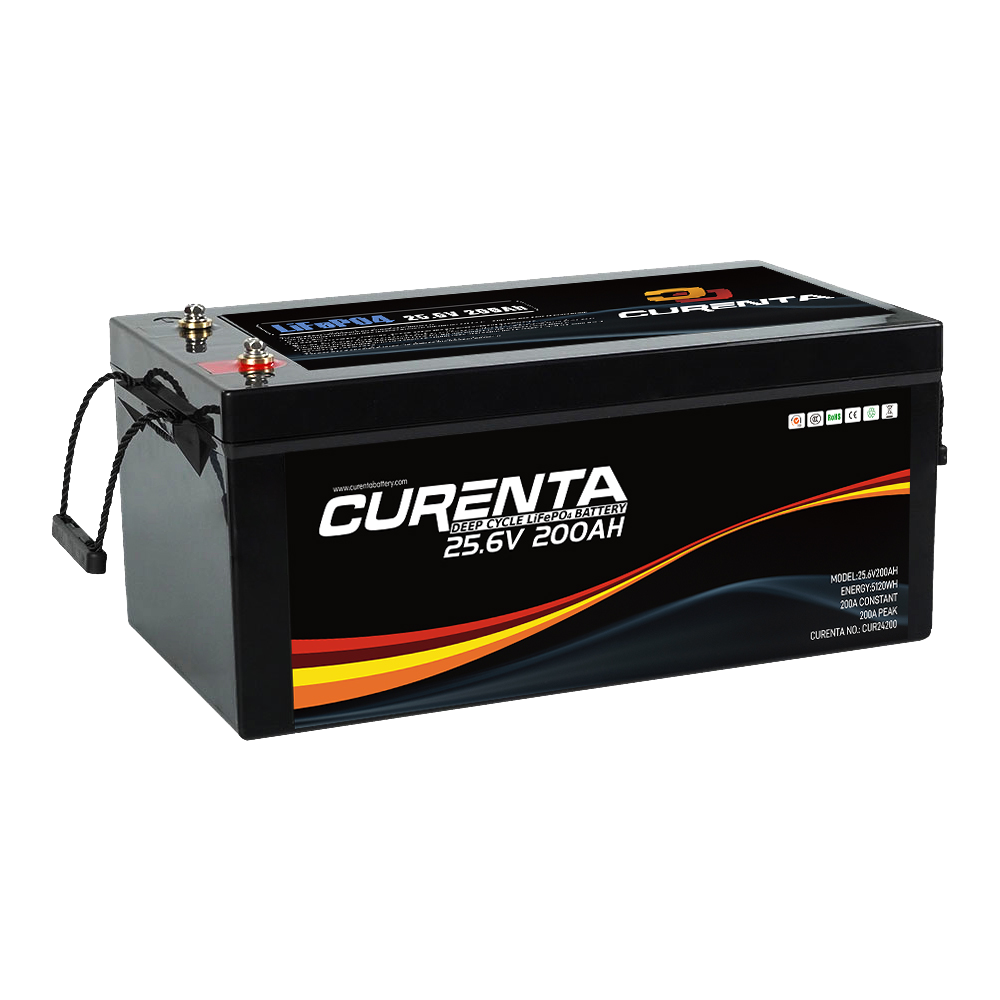
For organizations evaluating long-cycle lithium solutions, CURENTA BATTERY, INC provides LiFePO4 battery systems for applications including EVs, household energy storage, solar battery systems, golf carts, lead-acid replacement, and other energy storage and motive-power requirements. The company reports more than 15 years of experience in energy storage and motive-power applications, along with ISO9001, ISO14001, and ISO45001 certifications and CE, IEC, UKCA, UN38.3, and MSDS-related documentation.
The most useful question for a battery procurement project is therefore not simply “Does this battery have 6000 cycles?”
It is:
“Can this battery deliver the required usable energy, power, safety, communication, and service life under our actual operating conditions?”
That is the standard B2B buyers should use when evaluating a long-cycle LiFePO4 battery supplier.

 English
 German
 Czech
Czech French
 Italian
 Hungarian
 Russian
 Japanese
 Korean
 Arabic
 Spanish
 Portuguese
 Danish

 WhatsApp